Rock Cress
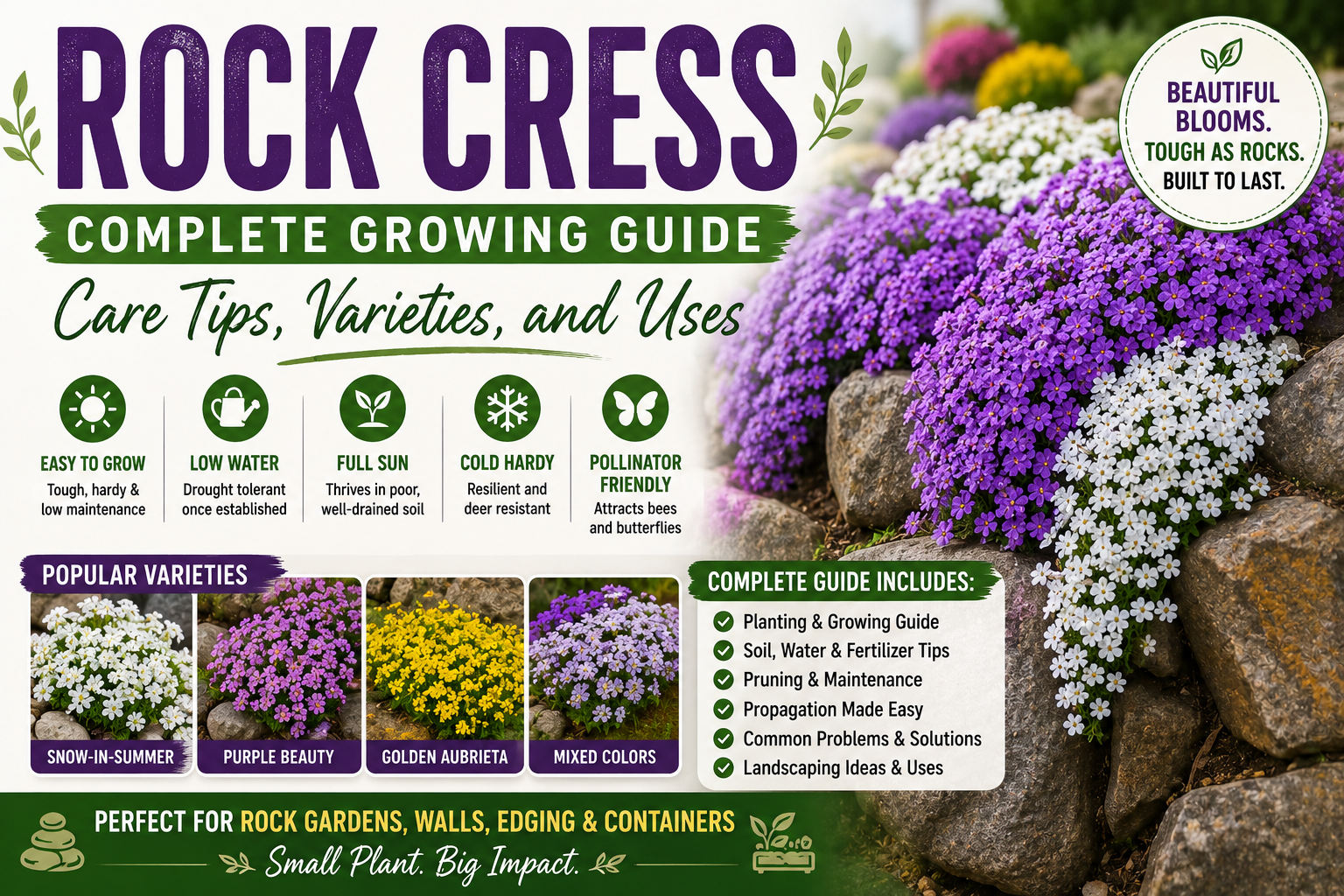
Rock cress is a low-growing, flowering perennial prized for its colorful spring blooms, evergreen foliage, and ability to thrive in rocky, well-drained locations. Gardeners value rock cress for its versatility in rock gardens, borders, retaining walls, and ground cover plantings. Its cascading habit and abundant flowers create a striking display that requires relatively little maintenance once established.
Whether you’re designing a drought-tolerant landscape or looking for a reliable spring bloomer, rock cress is an excellent choice that delivers both beauty and durability.
What Is Rock Cress?
Rock cress is the common name for several flowering plants in the genus Arabis and related species often grown in ornamental gardens. Native to mountainous and rocky regions, these plants naturally grow in well-drained soils and cooler climates.
The plant forms dense mats of gray-green to dark-green foliage and produces clusters of small flowers in shades of white, pink, purple, lavender, or rose during spring.
Quick Overview of Rock Cress
| Feature | Details |
|---|---|
| Common Name | Rock Cress |
| Botanical Name | Arabis species |
| Plant Type | Perennial ground cover |
| Mature Height | 4–10 inches |
| Mature Spread | 12–24 inches |
| Bloom Time | Early to late spring |
| Flower Colors | White, pink, purple, lavender |
| Sun Exposure | Full sun |
| Soil Type | Well-drained, sandy, rocky |
| USDA Hardiness Zones | 4–8 |
| Maintenance Level | Low |
Why Gardeners Love Rock Cress
Rock cress offers several advantages that make it a favorite among landscape designers and home gardeners.
| Benefit | Description |
|---|---|
| Early Spring Color | One of the earliest blooming perennials |
| Drought Tolerance | Performs well after establishment |
| Evergreen Foliage | Provides year-round interest |
| Pollinator Friendly | Attracts bees and butterflies |
| Ground Cover Ability | Helps suppress weeds |
| Erosion Control | Stabilizes slopes and rocky areas |
| Low Maintenance | Requires minimal care |
Popular Rock Cress Varieties
Different varieties offer unique flower colors and growth habits.
Snowcap Rock Cress
Produces masses of pure white flowers that nearly cover the foliage during bloom.
Purple Rock Cress
Known for vibrant purple flowers and vigorous spreading growth.
Rose Delight
Features bright rose-pink blooms that create dramatic spring color.
Spring Charm
Produces large flowers in shades of lavender and violet.
Varieties Comparison
| Variety | Flower Color | Height | Spread | Best Use |
|---|---|---|---|---|
| Snowcap | White | 6–8 inches | 18–24 inches | Borders, walls |
| Purple Rock Cress | Purple | 4–6 inches | 12–18 inches | Ground cover |
| Rose Delight | Pink | 6–8 inches | 18 inches | Accent planting |
| Spring Charm | Lavender | 6 inches | 18–24 inches | Rock gardens |
How to Grow Rock Cress
Growing rock cress successfully starts with selecting the right location.
Light Requirements
Rock cress performs best in full sun.
| Sun Exposure | Performance |
|---|---|
| Full Sun (6–8 hours) | Best flowering |
| Partial Shade | Reduced blooms |
| Full Shade | Poor growth |
For maximum flower production, provide at least six hours of direct sunlight daily.
Soil Requirements
The most important factor for growing rock cress is excellent drainage.
Ideal soil characteristics include:
- Sandy or gravelly texture
- Neutral to slightly alkaline pH
- Low to moderate fertility
- Good air circulation around roots
Water Requirements
Rock cress prefers moderate moisture during establishment but becomes drought tolerant later.
| Growth Stage | Watering Needs |
|---|---|
| Newly Planted | Regular watering |
| Established Plants | Occasional deep watering |
| Winter | Minimal watering |
Overwatering is one of the most common causes of failure.
Planting Rock Cress
Best Time to Plant
| Season | Suitability |
|---|---|
| Spring | Excellent |
| Early Fall | Excellent |
| Summer | Acceptable with irrigation |
| Winter | Not recommended |
Step-by-Step Planting Guide
| Step | Action |
|---|---|
| 1 | Select a sunny location |
| 2 | Improve drainage if necessary |
| 3 | Dig a hole twice the width of the root ball |
| 4 | Place plant at the same depth as the container |
| 5 | Backfill with soil |
| 6 | Water thoroughly |
| 7 | Apply light mulch away from the crown |
Spacing Recommendations
| Plant Size | Recommended Spacing |
|---|---|
| Small Varieties | 12 inches |
| Medium Varieties | 15–18 inches |
| Large Varieties | 18–24 inches |
Rock Cress Care Guide
Fertilizing
Rock cress generally thrives in relatively poor soils.
| Fertilizer Type | Frequency |
|---|---|
| Balanced Slow-Release | Once in spring |
| Compost | Light annual application |
| High-Nitrogen Fertilizer | Avoid |
Excessive fertilizer can reduce flowering and encourage leggy growth.
Pruning and Maintenance
After flowering:
- Trim spent flower stalks.
- Lightly shear foliage.
- Remove dead or damaged growth.
- Maintain compact shape.
Seasonal Care Calendar
| Season | Maintenance Tasks |
|---|---|
| Spring | Enjoy blooms, fertilize lightly |
| Summer | Monitor moisture levels |
| Fall | Divide plants if needed |
| Winter | Ensure good drainage |
Propagating Rock Cress
There are several effective ways to propagate rock cress.
Division
The easiest method for mature plants.
Steps:
- Dig up established clumps.
- Separate root sections.
- Replant divisions immediately.
- Water thoroughly.
Stem Cuttings
Take healthy cuttings after flowering.
Growing From Seed
| Factor | Requirement |
|---|---|
| Germination Temperature | 60–70°F (15–21°C) |
| Germination Time | 10–21 days |
| Light Requirement | Lightly cover seed |
| Best Sowing Time | Late winter to spring |
Best Landscaping Uses for Rock Cress
Rock cress excels in many landscape applications.
Rock Gardens
Its natural habitat makes it perfect for rock garden settings.
Retaining Walls
The plant cascades beautifully over stone walls and ledges.
Ground Cover
Dense growth helps suppress weeds while adding visual appeal.
Border Edging
Rock cress creates a neat, colorful edge along pathways.
Compost Bin Guide: Types, Benefits, Setup, and Maintenance Tips
Landscaping Applications
| Location | Suitability |
|---|---|
| Rock Gardens | Excellent |
| Slopes | Excellent |
| Retaining Walls | Excellent |
| Containers | Good |
| Cottage Gardens | Excellent |
| Woodland Gardens | Fair |
Companion Plants for Rock Cress
Combining rock cress with complementary plants extends seasonal interest.
| Companion Plant | Benefit |
|---|---|
| Creeping Phlox | Similar bloom season |
| Sedum | Drought tolerance |
| Dianthus | Contrasting texture |
| Candytuft | Continuous color |
| Aubrieta | Matching growth habit |
| Lavender | Extended seasonal appeal |
Common Problems and Solutions
Although rock cress is generally trouble-free, issues can occur.
Root Rot
Usually caused by poor drainage or overwatering.
Powdery Mildew
May appear in humid environments with poor air circulation.
Sparse Flowering
Often results from excessive shade or overfertilization.
Problem-Solving Guide
| Problem | Likely Cause | Solution |
|---|---|---|
| Yellow Leaves | Overwatering | Improve drainage |
| Root Rot | Wet soil | Reduce irrigation |
| Few Flowers | Insufficient sun | Move or thin surrounding plants |
| Leggy Growth | Too much fertilizer | Reduce feeding |
| Mildew | Poor airflow | Increase spacing |
Common Mistakes When Growing Rock Cress
| Mistake | Why It Happens | How to Fix It |
|---|---|---|
| Planting in Heavy Clay Soil | Poor drainage retains water | Amend soil with gravel or sand |
| Overwatering | Mistaken for moisture-loving plants | Allow soil to dry between waterings |
| Too Much Fertilizer | Attempting to boost growth | Feed sparingly |
| Growing in Shade | Lack of sunlight | Plant in full sun |
| Ignoring Pruning | Flowers become untidy | Trim after blooming |
| Crowded Planting | Limited airflow | Maintain proper spacing |
Pros and Cons of Rock Cress
| Pros | Cons |
|---|---|
| Spectacular spring blooms | Short bloom period |
| Drought tolerant | Sensitive to waterlogged soil |
| Evergreen foliage | May become woody with age |
| Low maintenance | Prefers sunny locations |
| Pollinator friendly | Less suited to humid climates |
How Long Does Rock Cress Live?
With proper care, rock cress can remain productive for several years. Many gardeners divide plants every three to five years to rejuvenate growth and maintain strong flowering performance.
Lifespan Timeline
| Age | Performance |
|---|---|
| Year 1 | Establishment |
| Years 2–4 | Peak flowering |
| Years 5–7 | Mature growth |
| Beyond 7 Years | May benefit from division |
Expert Tips for Growing Rock Cress Successfully
- Prioritize drainage over soil fertility.
- Plant on slopes or raised beds if drainage is questionable.
- Shear plants lightly after flowering to maintain compact growth.
- Avoid excessive mulch around the crown.
- Use rock cress near stone features for a natural appearance.
- Combine with other spring bloomers for extended seasonal color.
- Water deeply but infrequently once plants are established.
- Divide aging clumps every few years to maintain vigor.
FAQs
Is rock cress a perennial?
Yes, rock cress is a perennial in most growing regions and returns each year with proper care.
Does rock cress spread?
Rock cress spreads gradually through its mat-forming growth habit, making it an excellent ground cover.
Where should I plant rock cress?
Plant rock cress in a sunny location with excellent drainage, such as rock gardens, slopes, retaining walls, or borders.
How often should rock cress be watered?
New plants require regular watering, while established rock cress plants need only occasional deep watering during dry periods.
Does rock cress attract pollinators?
Yes. The flowers attract bees, butterflies, and other beneficial pollinators in spring.
Can rock cress grow in containers?
Yes, provided the container has excellent drainage and receives plenty of sunlight.
Why is my rock cress not flowering?
Insufficient sunlight, excessive fertilizer, or lack of pruning after previous blooms are common causes.
Is rock cress deer resistant?
Rock cress is generally considered moderately deer resistant, though feeding behavior varies by region.
Conclusion
Rock cress is one of the most rewarding perennial ground covers for gardeners seeking vibrant spring color, evergreen foliage, and minimal maintenance. Its ability to thrive in rocky, well-drained locations makes it ideal for rock gardens, retaining walls, slopes, and borders. By providing full sun, excellent drainage, and occasional maintenance, you can enjoy healthy rock cress plants for many years. For the best results, choose a suitable variety, avoid overwatering, and divide mature plants periodically to keep them vigorous and blooming abundantly.