
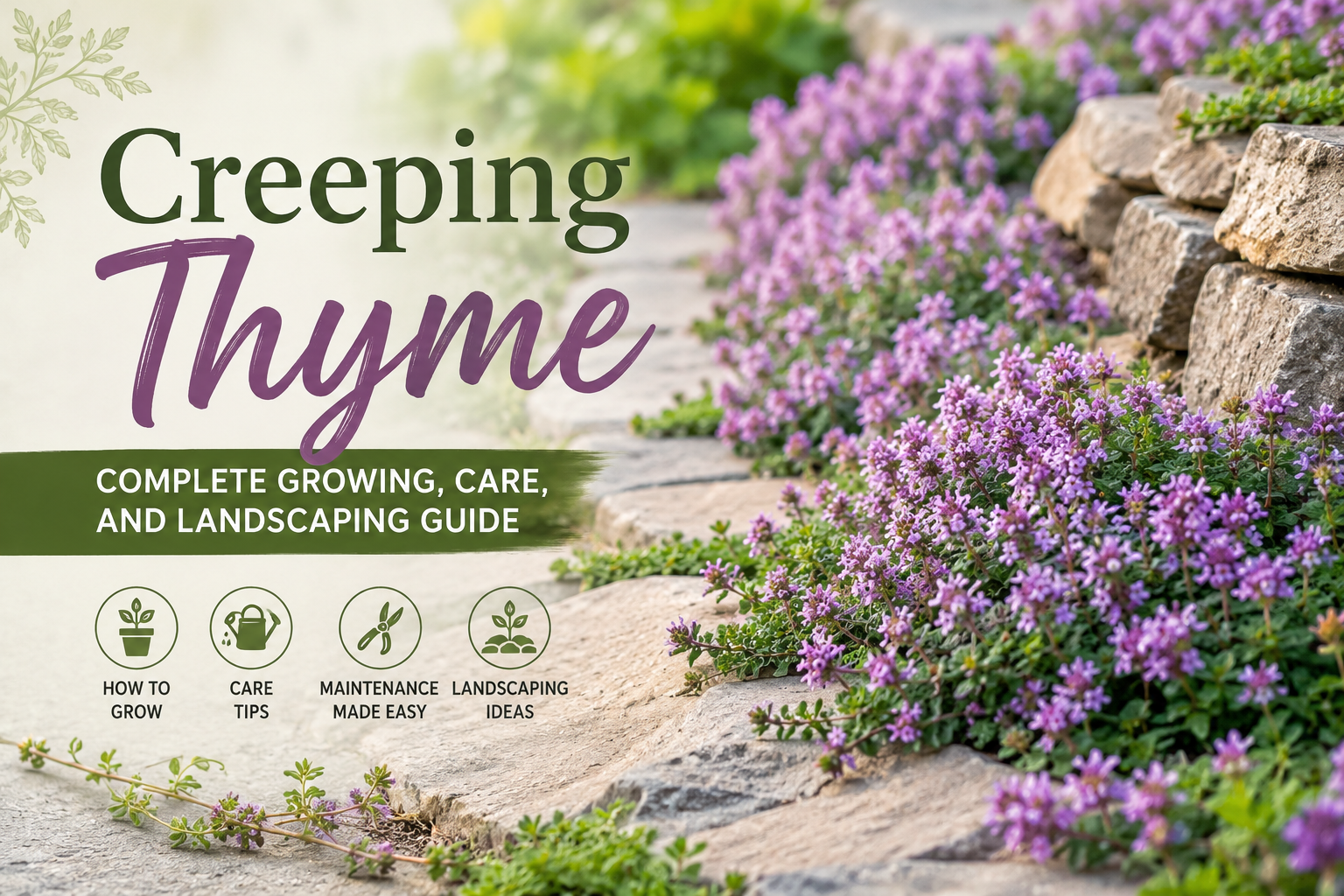
Creeping Thyme
Creeping thyme is a low-growing, fragrant perennial herb that forms a dense carpet of foliage and colorful blooms. Valued for its drought tolerance, pollinator-friendly flowers, and ability to thrive in challenging locations, it is one of the most versatile ground covers for home landscapes. Whether you’re filling gaps between stepping stones, replacing sections of lawn, or creating a water-wise garden, creeping thyme offers beauty, durability, and low-maintenance appeal.
Its popularity continues to grow because it combines ornamental value with practical benefits. Once established, it requires minimal care, tolerates foot traffic, and produces attractive flowers that attract bees and butterflies.
What Is Creeping Thyme?
Creeping thyme refers to several low-growing species and cultivars of the genus Thymus. Unlike upright culinary thyme varieties, these plants spread horizontally, creating a mat-like ground cover.
Key Characteristics
| Feature | Details |
|---|---|
| Botanical Name | Thymus species |
| Plant Type | Herbaceous perennial |
| Mature Height | 1–6 inches |
| Spread | 12–36 inches |
| Sun Requirements | Full sun |
| Soil Preference | Well-drained soil |
| Bloom Time | Late spring to summer |
| Flower Colors | Pink, purple, lavender, white |
| Hardiness Zones | USDA Zones 4–9 (varies by variety) |
| Drought Tolerance | High |
Benefits of Growing Creeping Thyme
This plant provides far more than visual appeal.
1. Excellent Ground Cover
It spreads naturally to create a dense mat that suppresses weeds and reduces soil erosion.
2. Drought Resistance
Once established, it requires significantly less water than traditional turf grass.
3. Pollinator Attraction
The flowers attract:
- Bees
- Butterflies
- Beneficial insects
This makes it a valuable addition to pollinator gardens.
4. Pleasant Fragrance
When stepped on or brushed against, the foliage releases a pleasant herbal scent.
5. Low Maintenance
Unlike lawns, it does not require frequent mowing, fertilizing, or watering.
Popular Varieties of Creeping Thyme
Different varieties offer unique colors, textures, and growth habits.
| Variety | Flower Color | Height | Best Use |
|---|---|---|---|
| Red Creeping Thyme | Deep pink-red | 2–4 inches | Pathways and borders |
| Woolly Thyme | Pale pink | 1–3 inches | Rock gardens |
| Elfin Thyme | Pink | 1–2 inches | Between stepping stones |
| Pink Chintz Thyme | Bright pink | 2–3 inches | Large ground cover areas |
| White Creeping Thyme | White | 2–4 inches | Contrast planting |
| Mother of Thyme | Purple-pink | 3–6 inches | Cottage gardens |
Choosing the Right Variety
| Goal | Recommended Variety |
|---|---|
| Heavy foot traffic | Elfin Thyme |
| Fast coverage | Red Creeping Thyme |
| Soft texture | Woolly Thyme |
| Pollinator garden | Mother of Thyme |
| Bright flower display | Pink Chintz Thyme |
Where to Plant Creeping Thyme
Site selection greatly influences long-term success.
Ideal Growing Conditions
Sunlight
The plant performs best with:
- 6–8 hours of direct sunlight daily
- Open locations with good air circulation
Insufficient sunlight often causes sparse growth and fewer blooms.
Soil
Ideal soil conditions include:
| Soil Characteristic | Recommendation |
|---|---|
| Drainage | Excellent |
| pH | 6.0–8.0 |
| Texture | Sandy or loamy |
| Organic Matter | Moderate |
Avoid areas with consistently wet or poorly drained soil.
How to Plant Creeping Thyme
Proper planting helps establish healthy growth quickly.
Step 1: Prepare the Area
- Remove weeds completely.
- Loosen soil to a depth of 6–8 inches.
- Improve drainage if necessary.
Step 2: Space Plants Correctly
| Desired Coverage Speed | Plant Spacing |
|---|---|
| Fast coverage | 6–8 inches |
| Moderate coverage | 10–12 inches |
| Budget-friendly coverage | 12–18 inches |
Step 3: Plant
- Dig a hole slightly larger than the root ball.
- Position the plant at soil level.
- Backfill gently.
- Water thoroughly.
Step 4: Mulch Lightly
Use:
- Fine gravel
- Small stones
Avoid thick organic mulch, which can retain excessive moisture.
Growing Creeping Thyme From Seed
Growing from seed is economical but requires patience.
Seed Starting Timeline
| Stage | Approximate Time |
|---|---|
| Germination | 14–28 days |
| Seedling Development | 4–8 weeks |
| Transplanting | After frost danger passes |
| Full Coverage | 1–3 years |
Seed Planting Tips
- Surface sow seeds.
- Do not bury deeply.
- Maintain consistent moisture.
- Provide bright light.
Watering Requirements
One of the biggest advantages of creeping thyme is its low water requirement.
Watering Schedule
| Growth Stage | Watering Frequency |
|---|---|
| Newly planted | 2–3 times weekly |
| Establishing | Weekly |
| Mature plants | During prolonged drought |
Overwatering is a more common problem than underwatering.
Signs of Overwatering
- Yellow leaves
- Root rot
- Sparse growth
- Fungal issues
Signs of Underwatering
- Browning foliage
- Wilting during extreme heat
- Reduced flowering
Fertilizing Guidelines
This plant generally thrives in lean soils.
Fertilizer Recommendations
| Situation | Recommendation |
|---|---|
| Healthy plants | No fertilizer needed |
| Poor soil | Light compost application |
| Severe nutrient deficiency | Balanced slow-release fertilizer |
Excessive fertilization often reduces fragrance and flowering.
Seasonal Care Guide
Spring
- Remove winter damage.
- Divide overcrowded plants.
- Apply light compost if needed.
Summer
- Enjoy peak flowering.
- Water during extended droughts.
- Monitor for weeds.
Fall
- Trim lightly if necessary.
- Improve drainage before winter.
Winter
- Avoid excessive moisture.
- Protect newly planted specimens in cold climates.
| Season | Primary Tasks |
|---|---|
| Spring | Cleanup and division |
| Summer | Water management |
| Fall | Preparation for winter |
| Winter | Drainage protection |
Using Creeping Thyme as a Lawn Alternative
Many homeowners choose creeping thyme to reduce lawn maintenance.
Advantages Over Traditional Grass
| Feature | Creeping Thyme | Typical Lawn Grass |
|---|---|---|
| Water Needs | Low | Moderate to high |
| Mowing | Rarely needed | Frequent |
| Pollinator Value | High | Low |
| Fragrance | Excellent | Minimal |
| Fertilizer Need | Low | Moderate |
| Drought Tolerance | High | Moderate |
Best Situations for Lawn Replacement
- Small yards
- Sloped landscapes
- Dry climates
- Decorative garden spaces
Landscaping Ideas
Between Stepping Stones
One of the most popular uses is filling gaps between stones. The plant softens hardscape edges and releases fragrance when walked on.
Rock Gardens
Its compact growth habit makes it ideal for rock gardens and alpine landscapes.
Garden Borders
Use it along:
- Walkways
- Driveways
- Flower beds
Slopes and Hillsides
The spreading habit helps stabilize soil while providing attractive coverage.
Companion Plants
Combining creeping thyme with compatible plants creates visual interest.
| Companion Plant | Benefit |
|---|---|
| Lavender | Similar water needs |
| Sedum | Drought-tolerant pairing |
| Catmint | Extended bloom season |
| Yarrow | Pollinator support |
| Ornamental grasses | Texture contrast |
| Coneflowers | Seasonal color |
Common Problems and Solutions
Although generally trouble-free, some issues can arise.
Common Mistakes
| Mistake | Why It Happens | How to Fix It |
|---|---|---|
| Overwatering | Treating it like lawn grass | Water only when needed |
| Planting in shade | Lack of site assessment | Move to full sun |
| Poor drainage | Heavy clay soil | Improve drainage before planting |
| Excess fertilization | Attempting faster growth | Reduce fertilizer use |
| Crowding plants | Improper spacing | Thin or divide plants |
| Ignoring weeds during establishment | Slow early spread | Weed regularly until coverage develops |
Diseases and Pests
Potential Diseases
| Disease | Symptoms | Prevention |
|---|---|---|
| Root Rot | Yellowing and collapse | Improve drainage |
| Fungal Leaf Issues | Spots on leaves | Increase airflow |
| Crown Rot | Plant decline | Avoid wet soil |
Potential Pests
Although uncommon, you may occasionally encounter:
- Spider mites
- Aphids
- Whiteflies
Healthy plants rarely experience serious infestations.
How Fast Does Creeping Thyme Spread?
Growth speed depends on:
- Variety
- Climate
- Soil quality
- Sun exposure
| Condition | Coverage Rate |
|---|---|
| Ideal conditions | Rapid spread |
| Partial shade | Slow spread |
| Poor drainage | Minimal spread |
| Drought during establishment | Reduced growth |
Most varieties reach substantial coverage within one to three growing seasons.
Pruning and Maintenance
When to Prune
Light pruning can:
- Improve appearance
- Encourage denser growth
- Remove spent blooms
Pruning Schedule
| Timing | Purpose |
|---|---|
| After flowering | Shape plant |
| Early spring | Remove winter damage |
| As needed | Control spread |
Avoid severe pruning into old woody growth.
Dividing and Propagating
Division is the easiest propagation method.
Division Process
- Dig up an established section.
- Separate healthy rooted portions.
- Replant immediately.
- Water thoroughly.
Propagation Comparison
| Method | Difficulty | Success Rate |
|---|---|---|
| Division | Easy | High |
| Cuttings | Moderate | High |
| Seeds | Moderate | Variable |
Cost of Establishing a Creeping Thyme Ground Cover
Costs vary depending on area size and planting density.
| Area Size | Estimated Plant Quantity | Typical Cost Range |
|---|---|---|
| 50 sq ft | 25–50 plants | Moderate |
| 100 sq ft | 50–100 plants | Moderate to high |
| 500 sq ft | 250–500 plants | Significant |
| 1,000 sq ft | 500–1,000 plants | Higher investment |
Starting from seed can significantly reduce costs but requires more time.
Expert Tips for Success
- Choose the sunniest location available.
- Prioritize drainage over soil fertility.
- Water deeply but infrequently.
- Remove weeds during the first year.
- Use gravel mulch in humid climates.
- Select varieties suited to your local hardiness zone.
- Avoid heavy foot traffic until plants are fully established.
- Divide mature patches every few years to rejuvenate growth.
- Combine with drought-tolerant companions for a cohesive landscape.
- Resist the urge to over-fertilize.
FAQs
Is creeping thyme invasive?
No. It spreads steadily but is generally considered well-behaved and easy to manage in residential landscapes.
Can creeping thyme handle foot traffic?
Yes. Most varieties tolerate light to moderate foot traffic, making them excellent between stepping stones and along garden paths.
Does creeping thyme stay green all year?
In mild climates, it may remain partially evergreen. In colder regions, some foliage can die back during winter and regrow in spring.
How long does it take for creeping thyme to fill in?
Most plantings begin filling noticeably within one growing season and may achieve full coverage within one to three years.
Does creeping thyme attract bees?
Yes. The flowers are highly attractive to bees, butterflies, and other beneficial pollinators.
Can creeping thyme grow in shade?
It prefers full sun. Partial shade may be tolerated, but growth and flowering are usually reduced.
Is creeping thyme deer resistant?
Yes. Its aromatic foliage typically discourages deer and rabbits from feeding on it.
Can creeping thyme be used as a lawn replacement?
Yes. Creeping thyme is one of the most popular alternatives to traditional turf in sunny, low-traffic areas because it requires less water and maintenance.
Conclusion
Creeping thyme is one of the most attractive and practical ground covers available for modern landscapes. Its drought tolerance, pollinator-friendly blooms, pleasant fragrance, and low-maintenance nature make it suitable for pathways, rock gardens, borders, slopes, and lawn alternatives. Success comes down to providing full sun, excellent drainage, and restraint with watering and fertilization. For gardeners seeking a beautiful, resilient, and environmentally friendly ground cover, creeping thyme is an outstanding choice that delivers long-term value with minimal upkeep.