
Welcome to Home Skill Guide — Your Path to Practical Mastery
Discover actionable guidance on cooking, gardening, home improvement, organization, and everyday living. Build real-world home skills that save money, boost confidence, and transform your daily life.
What Are Home Skills and Why Do They Matter?
Home skills are the practical abilities that allow you to manage, maintain, and improve your living environment with confidence and independence. These capabilities range from preparing a wholesome family meal to repairing a leaky faucet, growing fresh herbs in a window box, or organizing a cluttered garage so everything has its proper place. When you invest time in developing genuine home skills, you gain far more than knowledge — you earn self-reliance, financial savings, and the deep satisfaction that comes from creating something with your own hands.
Throughout history, people passed down essential household knowledge from one generation to the next. Grandparents taught grandchildren how to preserve summer vegetables. Parents showed their kids the correct way to patch drywall or sew a missing button back onto a coat. Neighbors shared recipes across fences and swapped advice about the best time to plant tomatoes. Somewhere along the way, modern convenience made it easy to outsource many of these tasks. Delivery services, professional cleaners, and pre-packaged meals replaced the quiet competence that once defined everyday life at home.
Home Skill Guide exists to bring that competence back — not by rejecting modern tools and technology, but by blending timeless wisdom with contemporary techniques. Whether you are a first-time renter trying to figure out how to unclog a drain, a parent who wants to teach executive functioning skills at home, or someone exploring what skills you need to work from home professionally, this resource is designed for you.
Building a Strong Foundation in the Kitchen
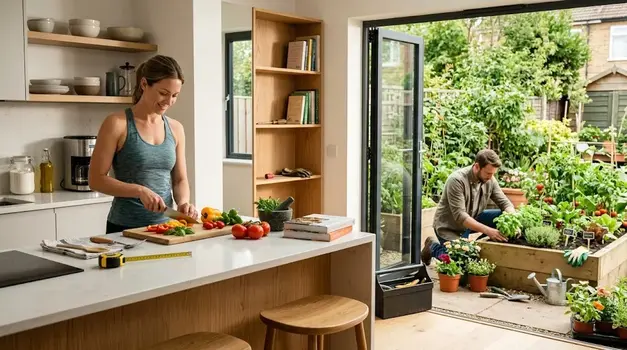
Cooking remains one of the most valuable home skills anyone can develop. When you know how to prepare meals from whole ingredients, you control what goes into your body, reduce food waste, and stretch your household budget further than you might imagine. Learning how to improve cooking skills at home does not require expensive classes or professional-grade equipment. It starts with curiosity, a willingness to experiment, and a handful of reliable techniques that serve as building blocks for hundreds of recipes.
Begin with the basics: learn how to properly dice an onion, understand the difference between sauteing and braising, and practice making a simple vinaigrette from scratch. Once you feel comfortable with foundational methods, branch out into baking bread, fermenting vegetables, or mastering the art of a perfectly seared piece of fish. Each new skill you add to your repertoire opens the door to dozens of additional dishes.
Good housekeeping home skills extend well beyond the stove. Knowing how to store leftovers safely, organize your pantry for efficiency, and deep-clean your oven without harsh chemicals are all part of the holistic approach we champion at Home Skill Guide. A well-maintained kitchen is not just cleaner and more pleasant — it actually encourages you to cook more often, creating a positive cycle that benefits your health, your wallet, and your overall quality of life.
For parents who want their children to grow up with practical confidence, involving kids in age-appropriate kitchen tasks is one of the most effective strategies available. Young children can wash produce and stir batters. Older children can follow simple recipes independently. Teenagers can plan and execute entire meals. Each stage builds responsibility, problem-solving ability, and a sense of contribution to the family unit.
Growing Your Own Food — From Container Gardens to Backyard Plots
There is something profoundly rewarding about harvesting a ripe tomato from a plant you grew yourself. Gardening connects you to the rhythms of nature, provides gentle physical exercise, and yields fresh produce that tastes remarkably better than anything from a supermarket shelf. Whether you have a sprawling backyard or a single sunny windowsill, developing gardening skills transforms your relationship with food and the environment.
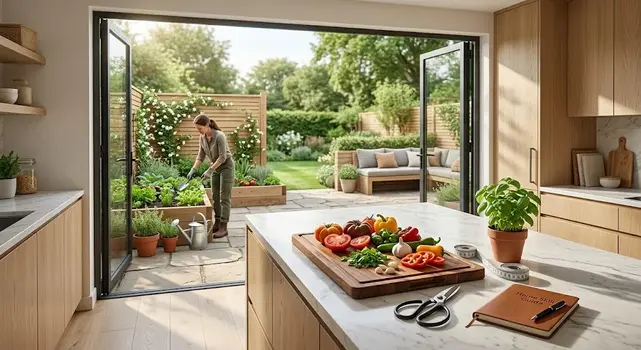
Container gardening is an excellent starting point for beginners and apartment dwellers. Herbs like basil, cilantro, and rosemary thrive in small pots on a balcony or kitchen counter. Lettuces, radishes, and cherry tomatoes adapt well to larger containers placed in a sunny spot. Once you experience the satisfaction of snipping fresh herbs directly into a simmering pot of soup, you will understand why so many people describe gardening as therapeutic.
For those with outdoor space, raised beds offer a manageable introduction to vegetable gardening. They provide excellent drainage, reduce the strain on your back, and allow you to control soil quality from the start. Planning a raised bed garden teaches you about crop rotation, companion planting, and seasonal timing — all transferable skills that deepen your understanding of natural systems.
Composting is another skill that connects your kitchen habits to your garden productivity. Instead of sending food scraps to a landfill, you transform them into rich, dark compost that nourishes your soil and helps your plants flourish. A simple compost bin requires minimal investment and, once established, practically runs itself. The result is a closed-loop system where your kitchen feeds your garden, and your garden feeds your kitchen.
Home Improvement and Maintenance — Confidence Through Competence
Every homeowner and renter eventually faces a moment when something breaks, wears out, or simply needs an upgrade. A dripping faucet, a squeaky door hinge, a wall that desperately needs a fresh coat of paint — these situations arise whether you are ready for them or not. Developing basic home improvement skills means you can address small issues before they become expensive problems, and you can tackle weekend projects that add both function and beauty to your living space.
Start with the repairs that save you the most money when handled independently. Replacing a worn toilet flapper, patching a small hole in drywall, re-caulking around a bathtub, and changing the air filter in your furnace are all straightforward tasks that would each cost fifty to two hundred dollars if you hired a professional. By learning these fundamental maintenance procedures, you could easily save a thousand dollars or more each year.
Beyond basic repairs, home improvement projects provide a creative outlet that few other activities can match. Painting a room with a carefully chosen color palette instantly changes the atmosphere. Installing floating shelves creates organized display space where there was none. Building a simple wooden planter box for your porch combines woodworking, gardening, and design into one satisfying afternoon project. Each completed task adds to your confidence and expands the boundary of what you believe you are capable of accomplishing.
For those interested in how to improve home automation skills, modern smart home technology offers a fascinating entry point. Setting up a smart thermostat, programming lighting scenes with Google Home skills, or configuring voice-activated routines through devices with capabilities similar to Alexa provides a hands-on introduction to technology integration. Whether you prefer Google Home skills like Alexa or want to explore the best Alexa smart home skills, the learning curve is gentle and the daily convenience is substantial.
Organizing Your Living Space for Clarity and Calm
An organized home is not about perfection or minimalism for its own sake. It is about creating systems that reduce daily friction, save time spent searching for misplaced items, and provide the mental clarity that comes from an environment that supports rather than sabotages your goals. Organizational skills are among the most universally applicable home skills you can develop, benefiting everything from your morning routine to your ability to host guests comfortably.
The principle behind effective organization is deceptively simple: every item you own should have a designated place, and returning items to their place should require minimal effort. In practice, this means evaluating your storage solutions, removing items you no longer use, and creating zones within each room that correspond to specific activities. A dedicated landing zone near your entryway, for example, prevents keys, mail, and bags from scattering across countertops throughout the house.
Kitchen organization deserves special attention because kitchens are among the hardest-working rooms in any home. Group cooking utensils near the stove, keep baking supplies together in a designated cabinet, and store frequently used items at eye level where they are easy to reach. Transparent containers for dry goods like flour, rice, and pasta not only look tidy but also let you see at a glance when supplies are running low.
Closet organization is another area where small investments of time and modest purchases — matching hangers, shelf dividers, drawer organizers — yield outsized returns in daily convenience. When you can see your clothing options clearly and access them without rummaging, getting dressed in the morning becomes faster and less stressful. That seemingly minor improvement compounds over weeks and months into a meaningful quality-of-life upgrade.
Working from Home — Skills That Bridge Domestic and Professional Life
The distinction between home skills and professional skills has blurred dramatically in recent years. Millions of people now work from home regularly, and the skills that make someone effective in a remote work environment overlap significantly with the skills that make a household run smoothly. Time management, self-discipline, communication, and environmental organization are all essential whether you are managing a household budget or leading a virtual team meeting.
If you are building work from home skills for your resume, consider how your domestic competencies translate into professional language. Managing a household budget demonstrates financial planning ability. Coordinating family schedules shows project management experience. Meal planning and preparation reveal logistical thinking and resource optimization. These are not trivial accomplishments — they represent genuine skills that employers increasingly recognize and value.
For those exploring what skills they need to work from home successfully, the most critical capabilities include strong written communication, comfort with digital collaboration tools, the ability to self-motivate without direct supervision, and the discipline to maintain boundaries between work time and personal time. Creating a dedicated workspace within your home, even if it is simply a specific corner of a room, establishes a physical boundary that supports mental focus.
Work from home skills to learn extend beyond the purely professional. Understanding how to set up an ergonomic workspace prevents back pain and repetitive strain injuries. Knowing how to troubleshoot basic technology issues — restarting a router, clearing a browser cache, managing cloud storage — saves time and reduces frustration. These practical technology skills are just as relevant at home as they are in a traditional office.
Developing Physical and Creative Abilities at Home
Your home is a remarkably versatile training ground for physical and creative skills. With a little creativity and dedication, you can develop abilities that many people assume require expensive memberships, specialized facilities, or formal instruction. The key is starting where you are with what you have, and building gradually through consistent practice.
Those interested in how to improve dancing skills at home can begin with free instructional videos, clearing a small space in the living room, and practicing basic footwork patterns. Dance builds coordination, balance, cardiovascular fitness, and musicality — all from the privacy of your own space. Similarly, learning how to improve acting skills at home involves practicing monologues, studying performances, and working on vocal projection and emotional range using your living room as a stage.
For musicians wondering how to improve guitar skills at home, the answer lies in structured daily practice sessions, even if they last only fifteen to twenty minutes. Focus on one technique at a time — chord transitions, fingerpicking patterns, or strumming rhythms — and track your progress over weeks. The incremental approach prevents frustration and builds a solid foundation that supports more advanced playing later.
Physical fitness at home has never been more accessible. Bodyweight exercises require no equipment and can be performed in any room. Yoga builds flexibility and mindfulness. Simple resistance bands or a pair of dumbbells expand your exercise options dramatically. For athletes wondering how to improve volleyball skills at home, targeted drills like wall setting, passing against a rebounder, and footwork agility exercises keep fundamental abilities sharp between team practices.
How to practice IV skills at home is a question relevant to nursing students and healthcare professionals. Simulation kits with practice arms and mannequins allow clinical skill development outside the hospital setting, and many nursing programs now incorporate home-based practice into their curricula. For those pursuing nursing home skills specifically, this type of self-directed practice builds the muscle memory and confidence that translate directly into patient care quality.
Communication Skills You Can Sharpen Without Leaving Your House
Effective communication is a home skill that ripples outward into every area of your life. How to improve English speaking skills quickly at home is one of the most frequently searched questions online, and the strategies are refreshingly practical. Read aloud for twenty minutes each day to improve pronunciation and fluency. Record yourself speaking on a topic and listen back to identify patterns you want to change. Engage in video calls with language exchange partners or join online discussion groups focused on topics you enjoy.
How to improve English speaking skills quickly at home for free is entirely achievable through public library resources, free language learning applications, podcasts, and YouTube channels dedicated to pronunciation and grammar instruction. The critical factor is daily practice. Even ten minutes of focused speaking practice each day produces measurable improvement within a few weeks.
Public speaking is another skill you can develop at home. How to improve public speaking skills at home involves practicing presentations in front of a mirror, recording video of yourself delivering talks, and gradually increasing the complexity and length of your material. Start by speaking for two minutes on a familiar topic. Work your way up to ten-minute presentations with visual aids. The confidence you build at home transfers directly to professional settings, classrooms, and community events.
Teaching Life Skills to Children and Teens
One of the most important responsibilities of parenting is preparing children to function independently. How to teach executive functioning skills at home is a question that encompasses planning, time management, emotional regulation, and task initiation — all capabilities that children need to succeed in school and eventually in adult life. You can build these abilities through age-appropriate chores, family planning sessions, and conversations about decision-making processes.
How to build fine motor skills at home is particularly relevant for parents of young children. Activities like threading beads, using child-safe scissors, playing with modeling clay, and drawing with crayons all strengthen the small muscles in hands and fingers that children need for writing, buttoning clothing, and using utensils. These activities double as creative play, making skill development feel like fun rather than work.
The girls guide to home skills — and indeed, any young person's guide — should include cooking basics, basic sewing, simple cleaning routines, budgeting fundamentals, and introductory repair skills. Gender should never determine which skills a child learns. Every young person benefits from knowing how to prepare a nutritious meal, manage money responsibly, and handle basic household maintenance. These capabilities build confidence, self-sufficiency, and the kind of practical intelligence that serves people throughout their entire lives.
Making Money from Home with Practical Skills
The skills you develop at home can become sources of income. What skills can you learn to make money from home is a question with an expanding list of answers. Cooking skills can lead to a catering side business, a food blog, or recipe development work. Gardening expertise opens doors to selling plants, produce, or garden design consultations. Home improvement knowledge qualifies you for handyman services or online tutorial creation.
Even if your goal is not self-employment, the financial benefits of strong home skills are substantial. How to make money from home with no skills is a misleading premise — everyone has skills, and many of them simply need to be recognized and developed. The ability to manage a household efficiently, prepare meals from scratch, perform basic repairs, and organize systems are all marketable abilities that save money directly and can generate income indirectly.
How to learn IT skills at home has become increasingly accessible through free online platforms, community college courses, and self-paced certification programs. Digital literacy is now as fundamental as knowing how to cook or balance a checkbook. Understanding basic coding, spreadsheet management, and digital communication tools positions you for remote work opportunities across virtually every industry.
Brewing, Crafting, and Specialized Pursuits
For those with specific interests, home provides the perfect laboratory for specialized skill development. How to improve home brewing skills involves understanding fermentation science, experimenting with ingredient ratios, maintaining sanitation protocols, and keeping detailed notes on each batch. Home brewing combines chemistry, patience, creativity, and quality assessment into a rewarding hobby that produces tangible results you can share with friends and family.
Learning how to learn fighting skills at home requires responsible approach and realistic expectations. Martial arts fundamentals including stances, basic strikes, stretching, and conditioning exercises can be practiced solo using instructional resources. However, sparring and advanced techniques should always be learned under qualified supervision. Home practice supplements formal training — it does not replace it.
Historical examples of determined self-improvement inspire continued effort. How did Irving increase his flying skills at home reminds us that dedicated practitioners throughout history have found ways to study, prepare, and rehearse essential skills within their home environments before applying them in real-world scenarios. The principle remains the same: preparation at home builds the foundation for performance elsewhere.
The Home Skills Meaning — A Living Definition
Home skills meaning encompasses far more than a checklist of tasks. It represents a philosophy of engaged, intentional living where you actively participate in the systems that sustain your daily life rather than passively consuming services provided by others. When you understand the mechanics of your home, the origins of your food, and the principles behind your health and comfort, you occupy a fundamentally different relationship with the world around you. You become a creator rather than merely a consumer.
This philosophy does not demand that you do everything yourself. It suggests that you understand enough to make informed choices about when to act independently and when to hire a professional. It encourages you to learn continuously, share knowledge generously, and approach each day with the quiet confidence that comes from genuine competence.
Start Your Home Skills Journey Today
Join thousands of readers who are building practical confidence, saving money, and creating homes they are proud of. Explore our guides, tips, and tutorials crafted by real people for real life.
Explore the BlogCooking Guides
Step-by-step recipes and kitchen techniques that build real confidence from your very first attempt through advanced meal preparation.
Home Improvement
Practical repair tutorials, weekend project ideas, and maintenance schedules that protect your investment and enhance your living space.
Garden and Outdoors
Growing guides for every season and space — from windowsill herbs to backyard vegetable plots and beautiful container gardens.
Our Promise to You
At Home Skill Guide, every piece of content is written by real people who practice what they publish. We test techniques in our own kitchens, gardens, and workshops before sharing them with you. We believe that practical knowledge should be accessible, clearly explained, and genuinely useful — not buried behind jargon or gated behind paywalls. Our goal is simple: to help you build the home skills that make everyday life a little easier, a little more satisfying, and a lot more self-sufficient.
Thank you for being part of this community. Whether you arrived here searching for ways to improve your cooking, organize your closets, start a garden, or build work from home skills for your career, you are in the right place. Every expert was once a beginner. Every skill worth having started with a single step. Take yours today, and let us walk alongside you on the journey.