Introduction
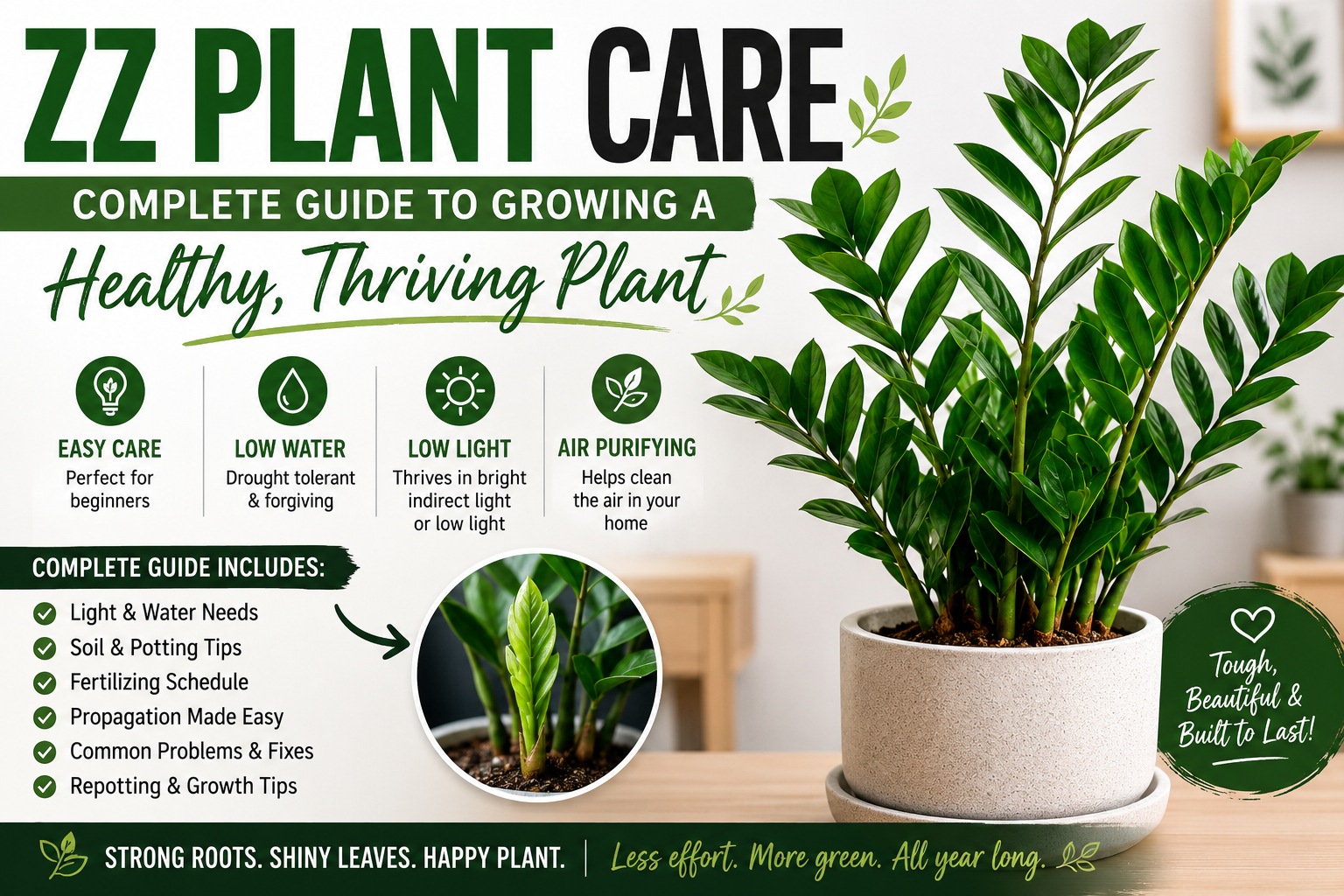
ZZ plant care is remarkably simple, which is one reason the ZZ plant has become one of the most popular houseplants worldwide. Known for its glossy green leaves, drought tolerance, and ability to thrive in low-light conditions, the ZZ plant is an excellent choice for beginners and experienced plant owners alike.
Understanding proper ZZ plant care helps prevent common issues such as overwatering, yellow leaves, and slow growth. With the right balance of light, water, soil, and maintenance, a ZZ plant can remain healthy and attractive for many years while enhancing indoor spaces with its elegant appearance.
What Is a ZZ Plant?
The ZZ plant, scientifically known as Zamioculcas zamiifolia, is a tropical perennial native to Eastern Africa. It stores water in thick underground rhizomes, allowing it to survive periods of drought.
Key Characteristics of ZZ Plants
| Feature | Details |
|---|---|
| Scientific Name | Zamioculcas zamiifolia |
| Common Name | ZZ Plant |
| Plant Type | Tropical perennial |
| Growth Habit | Upright, clumping |
| Mature Height | 2–4 feet indoors |
| Light Needs | Low to bright indirect light |
| Water Needs | Low |
| Toxicity | Toxic if ingested by pets and humans |
| Growth Rate | Slow to moderate |
ZZ Plant Care Requirements at a Glance
| Care Factor | Recommendation |
|---|---|
| Light | Bright indirect light preferred |
| Watering | Allow soil to dry completely |
| Soil | Well-draining potting mix |
| Temperature | 65°F–85°F (18°C–29°C) |
| Humidity | Average household humidity |
| Fertilizer | Monthly during growing season |
| Repotting | Every 2–3 years |
| Pruning | Remove damaged leaves as needed |
Light Requirements for ZZ Plant Care
Light plays a major role in overall plant health.
Best Lighting Conditions
ZZ plants tolerate a wide range of lighting conditions, including:
- Low-light offices
- Rooms with filtered sunlight
- Bright indirect light near windows
Bright indirect light typically produces faster growth and healthier foliage.
Lighting Conditions to Avoid
| Lighting Type | Effect on Plant |
|---|---|
| Deep shade | Very slow growth |
| Direct afternoon sun | Leaf scorching |
| Constant darkness | Weak growth over time |
Practical Example
A ZZ plant placed several feet from an east-facing window often grows faster and produces larger leaves than one kept in a dark corner.
Watering ZZ Plants Properly
Overwatering is the most common mistake in ZZ plant care.
Because ZZ plants store water in rhizomes, they need far less frequent watering than many houseplants.
Watering Schedule
| Season | Typical Frequency |
|---|---|
| Spring | Every 2–3 weeks |
| Summer | Every 2–3 weeks |
| Fall | Every 3–4 weeks |
| Winter | Every 4–6 weeks |
Always check soil moisture before watering.
How to Water Correctly
- Allow soil to dry completely.
- Water thoroughly until excess drains from the bottom.
- Empty drainage trays.
- Wait until the soil dries again before watering.
Signs of Overwatering
| Symptom | Likely Cause |
|---|---|
| Yellow leaves | Excess water |
| Mushy stems | Root rot |
| Foul odor from soil | Waterlogged roots |
| Drooping leaves | Root damage |
Signs of Underwatering
| Symptom | Likely Cause |
|---|---|
| Wrinkled stems | Lack of water |
| Dry soil for months | Severe drought |
| Slowed growth | Insufficient moisture |
Choosing the Best Soil
Proper drainage is essential for successful ZZ plant care.
Ideal Soil Characteristics
The best soil should be:
- Well-draining
- Light and airy
- Resistant to compaction
Recommended Soil Mix
| Ingredient | Percentage |
|---|---|
| Potting soil | 50% |
| Perlite | 25% |
| Coarse sand | 25% |
This combination allows water to drain quickly while retaining enough moisture for healthy root development.
Temperature and Humidity Requirements
ZZ plants adapt well to indoor environments.
NPK Fertilizer Explained: Types, Benefits, Ratios, and Application Guide
Ideal Temperature Range
| Condition | Temperature |
|---|---|
| Preferred | 65°F–85°F |
| Minimum | 50°F |
| Maximum | 95°F |
Humidity Needs
Average household humidity levels are generally sufficient.
Unlike tropical plants that require high humidity, ZZ plants tolerate:
- Air-conditioned homes
- Heated indoor spaces
- Dry office environments
Fertilizing for Healthy Growth
Although ZZ plants are not heavy feeders, occasional fertilization can encourage healthier foliage.
Fertilizer Schedule
| Season | Recommendation |
|---|---|
| Spring | Monthly |
| Summer | Monthly |
| Fall | Every 6–8 weeks |
| Winter | Usually unnecessary |
Best Fertilizer Types
- Balanced liquid fertilizer (10-10-10)
- General houseplant fertilizer
- Slow-release indoor plant fertilizer
Apply at half strength to avoid fertilizer burn.
Repotting ZZ Plants
ZZ plants grow slowly but eventually outgrow their containers.
Signs It’s Time to Repot
- Roots emerge from drainage holes
- Pot becomes distorted
- Water drains unusually quickly
- Growth has slowed significantly
Repotting Timeline
| Plant Age | Repotting Frequency |
|---|---|
| Young plant | Every 1–2 years |
| Mature plant | Every 2–3 years |
Repotting Steps
- Choose a pot 1–2 inches larger.
- Remove the plant carefully.
- Inspect roots and rhizomes.
- Replace old soil with fresh mix.
- Water lightly after repotting.
ZZ Plant Propagation Methods
Propagation is an effective way to create new plants.
Leaf Propagation
- Remove a healthy leaf.
- Allow the cut end to dry.
- Insert into moist soil.
- Keep in bright indirect light.
Stem Propagation
| Step | Action |
|---|---|
| 1 | Cut healthy stem |
| 2 | Place in water or soil |
| 3 | Wait for roots to develop |
| 4 | Transplant when established |
Division
Division is the fastest propagation method.
Simply separate rhizome clusters during repotting and plant them individually.
Popular ZZ Plant Varieties
Common Types
| Variety | Characteristics |
|---|---|
| Standard ZZ Plant | Bright green foliage |
| Raven ZZ Plant | Leaves mature to nearly black |
| Zenzi ZZ Plant | Compact growth habit |
| Lucky Classic ZZ | Traditional upright appearance |
| Variegated ZZ | Cream and green patterned leaves |
Common Problems and Solutions
Yellow Leaves
| Possible Cause | Solution |
|---|---|
| Overwatering | Reduce watering |
| Poor drainage | Improve soil mix |
| Root rot | Inspect and trim roots |
Brown Leaf Tips
| Possible Cause | Solution |
|---|---|
| Excess fertilizer | Flush soil |
| Severe drought | Adjust watering schedule |
Leggy Growth
| Cause | Solution |
|---|---|
| Insufficient light | Move to brighter location |
Root Rot
Root rot is usually caused by consistently wet soil.
Early intervention includes:
- Removing affected roots
- Replacing soil
- Using a pot with drainage holes
Benefits of Growing a ZZ Plant
| Benefit | Explanation |
|---|---|
| Low maintenance | Requires minimal attention |
| Drought tolerant | Stores water efficiently |
| Attractive foliage | Glossy ornamental leaves |
| Adaptable | Thrives in varied conditions |
| Long lifespan | Can live for many years |
| Beginner-friendly | Easy to maintain |
Pros and Cons of ZZ Plants
| Pros | Cons |
|---|---|
| Extremely easy to grow | Toxic if ingested |
| Tolerates low light | Slow growth |
| Rarely needs watering | Can suffer from overwatering |
| Attractive foliage | Limited flowering indoors |
| Drought resistant | Sensitive to prolonged soggy soil |
Seasonal ZZ Plant Care Guide
| Season | Care Focus |
|---|---|
| Spring | Resume fertilizing and active growth monitoring |
| Summer | Maintain watering schedule |
| Fall | Reduce fertilizer frequency |
| Winter | Water sparingly and avoid cold drafts |
Common Mistakes in ZZ Plant Care
| Mistake | Why It Happens | How to Fix It |
|---|---|---|
| Overwatering | Treating ZZ plants like tropical plants | Allow soil to dry completely |
| Poor drainage | Using heavy soil | Use a well-draining mix |
| Excess fertilizer | Trying to speed growth | Fertilize lightly |
| Direct sunlight | Misunderstanding light needs | Provide indirect light |
| Ignoring root rot | Symptoms overlooked | Inspect roots promptly |
| Repotting too often | Assuming larger pots improve growth | Repot only when necessary |
Expert Tips for Successful ZZ Plant Care
- Water less often than you think is necessary.
- Always check soil moisture before watering.
- Use containers with drainage holes.
- Rotate the plant periodically for even growth.
- Clean leaves occasionally with a damp cloth to remove dust.
- Place the plant in bright indirect light for optimal growth.
- Avoid frequent repotting because ZZ plants prefer slightly crowded roots.
- Inspect roots during repotting to catch problems early.
- Keep the plant away from pets and small children due to toxicity.
- Use a cactus or succulent soil mix if drainage is a concern.
FAQs
How often should I water a ZZ plant?
Water only when the soil is completely dry. In most homes, proper ZZ plant care involves watering every 2–4 weeks, depending on temperature, light, and humidity.
Can ZZ plants survive in low light?
Yes. ZZ plants tolerate low-light conditions very well, although growth is generally faster in bright indirect light.
Why are my ZZ plant leaves turning yellow?
Yellow leaves are most commonly caused by overwatering or poor soil drainage. Check the roots and allow the soil to dry before watering again.
Should I mist my ZZ plant?
Misting is usually unnecessary because ZZ plants tolerate average household humidity levels.
Is a ZZ plant toxic to pets?
Yes. ZZ plants contain compounds that can cause irritation if ingested. Keep them away from cats, dogs, and children.
How fast do ZZ plants grow?
ZZ plants are generally slow to moderate growers. Growth speeds up when plants receive bright indirect light and proper care.
Can I grow a ZZ plant outdoors?
In warm climates with temperatures above 50°F (10°C), ZZ plants can be grown outdoors in shaded locations.
What is the best soil for a ZZ plant?
A well-draining mix containing potting soil, perlite, and coarse sand is ideal.
How do I make my ZZ plant grow faster?
Provide bright indirect light, avoid overwatering, fertilize lightly during the growing season, and maintain warm temperatures.
How long do ZZ plants live?
With proper care, ZZ plants can thrive for decades as long-lived indoor houseplants.
Conclusion
ZZ plant care is straightforward, making this plant one of the easiest and most rewarding houseplants to grow. By providing bright indirect light, allowing the soil to dry between waterings, using well-draining soil, and avoiding overwatering, you can enjoy healthy growth for many years. Whether you’re a beginner or an experienced plant enthusiast, following these ZZ plant care practices will help your plant remain vibrant, resilient, and attractive. For the best results, focus on consistency rather than frequent intervention—ZZ plants thrive when left largely undisturbed.