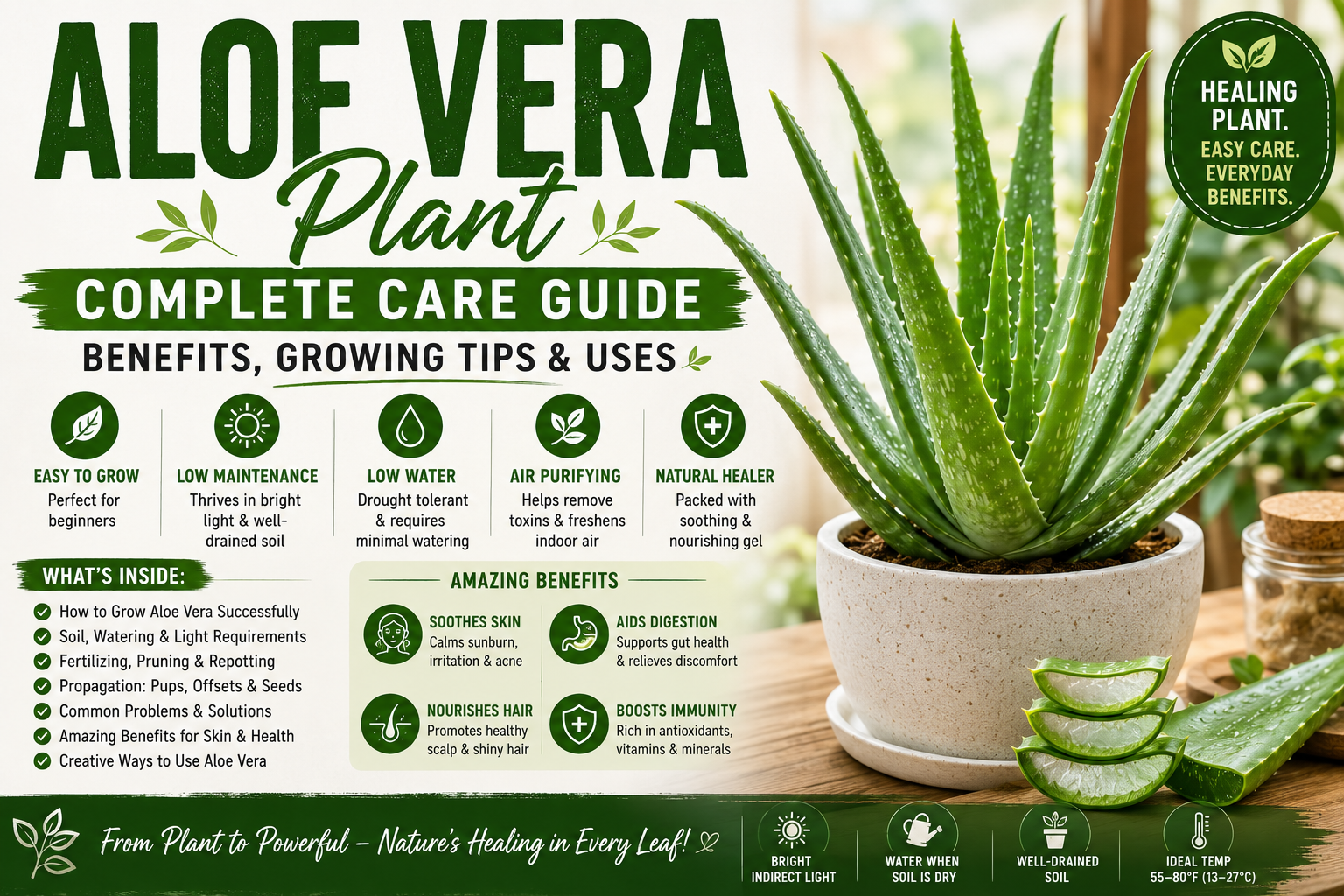
Aloe Vera Plant
The aloe vera plant is a popular succulent known for its thick, gel-filled leaves, low-maintenance nature, and numerous practical uses. Whether you’re growing it indoors as a houseplant or outdoors in a warm climate, aloe vera offers ornamental beauty and a readily available source of soothing gel.
Its popularity extends beyond gardening because the plant has been used for centuries in skincare, traditional remedies, and home decor. Understanding how to properly care for an aloe vera plant ensures healthy growth, longer lifespan, and maximum benefits.
What Is an Aloe Vera Plant?
The aloe vera plant (Aloe barbadensis Miller) is a succulent species native to the Arabian Peninsula but now cultivated worldwide. It belongs to the Asphodelaceae family and is adapted to survive in dry environments by storing water in its fleshy leaves.
Key Characteristics
| Feature | Description |
|---|---|
| Scientific Name | Aloe barbadensis Miller |
| Plant Type | Succulent |
| Family | Asphodelaceae |
| Mature Height | 12–36 inches |
| Sunlight Needs | Bright, indirect light to full sun |
| Water Needs | Low |
| Growth Rate | Moderate |
| Lifespan | 5–25+ years |
| Toxicity | Mildly toxic to pets |
Benefits of Growing an Aloe Vera Plant
One reason the aloe vera plant remains a favorite among gardeners is its combination of beauty and usefulness.
Major Benefits
| Benefit | Description |
|---|---|
| Air Purification | Helps improve indoor air quality |
| Low Maintenance | Requires minimal watering |
| Decorative Appeal | Attractive architectural shape |
| Drought Tolerance | Thrives with limited water |
| Gel Production | Leaves contain soothing gel |
| Easy Propagation | Produces offsets or “pups” |
Common Uses
- Houseplant decoration
- Indoor gardening
- Xeriscaping
- Container gardening
- DIY skincare applications
- Educational gardening projects
Types of Aloe Vera Plants
While many people refer to all aloe species as aloe vera, there are numerous varieties with unique appearances.
Popular Aloe Varieties
| Variety | Appearance | Best Use |
|---|---|---|
| Aloe Vera | Thick green leaves | Medicinal and ornamental |
| Aloe Arborescens | Shrub-like growth | Landscaping |
| Aloe Juvenna | Spotted leaves | Indoor containers |
| Aloe Ferox | Large rosettes | Outdoor gardens |
| Aloe Brevifolia | Compact blue-green leaves | Small spaces |
| Aloe Aristata | White speckled foliage | Decorative displays |
How to Grow an Aloe Vera Plant
Growing an aloe vera plant successfully starts with proper placement, soil selection, and watering practices.
Choose the Right Location
Indoor plants thrive near:
- South-facing windows
- East-facing windows
- Bright rooms with filtered sunlight
Outdoor plants perform best in:
- USDA Zones 9–11
- Sunny patios
- Well-drained garden beds
Soil Requirements
Aloe vera dislikes soggy soil. Use a fast-draining growing medium.
| Soil Component | Recommended Percentage |
|---|---|
| Cactus Mix | 60–70% |
| Perlite | 15–20% |
| Coarse Sand | 15–20% |
Ideal Growing Conditions
| Condition | Ideal Range |
|---|---|
| Temperature | 55–85°F (13–29°C) |
| Humidity | Low to moderate |
| Light | 6–8 hours daily |
| Soil pH | 6.0–8.0 |
Aloe Vera Plant Care Guide
Proper care prevents many common problems and encourages healthy growth.
Watering
The most common mistake is overwatering.
Watering Schedule
| Season | Frequency |
|---|---|
| Spring | Every 2–3 weeks |
| Summer | Every 1–2 weeks |
| Fall | Every 2–4 weeks |
| Winter | Every 3–5 weeks |
How to Water Correctly
- Check soil dryness first.
- Water thoroughly.
- Allow excess water to drain completely.
- Wait until soil dries before watering again.
Light Requirements
The aloe vera plant prefers bright light.
Indoor Lighting Tips
- Place near a sunny window.
- Rotate the pot monthly.
- Avoid prolonged exposure to dark corners.
Signs of Lighting Problems
| Symptom | Cause |
|---|---|
| Leggy growth | Insufficient light |
| Pale leaves | Lack of sunlight |
| Brown patches | Sunburn from sudden exposure |
Fertilizing
Aloe vera generally requires minimal feeding.
| Fertilizer Type | Frequency |
|---|---|
| Succulent Fertilizer | 1–2 times annually |
| Balanced Liquid Fertilizer | Every 6 months |
Avoid excessive fertilizer, which can damage roots.
How to Propagate an Aloe Vera Plant
Propagation is one of the easiest ways to multiply aloe plants.
Method 1: Using Pups
The aloe vera plant naturally produces baby plants around its base.
Steps
- Remove the parent plant from its pot.
- Identify healthy pups with roots.
- Separate carefully using a clean knife.
- Allow cut areas to dry.
- Plant in succulent soil.
- Water lightly after a few days.
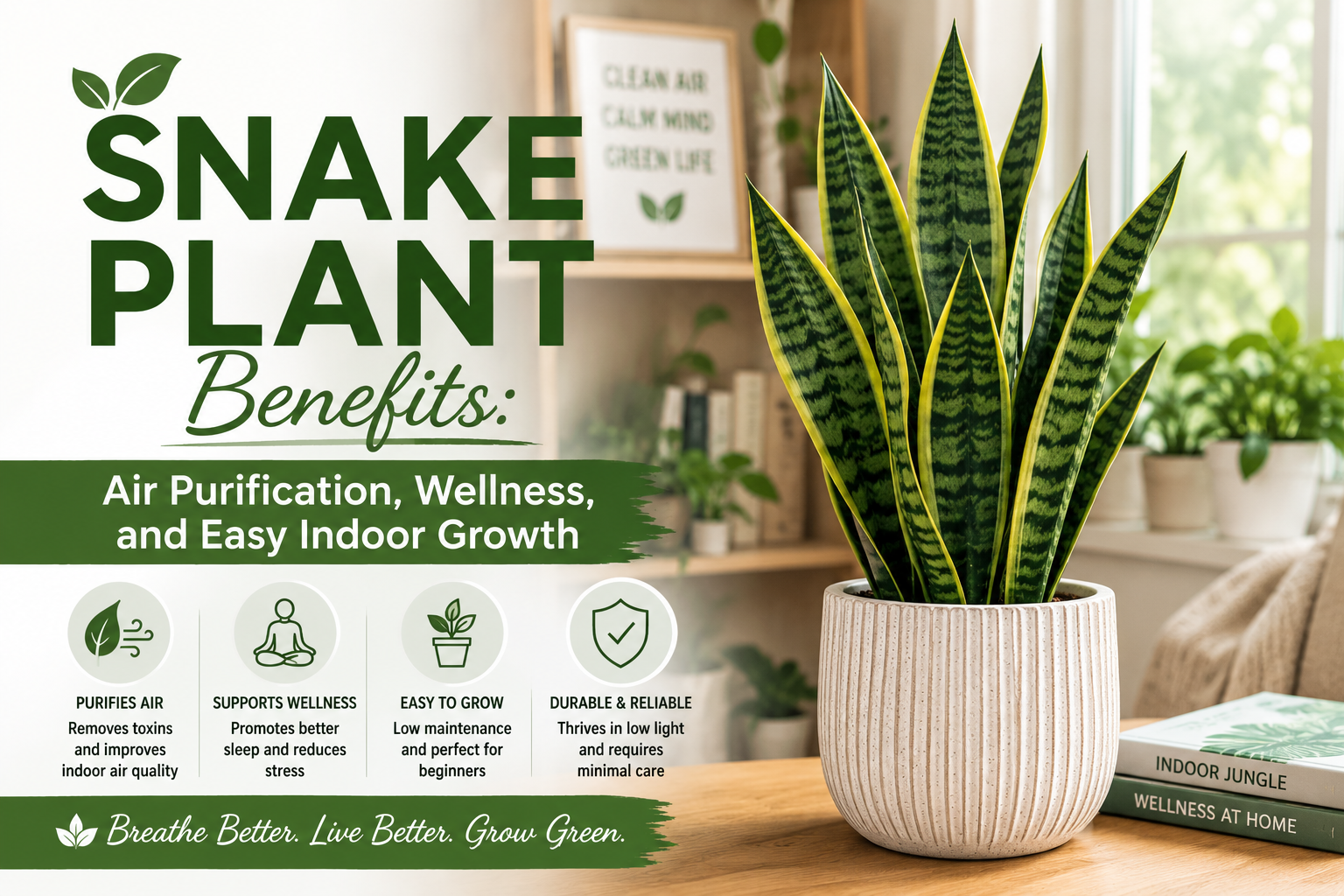
Snake Plant Benefits: Air Purification, Wellness, and Easy Indoor Growth
Propagation Timeline
| Stage | Approximate Time |
|---|---|
| Separation | Day 1 |
| Callusing | 2–3 Days |
| Root Establishment | 2–4 Weeks |
| New Growth | 1–3 Months |
Repotting an Aloe Vera Plant
Repotting becomes necessary when roots outgrow the container.
Signs Repotting Is Needed
- Roots emerging from drainage holes
- Top-heavy growth
- Cracked container
- Slower growth
Repotting Process
| Step | Action |
|---|---|
| 1 | Choose a pot 1–2 inches larger |
| 2 | Add fresh succulent soil |
| 3 | Remove old soil gently |
| 4 | Inspect roots |
| 5 | Replant at original depth |
| 6 | Wait several days before watering |
Common Problems and Solutions
Even hardy plants can develop issues.
Aloe Vera Troubleshooting Table
| Problem | Cause | Solution |
|---|---|---|
| Yellow Leaves | Overwatering | Reduce watering |
| Mushy Base | Root rot | Remove damaged roots |
| Brown Tips | Underwatering or stress | Adjust watering |
| Thin Leaves | Insufficient water | Water more consistently |
| Leggy Growth | Low light | Move to brighter location |
| Pest Infestation | Mealybugs or scale | Apply insecticidal soap |
Common Pests Affecting Aloe Vera
Most Frequent Pests
| Pest | Symptoms | Treatment |
|---|---|---|
| Mealybugs | White cottony clusters | Neem oil |
| Scale Insects | Brown bumps | Manual removal |
| Spider Mites | Fine webbing | Increased airflow |
| Fungus Gnats | Flying insects near soil | Reduce moisture |
Harvesting Aloe Vera Gel
Many gardeners grow the aloe vera plant for its gel.
How to Harvest
- Select mature outer leaves.
- Cut near the base.
- Allow yellow sap to drain.
- Remove leaf edges.
- Slice open the leaf.
- Scoop out clear gel.
Harvesting Guidelines
| Factor | Recommendation |
|---|---|
| Plant Age | At least 2–3 years old |
| Best Leaves | Outer mature leaves |
| Harvest Frequency | As needed |
| Storage | Refrigerate up to one week |
Indoor vs Outdoor Aloe Vera Plant
| Factor | Indoor Growth | Outdoor Growth |
|---|---|---|
| Growth Speed | Moderate | Faster |
| Temperature Control | Easier | Weather dependent |
| Water Needs | Lower | Slightly higher |
| Pest Exposure | Lower | Higher |
| Sunlight | Filtered | Direct |
| Size Potential | Smaller | Larger |
Pros and Cons of Growing Aloe Vera
| Pros | Cons |
|---|---|
| Easy to care for | Sensitive to overwatering |
| Drought tolerant | Can suffer frost damage |
| Attractive appearance | Slow growth in low light |
| Easy propagation | Mildly toxic to pets |
| Useful gel | Susceptible to root rot |
Common Mistakes
| Mistake | Why It Happens | How to Fix It |
|---|---|---|
| Overwatering | Treating aloe like regular houseplants | Allow soil to dry completely |
| Poor Drainage | Using heavy potting soil | Use cactus or succulent mix |
| Insufficient Light | Placement in dark rooms | Move to bright indirect light |
| Oversized Pots | Retain excess moisture | Choose appropriately sized containers |
| Excess Fertilizer | Attempting faster growth | Fertilize sparingly |
| Watering in Winter Too Often | Ignoring dormant growth | Reduce watering frequency |
Expert Tips for a Healthier Aloe Vera Plant
- Use terracotta pots whenever possible because they improve moisture evaporation.
- Always choose containers with drainage holes.
- Rotate indoor plants monthly for even growth.
- Water deeply but infrequently.
- Remove dead leaves promptly.
- Protect outdoor plants from frost.
- Quarantine newly purchased plants before placing them near existing collections.
- Use a cactus-specific soil mix for optimal root health.
- Repot every two to three years if growth slows.
- Harvest only mature leaves to avoid stressing the plant.
Frequently Asked Questions
How often should I water an aloe vera plant?
Water an aloe vera plant only when the soil is completely dry. In most homes, this means every two to four weeks, depending on temperature, humidity, and light conditions.
Can aloe vera grow indoors?
Yes. Aloe vera is one of the best indoor succulents and thrives near bright windows with plenty of indirect sunlight.
Why are my aloe vera leaves turning yellow?
Yellow leaves are usually caused by overwatering, poor drainage, or root rot. Allow the soil to dry and inspect the roots if symptoms persist.
How long does an aloe vera plant live?
With proper care, an aloe vera plant can live for decades. Many healthy specimens survive 20 years or longer.
Can I grow aloe vera from a leaf cutting?
Leaf propagation is generally unreliable. Growing from offsets or pups is the preferred method.
Does aloe vera need direct sunlight?
Aloe vera benefits from several hours of sunlight daily, but sudden exposure to intense direct sun can cause leaf burn.
Is aloe vera safe for pets?
No. Aloe vera contains compounds that can be toxic to cats and dogs if ingested.
When should I repot aloe vera?
Repot when roots become crowded, pups fill the container, or the plant becomes top-heavy.
Conclusion
The aloe vera plant is one of the easiest and most rewarding succulents to grow. Its drought tolerance, attractive appearance, simple propagation, and practical uses make it ideal for beginners and experienced gardeners alike. By providing well-draining soil, bright light, and careful watering, you can keep your aloe vera healthy for many years. For best results, focus on preventing overwatering, use a suitable succulent potting mix, and regularly monitor your aloe vera plant for signs of stress or pests.