Introduction
Flaming Katy, scientifically known as Kalanchoe blossfeldiana, is a striking succulent prized for its clusters of vivid, long-lasting flowers and glossy, dark green foliage. Native to Madagascar, this popular houseplant has earned a reputation for being both beautiful and remarkably forgiving, making it an excellent choice for beginners and experienced gardeners alike. However, to truly unlock its full potential—specifically, to encourage those brilliant blooms year after year—you need to understand its specific needs. This guide provides everything you need to know to help your Flaming Katy thrive, from light and watering requirements to troubleshooting common issues.
What is Flaming Katy? Understanding This Succulent Beauty
Flaming Katy is a flowering succulent from the Crassulaceae family. Unlike many succulents grown primarily for their foliage, this plant is celebrated for its prolific and vibrant flowers. These blooms, which can be red, pink, yellow, orange, or white, form in dense clusters that sit atop sturdy stems.
Key Characteristics
| Feature | Description |
|---|---|
| Botanical Name | Kalanchoe blossfeldiana |
| Common Names | Flaming Katy, Christmas Kalanchoe, Florist Kalanchoe, Madagascar Widow’s-thrill |
| Family | Crassulaceae |
| Origin | Madagascar |
| Plant Type | Succulent, Perennial |
| Mature Size | 12–18 inches tall and wide (indoors) |
| Bloom Time | Typically late winter to early spring, but can be forced to bloom at other times. |
| Flower Colors | Red, pink, orange, yellow, white, and various bi-colors. |
| Sun Exposure | Bright, indirect light; some direct morning sun. |
| Soil Type | Well-draining succulent or cactus mix. |
| Hardiness Zones | 10–12 (USDA) – usually grown as a houseplant. |
Flaming Katy Care Guide: The Essentials
Caring for a Flaming Katy is relatively straightforward, but paying attention to the details will ensure a spectacular floral display.
Light Requirements
Proper lighting is crucial for the health and blooming of your Flaming Katy.
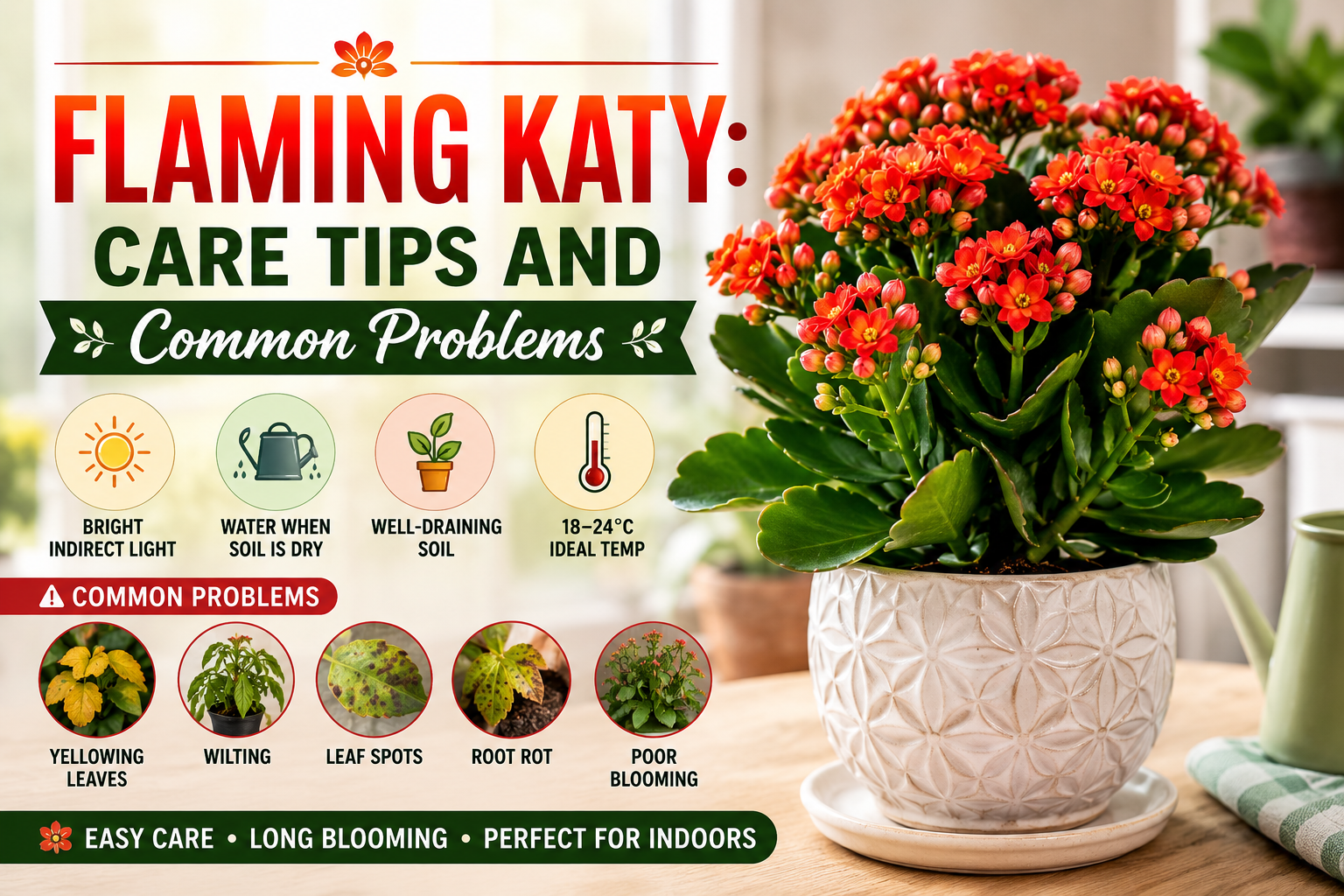
- Ideal Conditions: Bright, indirect sunlight for 4-6 hours a day. An east- or south-facing window is often ideal.
- Too Little Light: The plant will become leggy, with elongated stems and fewer flowers.
- Too Much Direct Sun: Especially harsh afternoon sun can scorch the leaves, causing them to turn yellow or brown.
Expert Tip: Rotate your plant every few weeks to ensure all sides receive equal light, promoting balanced growth.
Watering
As a succulent, your Flaming Katy stores water in its fleshy leaves and is highly susceptible to overwatering.
- The “Soak and Dry” Method: Water thoroughly until water drains from the bottom of the pot, then allow the soil to dry out completely before watering again.
- Signs of Overwatering: Yellow, mushy leaves or a wilting appearance despite wet soil.
- Signs of Underwatering: Wrinkled, shriveled, or limp leaves.
Actionable Advice: Instead of watering on a schedule, check the soil. Stick your finger about an inch into the potting mix. If it feels dry, it’s time to water. During the winter months, reduce watering frequency even more.
Soil and Potting
Choosing the right soil and pot is essential for preventing root rot.
- Soil: Use a high-quality, well-draining potting mix formulated for cacti and succulents. You can also make your own by mixing regular potting soil with perlite or coarse sand in a 2:1 ratio.
- Pot: A terracotta or clay pot is an excellent choice because it’s porous and allows excess moisture to evaporate. Ensure the pot has at least one drainage hole.
Temperature and Humidity
- Temperature: Prefers average room temperatures between 60-75°F (15-24°C). Avoid placing it near drafts, heaters, or air conditioning vents.
- Humidity: Flaming Katy is a succulent that thrives in average household humidity. It does not require misting, which can actually lead to leaf spot diseases.
How to Get Your Flaming Katy to Re-Bloom
Perhaps the most common question from owners is, “Why won’t my Flaming Katy bloom again?” Once the initial flush of flowers fades, many people struggle to get a second bloom. The secret lies in photoperiodism: the plant needs specific day-length conditions to form flower buds.
The Six-Week Short-Day Cycle
Flaming Katy is a “short-day” plant, meaning it requires long, uninterrupted periods of darkness to trigger blooming.
- Start the Process: After the last flower has faded (usually in late autumn), begin the process.
- Provide Darkness: For about 6 weeks, ensure your plant receives 14–16 hours of total darkness per day.
- During the Day: Provide bright, indirect light for the remaining 8–10 hours.
- Timing: A simple way to do this is to place the plant in a closet or dark room from 5 PM to 8 AM every day, then bring it back to its light-filled spot.
Common Mistake: Turning on a light in the room during its dark period, even briefly, can disrupt this cycle and delay or prevent blooming.
Seedless Grapes: Benefits, Varieties, Nutrition, Growing Tips & Uses
Expert Tip: Reduce watering during this 6-week dark period, allowing the soil to dry out more than usual. Once you see buds forming, you can resume normal watering and care.
Common Problems and Solutions
Even with good care, your Flaming Katy might show signs of distress. Here’s how to diagnose and fix common issues.
| Mistake | Why It Happens | How to Fix It |
|---|---|---|
| Yellow, Mushy Leaves | Overwatering / Root Rot | Water less frequently, ensure pot has good drainage, and consider repotting in fresh, dry soil if the problem is severe. |
| Leggy, Stretched Growth | Insufficient Light | Move the plant to a brighter location with more indirect sunlight. |
| Leaves Turning Brown & Crispy | Sunburn / Underwatering | Move plant away from harsh, direct afternoon sun. Water more thoroughly. |
| Lack of Re-Blooming | Not Enough Darkness | Implement the “short-day” cycle described above, ensuring 14-16 hours of complete darkness for six weeks. |
| White, Cottony Spots | Mealybugs | Wipe pests off with a cotton swab dipped in rubbing alcohol. Isolate the plant to prevent spread. |
| Grayish-Brown Patches | Powdery Mildew | Improve air circulation, avoid misting, and treat with a suitable fungicide if necessary. |
Expert Tips for Thriving Flaming Katy Plants
- Pinch Back Faded Blooms: Deadheading, or removing spent flowers, encourages the plant to put energy into producing new growth and future blooms.
- Fertilize Sparingly: Feed your Flaming Katy with a balanced, water-soluble fertilizer diluted to half-strength, but only during the active growing season (spring and summer). Stop fertilizing in the fall and winter.
- Repotting: Repot your Flaming Katy every 2-3 years, or when it becomes root-bound, ideally in the spring. Use a pot just one size larger.
- Propagation is Easy: You can easily propagate your Flaming Katy from stem or leaf cuttings. Allow the cutting to callous over for a few days, then plant it in moist succulent soil.
- Wipe the Leaves: Gently wipe the leaves with a damp cloth to remove dust, allowing the plant to photosynthesize more efficiently.
FAQs About Flaming Katy
1. Is Flaming Katy toxic to pets?
Yes, Flaming Katy contains bufadienolides, which are toxic to both cats and dogs if ingested. Symptoms can include vomiting, diarrhea, and, in rare cases, heart arrhythmias. It’s best to keep this plant out of reach of curious pets.
2. Why is my Flaming Katy dropping its leaves?
Sudden leaf drop is often a sign of stress. This can be caused by overwatering, underwatering, temperature shocks, or being placed in a drafty location. Check your care routine and the environment to identify and correct the issue.
3. Can I plant my Flaming Katy outside?
Yes, if you live in USDA hardiness zones 10-12. In these warm climates, it can be grown as an outdoor perennial in a sunny, well-draining spot. In cooler climates, it is best kept as a houseplant or moved indoors before the first frost.
4. How long do Flaming Katy flowers last?
With proper care, the individual flower clusters can last for several weeks, often 6-8 weeks. The overall flowering period can extend for several months as new buds open.
5. What type of pot is best for a Flaming Katy?
A terracotta or unglazed clay pot is ideal because it allows the soil to breathe and moisture to evaporate, significantly reducing the risk of overwatering. Ensure the pot has a drainage hole.
6. My Flaming Katy is getting too tall and spindly. What should I do?
This is a classic sign of insufficient light. Move it to a brighter spot. You can also prune it back to encourage bushier growth. Spring is the best time for this.
7. How often should I fertilize my Flaming Katy?
Use a balanced, water-soluble fertilizer diluted to half-strength. Fertilize once a month during the spring and summer. Do not fertilize during the fall and winter.
8. What’s the best way to water a Flaming Katy?
Water thoroughly from the top until water runs out of the drainage hole, then empty the saucer. Wait until the top inch of soil feels dry before watering again. This “soak and dry” method mimics their natural, arid habitat.
9. Can I cut off the flower stems after they die?
Yes, prune the flower stems back to the base of the plant once all the flowers have faded and the stem begins to dry. This encourages new, healthy growth.
10. Does Flaming Katy need high humidity?
No, it is a succulent and thrives in normal household humidity. Misting is not necessary and can invite fungal diseases.
Conclusion
The Flaming Katy (Kalanchoe blossfeldiana) is a rewarding houseplant that offers a stunning display of color with relatively minimal effort. The key to success lies in understanding its succulent nature: provide bright, indirect light, water thoroughly only when the soil is dry, and give it its necessary “dark time” to trigger those vibrant blooms. By following the care guidelines and expert advice in this article, you can enjoy a healthy, flourishing Flaming Katy that will be the highlight of your indoor garden for years to come. Remember to be patient, especially with the re-blooming process, and you will be richly rewarded.