Peat Moss
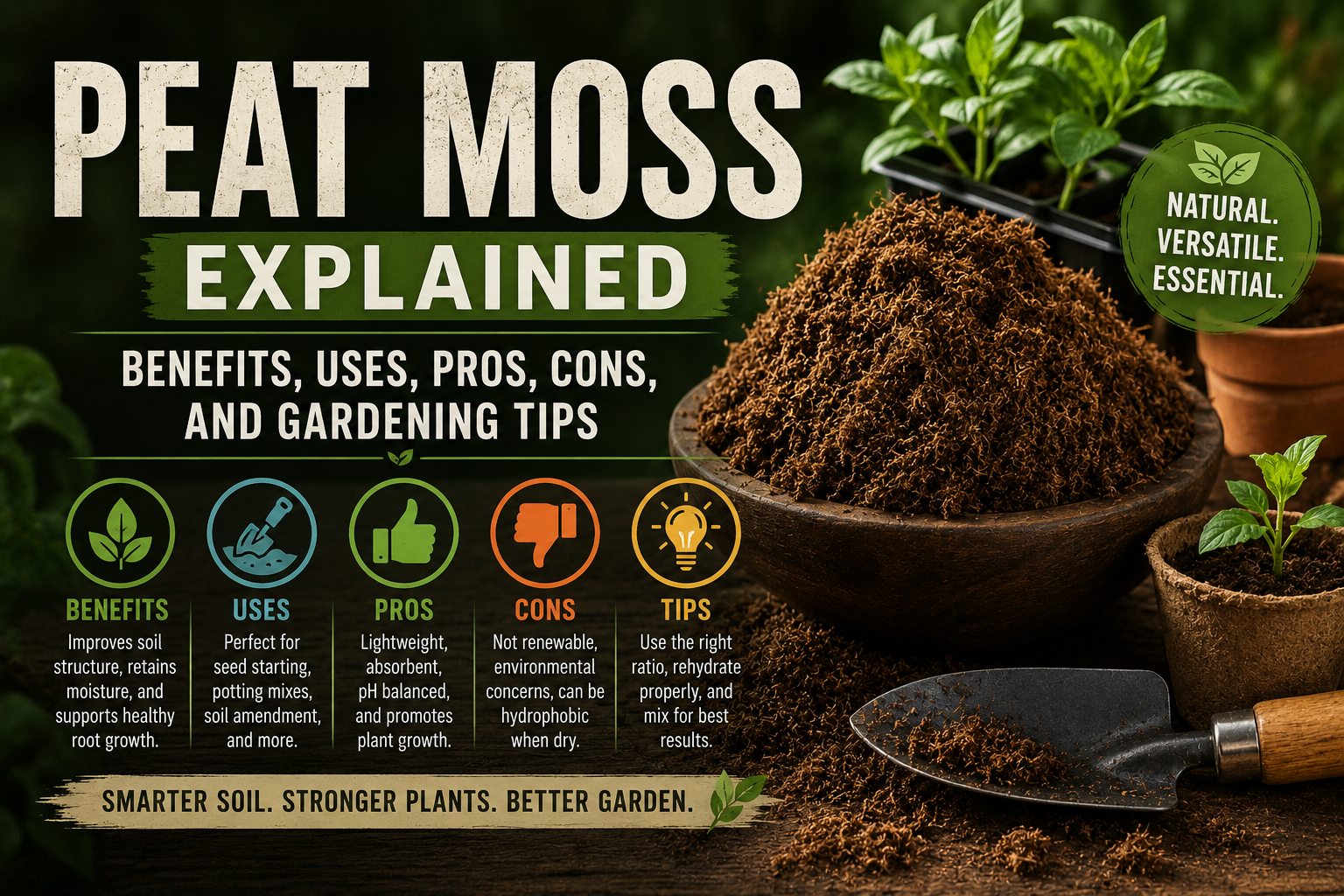
Peat moss is a partially decomposed organic material harvested from peat bogs, primarily consisting of sphagnum moss that has broken down over thousands of years. Gardeners and horticulturists value peat moss for its exceptional water-holding capacity, lightweight texture, and ability to improve soil structure.
Understanding peat moss is important because it remains one of the most widely used soil amendments in gardening, seed starting, landscaping, and commercial plant production. Whether you’re growing vegetables, flowers, shrubs, or houseplants, knowing when and how to use peat moss can significantly improve plant health and soil performance.
What Is Peat Moss?
If you’ve ever wondered what is peat moss, the simple answer is that it is an organic soil amendment formed from decomposed moss and other plant materials in waterlogged peat bogs. Because decomposition occurs very slowly in these oxygen-poor environments, peat accumulates over centuries.
After harvesting and processing, peat moss becomes a lightweight, brown material commonly sold in compressed bales for gardening use.
How Peat Moss Forms
| Stage | Description |
|---|---|
| Plant Growth | Mosses and wetland plants grow in bogs |
| Partial Decomposition | Waterlogged conditions slow decay |
| Peat Accumulation | Organic matter builds up over centuries |
| Harvesting | Peat is collected, dried, and processed |
| Packaging | Prepared for gardening and horticultural use |
Key Characteristics of Peat Moss
Peat moss has several unique properties that make it valuable for gardeners.
| Characteristic | Details |
|---|---|
| Water Retention | Holds 15–25 times its weight in water |
| Texture | Light and fluffy |
| pH Level | Naturally acidic (typically 3.5–4.5) |
| Nutrient Content | Low in nutrients |
| Sterility | Generally free from weed seeds and pathogens |
| Longevity | Breaks down slowly in soil |
| Weight | Lightweight and easy to handle |
Benefits of Peat Moss
Excellent Water Retention
One of the biggest advantages of peat moss is its ability to absorb and retain moisture.
This helps:
- Reduce watering frequency
- Improve moisture availability
- Support seed germination
- Prevent drought stress
For container gardening, peat moss helps maintain consistent moisture levels between waterings.
Improves Soil Structure
Peat moss loosens heavy clay soils and improves aeration.
Benefits include:
- Better root development
- Increased oxygen availability
- Improved drainage balance
- Reduced soil compaction
Ideal for Seed Starting
Many professional seed-starting mixes contain peat moss because it provides:
- Consistent moisture
- Sterile growing conditions
- Fine texture for delicate roots
- Reliable germination support
Helps Sandy Soils Retain Moisture
Sandy soils drain quickly and often struggle to hold water.
Adding peat moss can:
- Increase water retention
- Improve nutrient retention
- Reduce plant stress during hot weather
Long-Lasting Soil Amendment
Unlike some organic materials that decompose quickly, peat moss remains effective for years, making it a durable soil conditioner.
Peat Moss Uses in Gardening
Vegetable Gardens
Peat moss can improve soil quality for:
- Tomatoes
- Peppers
- Lettuce
- Cucumbers
- Root vegetables
Flower Beds
Many flowering plants benefit from improved moisture retention and soil structure.
Hydrangea Guide: Types, Care Tips, Pruning, and Blooming Secrets
Examples include:
- Petunias
- Begonias
- Marigolds
- Hydrangeas
- Impatiens
Raised Beds
Raised beds often dry out faster than in-ground gardens. Peat moss helps maintain moisture while improving soil texture.
Container Gardening
Container plants frequently benefit from peat moss because it:
- Reduces moisture fluctuations
- Improves root growth
- Keeps potting mixes lightweight
Lawn Establishment
When starting a lawn from seed, peat moss is often spread as a thin layer to help:
- Retain moisture
- Improve seed-to-soil contact
- Support germination
Peat Moss vs Other Soil Amendments
Peat Moss vs Compost
| Feature | Peat Moss | Compost |
|---|---|---|
| Nutrients | Low | High |
| Water Retention | Excellent | Good |
| Soil Biology | Limited | Rich |
| pH | Acidic | Usually neutral |
| Microorganisms | Few | Many |
| Cost | Moderate | Often inexpensive |
Peat Moss vs Coconut Coir
| Feature | Peat Moss | Coconut Coir |
|---|---|---|
| Source | Peat bogs | Coconut husks |
| Sustainability | Lower | Higher |
| Water Retention | Excellent | Excellent |
| pH | Acidic | Near neutral |
| Renewable Resource | No | Yes |
| Nutrient Retention | Good | Good |
Peat Moss vs Topsoil
| Feature | Peat Moss | Topsoil |
|---|---|---|
| Primary Use | Soil amendment | Base growing medium |
| Nutrient Content | Low | Moderate |
| Weight | Lightweight | Heavy |
| Water Retention | High | Variable |
| Drainage Improvement | Excellent | Moderate |
How to Use Peat Moss Correctly
For Garden Beds
- Spread 2–3 inches of peat moss over the soil surface.
- Incorporate it into the top 6–12 inches of soil.
- Water thoroughly after mixing.
For Potting Mixes
A common mixture includes:
| Ingredient | Percentage |
|---|---|
| Peat Moss | 40–60% |
| Perlite | 20–30% |
| Compost | 20–30% |
For Seed Starting
Use a fine-textured mix containing peat moss, vermiculite, and perlite for optimal germination.
For Acid-Loving Plants
Peat moss works especially well for:
- Blueberries
- Azaleas
- Rhododendrons
- Camellias
- Hydrangeas
Its natural acidity helps create favorable growing conditions.
Potential Drawbacks of Peat Moss
While peat moss offers many advantages, gardeners should also understand its limitations.
Low Nutrient Content
Peat moss contributes very few nutrients to plants.
You will typically need to add:
- Compost
- Organic fertilizers
- Slow-release fertilizers
Can Become Hydrophobic
When completely dry, peat moss can repel water and become difficult to rehydrate.
Naturally Acidic
Some plants prefer neutral or alkaline soils.
In those cases, lime may be needed to balance soil pH.
Environmental Concerns
Peat bogs develop extremely slowly, making peat moss a non-renewable resource on a human timescale. Because peatlands store significant amounts of carbon, some gardeners choose alternative materials such as coconut coir.
Pros and Cons of Peat Moss
| Pros | Cons |
|---|---|
| Excellent moisture retention | Low nutrient content |
| Lightweight | Can be difficult to rewet |
| Improves soil structure | Naturally acidic |
| Good for seed starting | Environmental concerns |
| Long-lasting | Not renewable on short timescales |
| Sterile and weed-free | May require pH adjustment |
Best Plants for Peat Moss
| Plant Type | Suitable? | Reason |
|---|---|---|
| Blueberries | Excellent | Prefer acidic soil |
| Azaleas | Excellent | Thrive in acidic conditions |
| Rhododendrons | Excellent | Improved moisture retention |
| Vegetables | Good | Better soil structure |
| Annual Flowers | Good | Consistent moisture |
| Succulents | Limited | May retain too much water |
| Cacti | Limited | Can reduce drainage |
Common Mistakes When Using Peat Moss
| Mistake | Why It Happens | How to Fix It |
|---|---|---|
| Using peat moss alone as garden soil | Misunderstanding its purpose | Mix with soil and compost |
| Not adding fertilizer | Peat moss contains few nutrients | Use balanced fertilizer |
| Allowing it to dry completely | High drying potential in containers | Water consistently |
| Ignoring soil pH | Peat moss is naturally acidic | Test soil and adjust if necessary |
| Overusing in succulent mixes | Excess moisture retention | Add sand or perlite |
| Applying without mixing | Poor root penetration | Incorporate thoroughly into soil |
Expert Tips for Using Peat Moss
- Combine peat moss with compost for the best balance of moisture retention and nutrients.
- Pre-moisten peat moss before use to make it easier to work with.
- Use peat moss sparingly in succulent and cactus mixes.
- Test soil pH annually when using large amounts of peat moss.
- Add perlite to improve drainage in containers.
- Use peat moss in raised beds where moisture retention is especially valuable.
- Supplement with slow-release fertilizer to compensate for low nutrient content.
- Store unused peat moss in a dry location to preserve quality.
How Much Peat Moss Do You Need?
| Project | Recommended Amount |
|---|---|
| Garden Bed Improvement | 2–3 inches incorporated into soil |
| Raised Beds | 20–30% of soil mix |
| Container Mixes | 40–60% of mix |
| Seed Starting | 50–70% of mix |
| Lawn Seeding | Thin surface layer |
Frequently Asked Questions
What is peat moss used for?
Peat moss is used to improve soil structure, increase moisture retention, support seed germination, and enhance growing conditions in gardens, containers, raised beds, and landscaping projects.
Is peat moss the same as sphagnum moss?
No. Sphagnum moss is the living or recently harvested moss plant, while peat moss is partially decomposed sphagnum and other organic material that has accumulated in peat bogs over time.
Does peat moss add nutrients to soil?
Peat moss contains very few nutrients. Most plants will require additional fertilizer or compost for healthy growth.
Is peat moss acidic?
Yes. Peat moss is naturally acidic, typically with a pH between 3.5 and 4.5.
Can peat moss improve clay soil?
Yes. Mixing peat moss into clay soil can improve aeration, drainage, and root penetration.
Is peat moss good for vegetable gardens?
Yes. Peat moss can improve soil texture and water retention, making it beneficial for many vegetables when combined with nutrient-rich amendments.
What is the best alternative to peat moss?
Coconut coir is often considered the most popular alternative because it offers similar water retention while coming from a renewable resource.
Can peat moss be used in pots?
Absolutely. Peat moss is commonly included in potting mixes because it helps maintain moisture while keeping containers lightweight.
Conclusion
Peat moss remains one of the most effective soil amendments available for improving water retention, enhancing soil structure, and supporting healthy plant growth. Understanding what is peat moss and how to use it correctly allows gardeners to maximize its benefits while avoiding common mistakes. Whether you’re starting seeds, improving garden beds, or creating custom potting mixes, peat moss can be a valuable tool when combined with proper fertilization and soil management. For the best results, use peat moss strategically alongside compost and other organic amendments to create a balanced, productive growing environment.