Epsom Salt for Plants
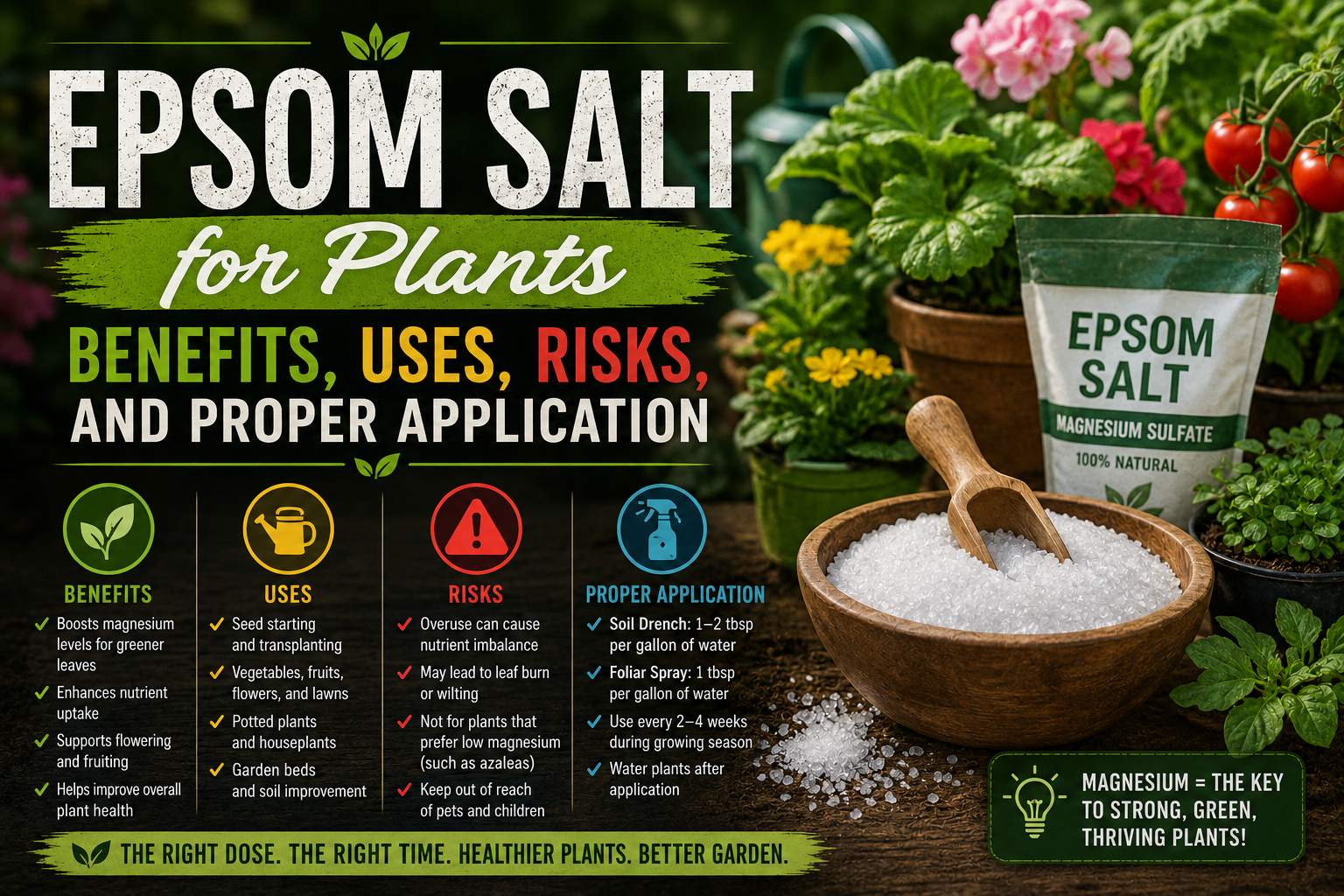
Epsom salt for plants is a gardening supplement made of magnesium sulfate, a compound that provides two essential plant nutrients: magnesium and sulfur. When used appropriately, it can help correct magnesium deficiencies, improve chlorophyll production, and support healthy plant growth. However, it is not a universal fertilizer and should only be applied when plants actually need these nutrients.
Many gardeners use epsom salt for plants to encourage greener foliage, improve flowering, and support fruit production. Understanding when and how to use it can help you achieve better results while avoiding common mistakes that may harm plant health.
What Is Epsom Salt?
Epsom salt is a naturally occurring mineral compound consisting of magnesium, sulfur, and oxygen. Unlike table salt, it does not contain sodium chloride and will not make soil salty when used properly.
Nutrient Composition of Epsom Salt
| Component | Function in Plants |
|---|---|
| Magnesium (Mg) | Essential for chlorophyll production and photosynthesis |
| Sulfur (S) | Supports protein formation and enzyme activity |
| Oxygen (O) | Part of the compound structure |
Magnesium is particularly important because it sits at the center of every chlorophyll molecule, making it critical for healthy green growth.
Benefits of Epsom Salt for Plants
When plants suffer from magnesium deficiency, epsom salt can provide noticeable benefits.
1. Improves Chlorophyll Production
Magnesium helps plants produce chlorophyll, which is responsible for their green color and ability to convert sunlight into energy.
Benefits include:
- Greener leaves
- Improved photosynthesis
- Increased plant vigor
2. Supports Flower and Fruit Development
Certain flowering and fruiting plants may benefit from additional magnesium when soil levels are low.
Potential benefits:
- Better flower production
- Improved fruit development
- Enhanced overall plant performance
3. Helps Correct Magnesium Deficiency
Plants experiencing magnesium deficiency often display:
- Yellowing between leaf veins
- Pale foliage
- Reduced growth
- Premature leaf drop
Epsom salt can help restore magnesium levels when deficiency is confirmed.
4. Improves Nutrient Uptake
Adequate magnesium can support a plant’s ability to utilize nutrients such as:
- Nitrogen
- Phosphorus
- Potassium
This can contribute to healthier overall growth.
Which Plants Benefit Most from Epsom Salt?
Not all plants need epsom salt. It is most useful for plants growing in magnesium-deficient soils.
Plants That May Benefit
| Plant Type | Potential Benefits |
|---|---|
| Tomatoes | Improved growth when magnesium deficient |
| Peppers | Better foliage development |
| Roses | Greener leaves and healthier blooms |
| Hydrangeas | Support for healthy growth |
| Houseplants | Correction of magnesium deficiencies |
| Citrus Trees | Improved leaf color and vigor |
Plants That Usually Do Not Need Epsom Salt
| Plant Type | Reason |
|---|---|
| Native plants | Adapted to local soil conditions |
| Succulents | Low nutrient requirements |
| Cacti | Generally require minimal supplementation |
| Plants in nutrient-rich soil | Additional magnesium may be unnecessary |
Signs Your Plants May Need Epsom Salt
Before applying epsom salt, identify whether magnesium deficiency is actually present.
Common Symptoms
| Symptom | Possible Cause |
|---|---|
| Yellowing between leaf veins | Magnesium deficiency |
| Older leaves turning yellow first | Mobile nutrient deficiency |
| Poor growth | Nutrient imbalance |
| Weak flowering | Possible magnesium shortage |
| Leaf curling | Nutrient stress |
Important Note
Many nutrient deficiencies produce similar symptoms. A soil test is the most reliable way to determine whether magnesium supplementation is necessary.
How to Use Epsom Salt for Plants
Several application methods are commonly used.
Soil Application
Mix epsom salt into the soil around the root zone.
| Plant Type | Typical Amount |
|---|---|
| Small plants | 1 tablespoon per gallon of water |
| Medium plants | 1–2 tablespoons per gallon |
| Large shrubs | Follow soil test recommendations |
Apply every 4–6 weeks during the active growing season if deficiency exists.
Foliar Spray
Foliar feeding allows magnesium to be absorbed through leaves.
Steps
- Dissolve 1 tablespoon of epsom salt in 1 gallon of water.
- Pour into a spray bottle or garden sprayer.
- Spray leaves thoroughly.
- Apply during cooler parts of the day.
Garden Bed Treatment
For larger garden areas:
| Area | Suggested Rate |
|---|---|
| 100 square feet | Approximately 1 cup of epsom salt |
Water thoroughly after application.
Epsom Salt for Tomato Plants
Tomatoes are among the plants most commonly associated with epsom salt use.
Potential Benefits
- Correction of magnesium deficiency
- Improved leaf color
- Better photosynthesis
- Stronger plant growth
How to Apply
| Growth Stage | Application |
|---|---|
| Planting time | Light soil incorporation if needed |
| Vegetative growth | Monthly magnesium supplementation if deficient |
| Fruiting stage | Foliar spray as required |
Common Myth
Epsom salt does not prevent blossom end rot.
Blossom end rot is primarily caused by calcium deficiency and inconsistent watering, not magnesium shortages.
Epsom Salt for Roses
Many rose growers use epsom salt to support healthy foliage and flowering.
Possible Advantages
- Improved leaf color
- Enhanced photosynthesis
- Stronger cane development
- Increased bloom production when magnesium is deficient
Application Schedule
| Season | Application |
|---|---|
| Early spring | Soil application |
| Mid-season | Supplemental feeding if needed |
| Late season | Avoid excessive applications |
Epsom Salt for Houseplants
Indoor plants can occasionally develop magnesium deficiencies due to repeated watering and nutrient depletion.
Suitable Houseplants
- Pothos
- Philodendron
- Peace lilies
- Spider plants
- Rubber plants
Houseplant Feeding Guide
| Application Method | Frequency |
|---|---|
| Diluted watering solution | Every 1–2 months |
| Foliar spray | As needed |
| Soil drench | For confirmed deficiencies |
Epsom Salt vs Traditional Fertilizer
One of the biggest misconceptions is that epsom salt can replace fertilizer.
Lawn Care Guide: Proven Tips for a Healthier, Greener Lawn Year-Round
Comparison Table
| Feature | Epsom Salt | Complete Fertilizer |
|---|---|---|
| Provides magnesium | Yes | Sometimes |
| Provides sulfur | Yes | Often |
| Provides nitrogen | No | Yes |
| Provides phosphorus | No | Yes |
| Provides potassium | No | Yes |
| Complete plant nutrition | No | Yes |
Epsom salt should be viewed as a supplement rather than a complete feeding solution.
Potential Risks of Overusing Epsom Salt
Applying too much magnesium can create nutrient imbalances.
Possible Problems
| Issue | Result |
|---|---|
| Excess magnesium | Reduced calcium uptake |
| Nutrient imbalance | Poor plant performance |
| Salt buildup | Root stress |
| Unnecessary application | Wasted effort and expense |
Warning Signs of Overuse
- Leaf burn
- Poor growth despite feeding
- Nutrient deficiencies appearing after treatment
- Soil imbalance
Common Mistakes When Using Epsom Salt for Plants
| Mistake | Why It Happens | How to Fix It |
|---|---|---|
| Using it as a fertilizer replacement | Misunderstanding its purpose | Use a complete fertilizer when needed |
| Applying without testing soil | Assumption of deficiency | Conduct a soil test first |
| Overapplying | Belief that more is better | Follow recommended rates |
| Treating every plant the same | Different nutrient needs | Tailor applications to plant species |
| Using for blossom end rot | Common gardening myth | Address calcium and watering issues |
| Applying too frequently | Desire for faster results | Limit applications appropriately |
Expert Tips for Using Epsom Salt for Plants
- Test soil before adding supplements whenever possible.
- Use epsom salt only when magnesium deficiency is likely or confirmed.
- Apply during active growth periods for best results.
- Water thoroughly after soil applications.
- Avoid combining high-magnesium amendments unnecessarily.
- Monitor plants for improvement within several weeks.
- Use foliar sprays for quicker magnesium absorption.
- Continue balanced fertilization practices.
- Keep records of application rates and plant responses.
- Focus on overall soil health rather than relying on single supplements.
Frequently Asked Questions
Is epsom salt good for all plants?
No. Epsom salt for plants is beneficial primarily when magnesium or sulfur deficiencies exist. Many plants growing in healthy soil do not need additional magnesium.
How often should I use epsom salt for plants?
Most gardeners apply it every 4–6 weeks during the growing season when a deficiency is present. Avoid routine use without evidence of need.
Can too much epsom salt harm plants?
Yes. Excessive applications can interfere with nutrient balance, particularly calcium uptake, and may negatively affect plant health.
Does epsom salt make plants grow faster?
Not necessarily. It can improve growth in magnesium-deficient plants, but it will not dramatically accelerate growth in healthy plants.
Can I sprinkle epsom salt directly on soil?
Yes, but watering afterward is important. Dissolving it in water often improves distribution and absorption.
Does epsom salt help tomatoes produce more fruit?
If magnesium deficiency is limiting growth, correcting that deficiency may improve production. However, epsom salt is not a guaranteed yield booster.
Is epsom salt safe for organic gardening?
Epsom salt is generally accepted for use in many organic gardening systems, but it should still be applied only when needed.
Can I use epsom salt on indoor plants?
Yes. Houseplants with magnesium deficiencies may benefit from occasional diluted applications.
Conclusion
Epsom salt for plants can be a valuable gardening tool when used correctly. Because it supplies magnesium and sulfur, it can help plants suffering from nutrient deficiencies develop greener foliage, stronger growth, and improved flowering. However, it is not a complete fertilizer and should never replace balanced plant nutrition. The most effective approach is to test your soil, identify actual deficiencies, and apply epsom salt only where it provides a clear benefit. Used thoughtfully, epsom salt for plants can become a useful part of a healthy, science-based gardening routine.