Spider Plant Care
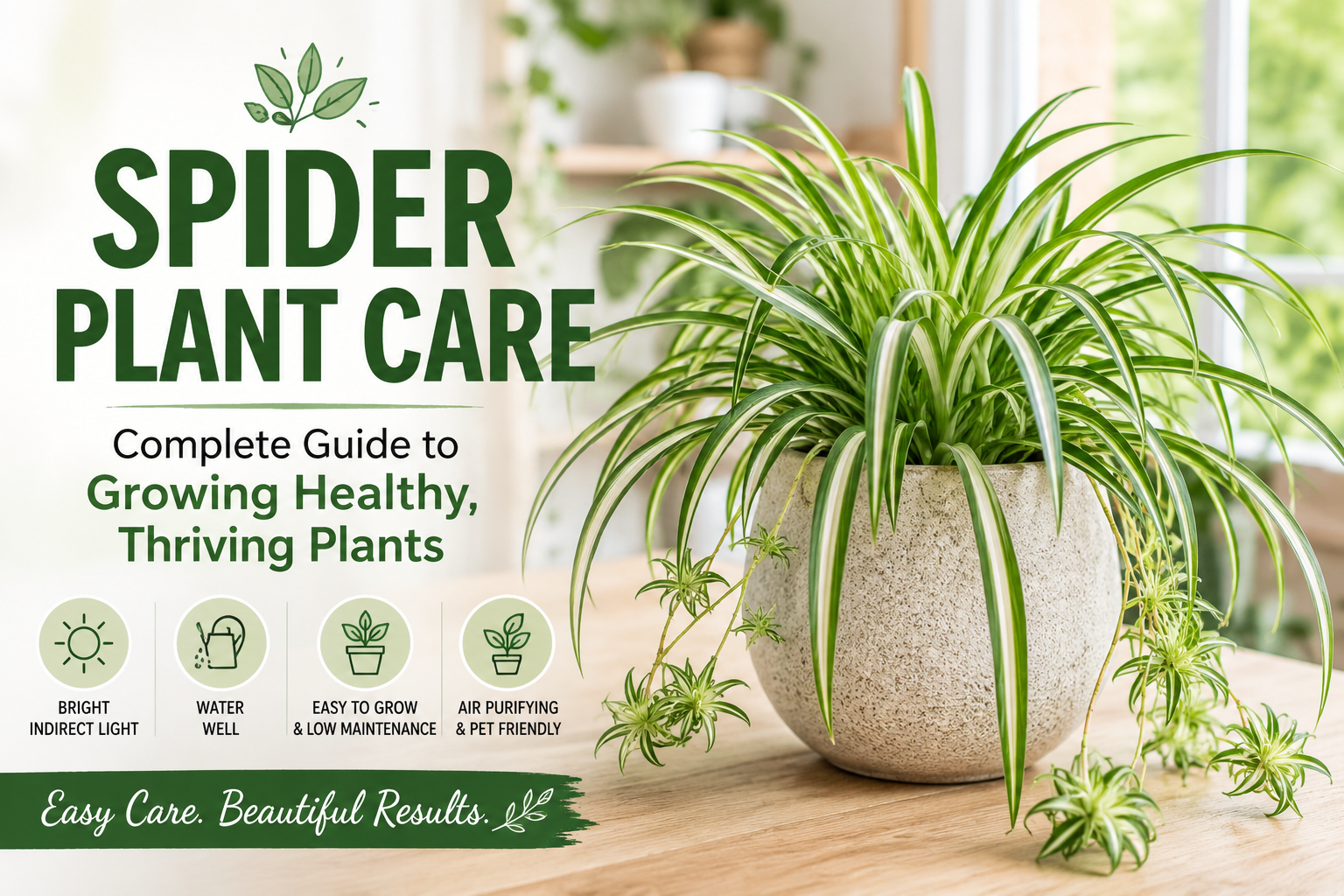
Spider plant care is simple, making this popular houseplant an excellent choice for both beginners and experienced plant owners. Known for its arching green leaves and easy-growing plantlets, the spider plant thrives in a wide range of indoor conditions when given proper light, water, and occasional maintenance. Understanding its basic needs helps prevent common problems and encourages vigorous growth for years.
Whether you’re growing a mature specimen in a hanging basket or propagating baby spider plants, proper care ensures attractive foliage, healthy roots, and consistent growth.
Understanding Spider Plants
Spider plants (Chlorophytum comosum) are among the most adaptable houseplants available. Native to southern Africa, they are valued for their resilience, air-purifying qualities, and ability to produce numerous offshoots.
Key Characteristics
| Feature | Details |
|---|---|
| Botanical Name | Chlorophytum comosum |
| Common Name | Spider Plant |
| Plant Type | Perennial Houseplant |
| Mature Size | 12–24 inches tall and wide |
| Light Needs | Bright indirect light |
| Water Needs | Moderate |
| Pet Safety | Non-toxic to cats and dogs |
| Growth Rate | Fast |
| Propagation | Plantlets, division |
Ideal Growing Conditions
Creating the right environment is the foundation of successful spider plant care.
Light Requirements
Spider plants perform best in bright, indirect sunlight. While they tolerate lower light levels, growth may slow, and variegated varieties can lose some of their coloration.
Best Light Locations
| Location | Suitability |
|---|---|
| East-facing window | Excellent |
| North-facing window | Good |
| South-facing window with curtain | Excellent |
| Direct afternoon sun | Poor |
| Dark corner | Fair |
Signs of Incorrect Lighting
| Symptom | Likely Cause |
|---|---|
| Pale leaves | Too much direct sun |
| Slow growth | Insufficient light |
| Brown leaf tips | Excess sunlight or stress |
| Faded variegation | Low light |
Watering Spider Plants Correctly
Overwatering causes more spider plant problems than underwatering.
Watering Guidelines
Allow the top 1–2 inches of soil to dry before watering again. Water thoroughly until excess moisture drains from the pot.
Seasonal Watering Schedule
| Season | Watering Frequency |
|---|---|
| Spring | Every 7–10 days |
| Summer | Every 5–7 days |
| Fall | Every 10–14 days |
| Winter | Every 2–3 weeks |
Water Quality Matters
Spider plants can be sensitive to fluoride and chlorine found in tap water.
For best results:
- Use filtered water when possible.
- Let tap water sit overnight before use.
- Flush soil occasionally to remove mineral buildup.
Choosing the Right Soil
Well-draining soil is essential for healthy roots.
Recommended Soil Mix
| Component | Percentage |
|---|---|
| Potting Soil | 60% |
| Perlite | 20% |
| Coco Coir or Peat Moss | 20% |
This combination retains moisture while preventing waterlogged roots.
Soil pH
Spider plants prefer slightly acidic to neutral soil:
| pH Range | Suitability |
|---|---|
| 6.0–7.0 | Ideal |
| Below 5.5 | Less suitable |
| Above 7.5 | May affect nutrient uptake |
Temperature and Humidity Needs
Spider plants adapt well to typical indoor conditions.
Ideal Conditions
| Factor | Recommended Range |
|---|---|
| Temperature | 65–80°F (18–27°C) |
| Minimum Temperature | 50°F (10°C) |
| Humidity | 40–60% |
Increasing Humidity
If indoor air is dry:
- Use a pebble tray.
- Group plants together.
- Run a humidifier nearby.
- Mist occasionally during very dry periods.
Fertilizing for Healthy Growth
Spider plants are not heavy feeders but benefit from occasional fertilization.
Peace Lily Plant Care Guide: Growing, Watering, and Troubleshooting
Fertilizer Schedule
| Season | Frequency |
|---|---|
| Spring | Monthly |
| Summer | Monthly |
| Fall | Every 6–8 weeks |
| Winter | Usually unnecessary |
Best Fertilizer Types
| Fertilizer | Benefit |
|---|---|
| Balanced 10-10-10 | General growth |
| Balanced 20-20-20 (diluted) | Vigorous development |
| Organic houseplant fertilizer | Gentle feeding |
Avoid excessive fertilizer, which often causes brown leaf tips.
Repotting Spider Plants
Spider plants develop thick tuberous roots and eventually outgrow their containers.
When to Repot
Look for these signs:
- Roots emerging from drainage holes
- Water draining immediately after watering
- Slowed growth
- Cracked or distorted pots
Repotting Timeline
| Plant Age | Typical Repotting Frequency |
|---|---|
| Young Plants | Every 1–2 years |
| Mature Plants | Every 2–3 years |
Repotting Steps
- Select a pot 1–2 inches larger.
- Remove the plant carefully.
- Loosen compacted roots.
- Place in fresh potting mix.
- Water thoroughly after repotting.
Spider Plant Propagation
One of the most rewarding aspects of spider plant care is propagation.
Propagation by Plantlets
Spider plants produce baby plants on long stems.
Water Method
- Cut a healthy plantlet.
- Place the base in water.
- Wait for roots to develop.
- Transfer to soil.
Direct Soil Method
- Place the plantlet in moist potting soil.
- Keep soil lightly moist.
- Roots usually establish within a few weeks.
Propagation Comparison
| Method | Difficulty | Success Rate |
|---|---|---|
| Water Rooting | Easy | High |
| Direct Soil | Easy | High |
| Division | Moderate | Very High |
Common Spider Plant Problems
Even resilient plants occasionally develop issues.
Brown Leaf Tips
Causes
- Fluoride or chlorine exposure
- Low humidity
- Overfertilization
- Irregular watering
Solutions
- Use filtered water.
- Reduce fertilizer.
- Increase humidity.
- Maintain consistent watering.
Yellow Leaves
| Cause | Solution |
|---|---|
| Overwatering | Let soil dry more between waterings |
| Poor drainage | Improve soil drainage |
| Root rot | Remove affected roots |
Root Rot
Symptoms include:
- Soft roots
- Foul smell
- Wilting despite moist soil
Immediate repotting into fresh soil is usually necessary.
Common Mistakes
| Mistake | Why It Happens | How to Fix It |
|---|---|---|
| Overwatering | Fear of underwatering | Check soil before watering |
| Using heavy soil | Poor drainage awareness | Use airy potting mix |
| Too much direct sun | Misunderstanding light needs | Move to indirect light |
| Overfertilizing | Trying to speed growth | Feed sparingly |
| Ignoring mineral buildup | Tap water deposits | Flush soil periodically |
| Delaying repotting | Underestimating root growth | Repot when rootbound |
Popular Spider Plant Varieties
Variegated Spider Plant
Green leaves with white edges.
Reverse Variegated Spider Plant
White center stripe with green margins.
Curly Spider Plant (Bonnie)
Distinct curled foliage and compact growth.
Variety Comparison
| Variety | Appearance | Growth Habit |
|---|---|---|
| Variegatum | White edges | Arching |
| Vittatum | White center stripe | Upright then arching |
| Bonnie | Curled leaves | Compact |
| Solid Green | Entirely green foliage | Fast-growing |
Expert Tips for Better Growth
- Rotate the plant every few weeks for even growth.
- Use containers with drainage holes.
- Remove dead leaves promptly.
- Clean leaves occasionally with a damp cloth.
- Avoid placing plants near heating vents.
- Allow soil to partially dry between waterings.
- Repot before roots become severely crowded.
- Use diluted fertilizer rather than full-strength applications.
Seasonal Spider Plant Care
Spring
- Resume fertilizing.
- Repot if needed.
- Begin propagation.
Summer
- Monitor moisture levels more frequently.
- Protect from intense afternoon sun.
Fall
- Reduce feeding.
- Check for root crowding.
Winter
- Water less often.
- Keep away from cold drafts.
- Avoid excessive fertilization.
Benefits of Growing Spider Plants
| Benefit | Explanation |
|---|---|
| Beginner Friendly | Easy to maintain |
| Fast Growth | Produces new foliage quickly |
| Attractive Appearance | Decorative arching leaves |
| Easy Propagation | Produces numerous plantlets |
| Pet Friendly | Non-toxic to common household pets |
| Adaptable | Tolerates varied indoor conditions |
FAQs
How often should I water a spider plant?
Water when the top 1–2 inches of soil feel dry. Most indoor plants need watering every 1–2 weeks depending on temperature, humidity, and light levels.
What is the best light for spider plants?
Bright indirect light is ideal. Spider plants tolerate lower light but grow more vigorously and maintain better coloration in brighter conditions.
Why are my spider plant leaf tips turning brown?
Brown tips commonly result from fluoride in tap water, low humidity, inconsistent watering, or excess fertilizer.
Can spider plants survive in low light?
Yes, but growth may slow, and variegated leaves may lose some color intensity over time.
When should I repot a spider plant?
Repot when roots become crowded, emerge from drainage holes, or when water runs through the pot too quickly.
How do I propagate spider plant babies?
Plantlets can be rooted directly in soil or first placed in water until roots develop before transplanting.
Are spider plants safe for pets?
Yes. Spider plants are generally considered non-toxic to cats and dogs.
Why is my spider plant not producing babies?
Insufficient light, a very young plant, or excessive pot size can reduce plantlet production.
Conclusion
Successful spider plant care comes down to providing bright indirect light, well-draining soil, moderate watering, and occasional feeding. These adaptable houseplants reward minimal effort with lush foliage and abundant plantlets that can be propagated into new plants. By avoiding common mistakes such as overwatering and excessive fertilizer use, you can keep your spider plant healthy, attractive, and thriving for many years. For the best results, monitor growing conditions regularly and make small adjustments as the seasons change.