Ficus Tree
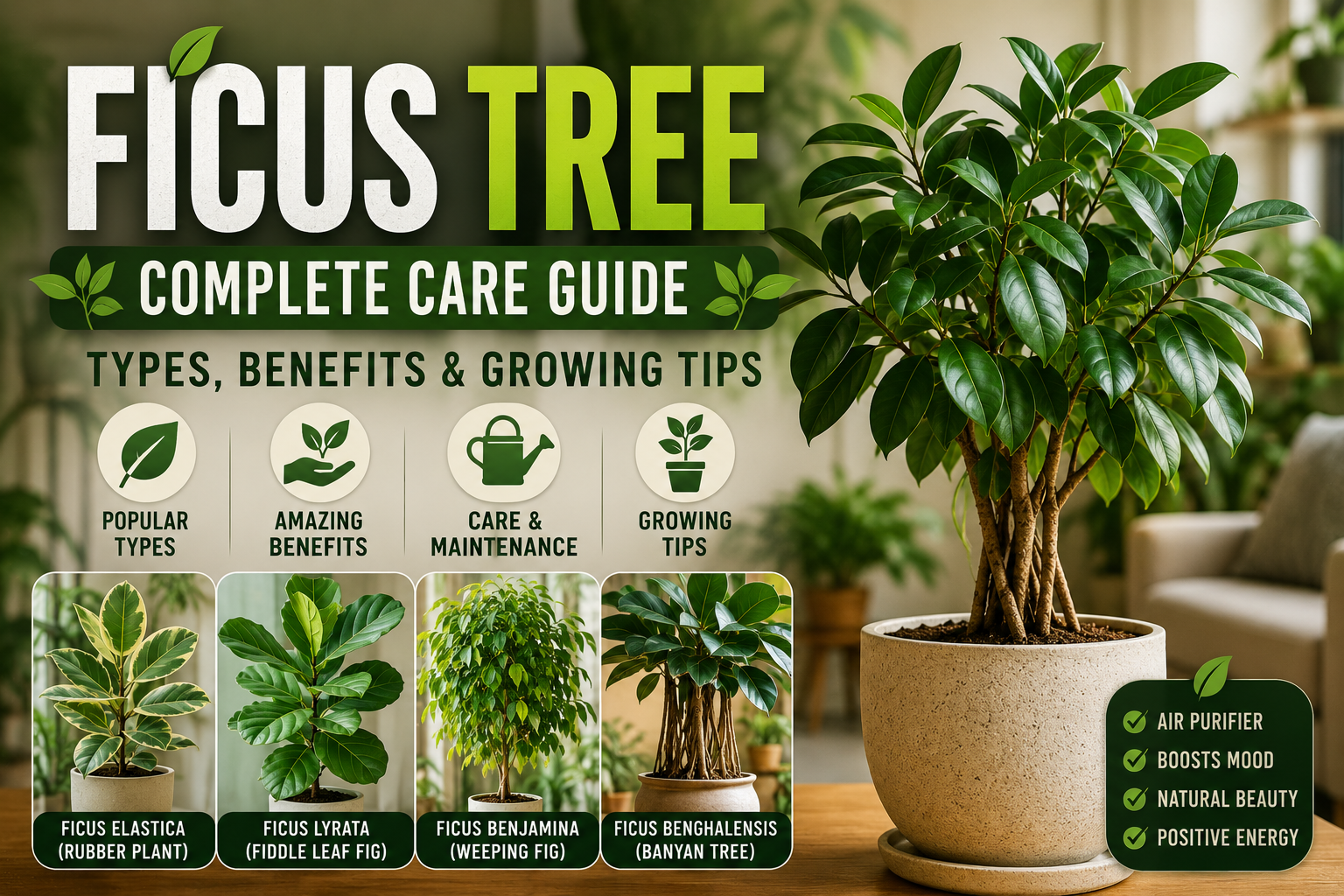
A ficus tree is one of the world’s most popular ornamental plants, admired for its lush green foliage, elegant appearance, and versatility. Belonging to the Ficus genus, which includes more than 800 species, these trees can be grown indoors as attractive houseplants or outdoors in warm climates. From the classic Weeping Fig to the trendy Fiddle Leaf Fig and the hardy Rubber Plant, every ficus tree brings natural beauty to homes, offices, and gardens.
Besides its decorative appeal, a ficus tree is relatively easy to maintain when provided with the right balance of light, water, humidity, and nutrients. Understanding its care requirements can help prevent common issues such as yellow leaves, leaf drop, and slow growth.
Types of Ficus Tree
Different species have unique growth habits and care needs.
| Ficus Variety | Scientific Name | Best Growing Location | Mature Height | Main Features |
|---|---|---|---|---|
| Weeping Fig | Ficus benjamina | Indoors & Outdoors | 6–60 ft | Graceful branches and glossy leaves |
| Rubber Plant | Ficus elastica | Indoors | 6–10 ft | Thick, dark green leaves |
| Fiddle Leaf Fig | Ficus lyrata | Indoors | 6–12 ft | Large violin-shaped leaves |
| Banyan Tree | Ficus benghalensis | Outdoors | Up to 100 ft | Massive canopy and aerial roots |
| Ginseng Ficus | Ficus microcarpa | Bonsai | 1–3 ft | Thick twisted trunk |
Benefits of Growing a Ficus Tree
A ficus tree offers more than visual appeal. It provides practical and environmental benefits that make it a favorite among gardeners.
| Benefit | Description |
|---|---|
| Attractive Appearance | Adds elegance to homes, offices, and landscapes |
| Air Quality | Helps improve indoor air quality by trapping dust |
| Easy Maintenance | Requires only basic care once established |
| Long Lifespan | Can live for decades with proper care |
| Decorative Value | Available in many sizes and leaf shapes |
| Shade | Outdoor species provide cooling shade |
How to Care for a Ficus Tree
Light
Most ficus varieties thrive in bright, indirect sunlight. Outdoor trees prefer partial to full sun depending on the species.
Watering
Allow the top 1–2 inches of soil to dry before watering again. Avoid keeping the soil constantly wet, as excessive moisture may lead to root rot.
Soil
Use fertile, well-draining soil with plenty of organic matter. A quality indoor potting mix works well for container-grown plants.
Temperature
Maintain temperatures between 60°F and 80°F (16°C–27°C). Protect the plant from frost and sudden temperature changes.
Humidity
Most indoor ficus trees appreciate moderate to high humidity. Occasional misting or using a humidifier can help in dry climates.
Fertilizer
Feed with a balanced liquid fertilizer once a month during spring and summer. Reduce feeding during fall and winter when growth slows.
Seedless Grapes: Benefits, Varieties, Nutrition, Growing Tips & Uses
Ficus Tree Care Guide
| Care Requirement | Recommendation |
|---|---|
| Light | Bright indirect sunlight |
| Water | When topsoil becomes dry |
| Soil | Well-draining, fertile soil |
| Temperature | 60–80°F (16–27°C) |
| Humidity | Moderate to high |
| Fertilizer | Monthly during growing season |
| Repotting | Every 2–3 years |
| Pruning | Once or twice yearly |
How to Plant a Ficus Tree
- Choose a pot with drainage holes.
- Fill it with a high-quality potting mix.
- Place the root ball at the same depth it was previously growing.
- Fill around the roots and gently firm the soil.
- Water thoroughly after planting.
- Place the plant in bright indirect light.
How to Prune a Ficus Tree
Pruning encourages fuller growth and removes damaged branches.
- Remove dead or diseased stems.
- Cut back long branches to maintain shape.
- Sterilize pruning tools before use.
- Prune during spring or early summer.
- Avoid removing more than one-third of the plant at one time.
Propagating a Ficus Tree
Most ficus trees are propagated through stem cuttings.
Steps
- Take a healthy cutting 4–6 inches long.
- Remove lower leaves.
- Dip the cut end in rooting hormone (optional).
- Plant in moist potting mix.
- Keep warm and humid until roots develop.
Indoor vs Outdoor Ficus Tree
| Feature | Indoor | Outdoor |
|---|---|---|
| Size | Smaller | Much larger |
| Light | Bright indirect | Partial to full sun |
| Growth Rate | Moderate | Faster |
| Maintenance | Easier | Requires occasional pruning |
| Lifespan | Long | Very long |
Common Problems and Solutions
| Problem | Cause | Solution |
|---|---|---|
| Yellow Leaves | Overwatering | Reduce watering |
| Leaf Drop | Sudden movement or stress | Keep plant in one place |
| Brown Tips | Low humidity | Increase humidity |
| Slow Growth | Low light | Move to brighter location |
| Root Rot | Poor drainage | Repot into fresh soil |
Pros and Cons
| Pros | Cons |
|---|---|
| Attractive foliage | Sensitive to sudden changes |
| Easy to grow | Can drop leaves after relocation |
| Many varieties | Some species grow very large |
| Suitable indoors | Needs consistent care |
Common Mistakes
| Mistake | Why It Happens | How to Fix It |
|---|---|---|
| Overwatering | Watering too often | Allow soil to dry slightly |
| Poor Lighting | Keeping plant in dark rooms | Move near a bright window |
| Using Heavy Soil | Poor drainage | Use well-draining mix |
| Ignoring Pests | Infrequent inspections | Check leaves regularly |
| Frequent Relocation | Ficus dislikes change | Keep in a stable location |
Expert Tips
- Rotate the pot every few weeks for even growth.
- Clean leaves regularly to improve photosynthesis.
- Avoid placing the plant near air conditioners or heaters.
- Use rainwater or filtered water if tap water is very hard.
- Repot every two to three years to refresh the soil.
- Inspect regularly for spider mites, mealybugs, and scale insects.
- Prune lightly each year to encourage a fuller canopy.
- Avoid overfertilizing, as it may burn the roots.
Frequently Asked Questions
1. Is a ficus tree easy to care for?
Yes. A ficus tree is relatively easy to maintain when it receives adequate light, proper watering, and well-draining soil.
2. How often should I water a ficus tree?
Water only when the top inch or two of soil feels dry.
3. Can a ficus tree grow indoors?
Yes. Many species, including the Rubber Plant, Weeping Fig, and Fiddle Leaf Fig, are excellent indoor plants.
4. Why is my ficus tree dropping leaves?
Leaf drop is commonly caused by overwatering, underwatering, sudden temperature changes, low light, or moving the plant to a new location.
5. Does a ficus tree need direct sunlight?
Most indoor varieties prefer bright, indirect sunlight, while outdoor species tolerate more direct sun.
6. How fast does a ficus tree grow?
Growth depends on the species and conditions, but many indoor ficus trees grow between 12 and 24 inches per year.
7. When should I repot a ficus tree?
Repot every two to three years or when roots begin growing through the drainage holes.
8. Can I prune my ficus tree anytime?
The best time to prune is during spring or early summer when the plant is actively growing.
Conclusion
A ficus tree is an excellent addition to any home, office, or garden because of its beautiful foliage, adaptability, and relatively simple care requirements. Whether you choose a Weeping Fig, Rubber Plant, Fiddle Leaf Fig, or another variety, providing bright light, well-draining soil, consistent watering, and occasional pruning will help it thrive. By avoiding common care mistakes and following expert recommendations, your ficus tree can remain healthy, vibrant, and attractive for many years.