How to Prune Hydrangeas
Introduction
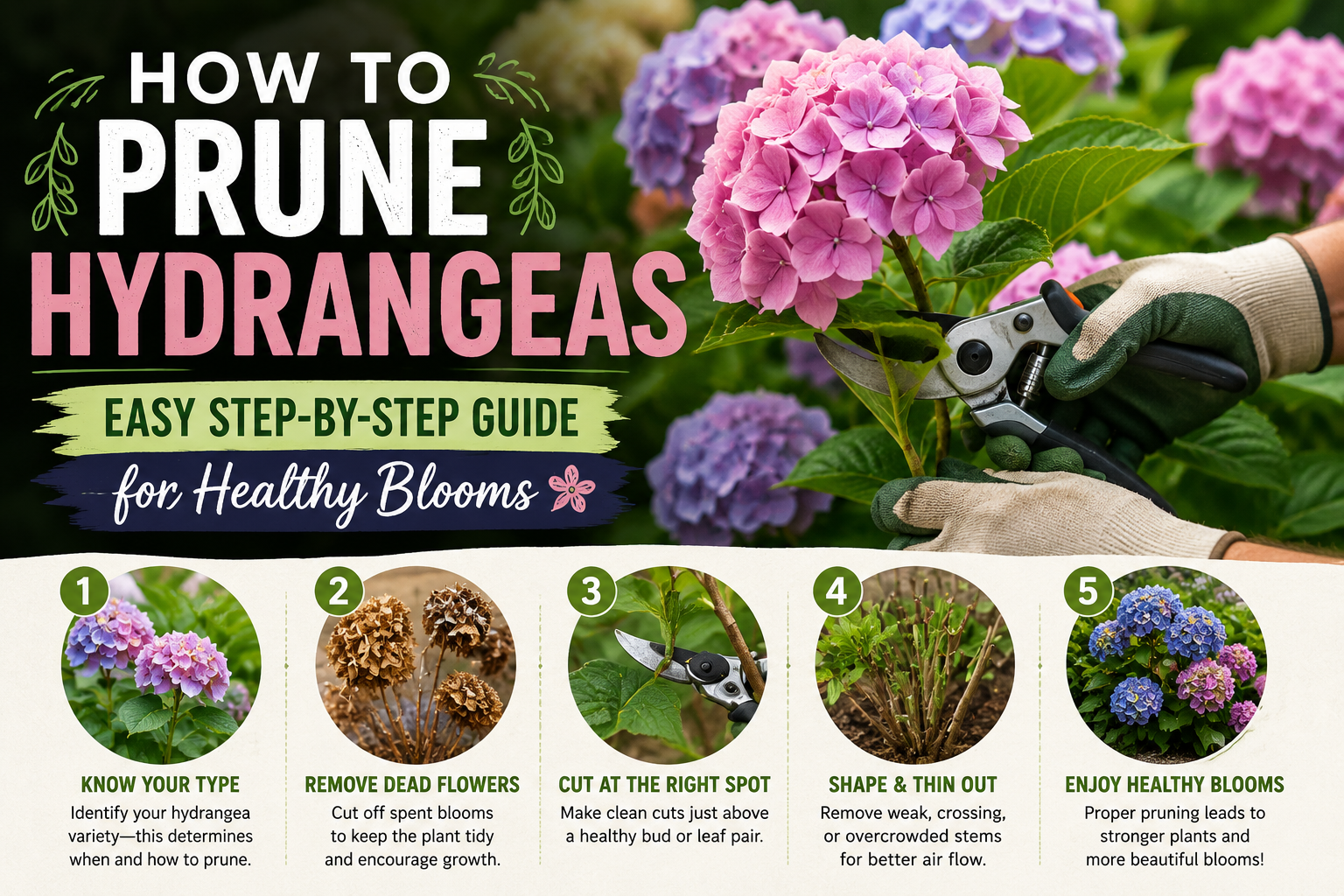
Learning how to prune hydrangeas is one of the most important steps in keeping these flowering shrubs healthy, attractive, and productive. Proper pruning removes dead or damaged wood, improves airflow, encourages vigorous new growth, and helps maintain the plant’s natural shape. However, not all hydrangeas are pruned the same way. Some bloom on old wood, while others flower on new growth. Understanding this difference ensures you don’t accidentally remove next season’s flower buds.
Why Pruning Hydrangeas Is Important
Regular pruning provides several benefits:
- Promotes healthy, vigorous growth
- Encourages larger and more abundant flowers
- Removes dead, diseased, or damaged branches
- Improves sunlight penetration and air circulation
- Helps control the plant’s size and shape
- Reduces the risk of fungal diseases
Know Your Hydrangea Type
Before you start pruning, identify which type of hydrangea you have.
| Hydrangea Variety | Blooms On | Best Time to Prune | Pruning Level |
|---|---|---|---|
| Bigleaf (Mophead) | Old Wood | After flowering | Light |
| Lacecap | Old Wood | After flowering | Light |
| Oakleaf | Old Wood | Mid to late summer | Light |
| Climbing | Old Wood | After flowering | Minimal |
| Panicle | New Wood | Late winter or early spring | Moderate |
| Smooth (Annabelle) | New Wood | Late winter or early spring | Hard pruning if desired |
Best Time to Prune Hydrangeas
Spring
Ideal for smooth and panicle hydrangeas because they bloom on new wood.
Summer
Prune bigleaf, lacecap, oakleaf, and climbing hydrangeas immediately after flowering.
Autumn
Only remove faded blooms and dead branches. Avoid heavy pruning.
Winter
Late winter is suitable for new-wood blooming varieties before new growth appears.
How to Prune Hydrangeas Step by Step
Step 1: Gather the Right Tools
You’ll need:
- Sharp bypass pruning shears
- Loppers for thick branches
- Gardening gloves
- Disinfectant to clean blades
Step 2: Inspect the Plant
Look for:
- Dead branches
- Diseased stems
- Broken limbs
- Weak or crossing branches
Remove these first.
Step 3: Cut Above Healthy Buds
Always make clean cuts about ¼ inch above outward-facing buds at a slight angle.
Step 4: Remove Older Stems
Older stems produce fewer flowers. Removing a few of the oldest can stimulate healthy new growth.
Step 5: Shape the Plant
Trim lightly to create an open, balanced structure while preserving its natural form.
Peat Moss Explained: Benefits, Uses, Pros, Cons, and Gardening Tips
How Much Should You Prune?
| Plant Condition | Recommended Pruning |
|---|---|
| Healthy | Remove 15–25% of growth |
| Overgrown | Remove up to one-third |
| Damaged | Remove affected stems completely |
| Mature Annabelle | Can be cut back to 12–18 inches |
Care After Pruning
Proper aftercare helps hydrangeas recover quickly.
| Care Task | Benefit |
|---|---|
| Deep watering | Reduces transplant stress |
| Mulching | Conserves soil moisture |
| Balanced fertilizer | Supports healthy growth |
| Weed removal | Reduces competition |
| Regular inspection | Detects pests early |
Signs You’ve Pruned Correctly
- Healthy green buds remain.
- The center of the shrub feels open.
- Dead wood has been removed.
- New shoots appear within weeks.
- The plant keeps a natural shape.
Common Mistakes
| Mistake | Why It Happens | How to Fix It |
|---|---|---|
| Pruning at the wrong time | Not knowing the hydrangea type | Identify whether it blooms on old or new wood |
| Cutting too much | Trying to reduce size quickly | Remove no more than one-third annually |
| Using dull tools | Lack of maintenance | Sharpen and disinfect pruning tools |
| Removing flower buds | Pruning old-wood varieties too late | Prune immediately after blooming |
| Ignoring diseased branches | Lack of inspection | Remove infected stems promptly |
Expert Tips
- Label your hydrangea variety when planting.
- Sterilize tools before moving to another plant.
- Prune on a dry day to reduce disease.
- Avoid pruning during extreme heat or frost.
- Mulch around the base after pruning.
- Water deeply if rainfall is limited.
- Don’t rush to remove stems that may still be alive.
FAQs
How do I know how to prune hydrangeas properly?
First identify whether your hydrangea blooms on old wood or new wood. This determines the correct pruning season and prevents accidental removal of flower buds.
Can I prune hydrangeas in the fall?
Only remove spent flowers, damaged branches, and dead wood. Save major pruning for the appropriate season.
What happens if I prune too much?
Over-pruning can reduce flowering, weaken the shrub, and delay recovery.
Should I deadhead hydrangeas?
Yes. Removing faded flowers improves appearance and encourages healthier growth, although it won’t always increase blooming.
Do all hydrangeas need pruning every year?
No. Many only require light maintenance and removal of dead or damaged stems.
Can neglected hydrangeas be restored?
Yes. Gradual pruning over two or three years is safer than removing too much growth at once.
Is it okay to prune hydrangeas after frost?
Wait until the danger of severe frost has passed before pruning new-wood varieties.
Conclusion
Understanding how to prune hydrangeas helps your plants stay healthy, produce abundant flowers, and maintain an attractive shape. Always identify your hydrangea variety before pruning, use clean and sharp tools, and remove only the necessary growth. With proper timing and care, your hydrangeas will reward you with vigorous growth and beautiful blooms year after year.