Arabian Jasmine
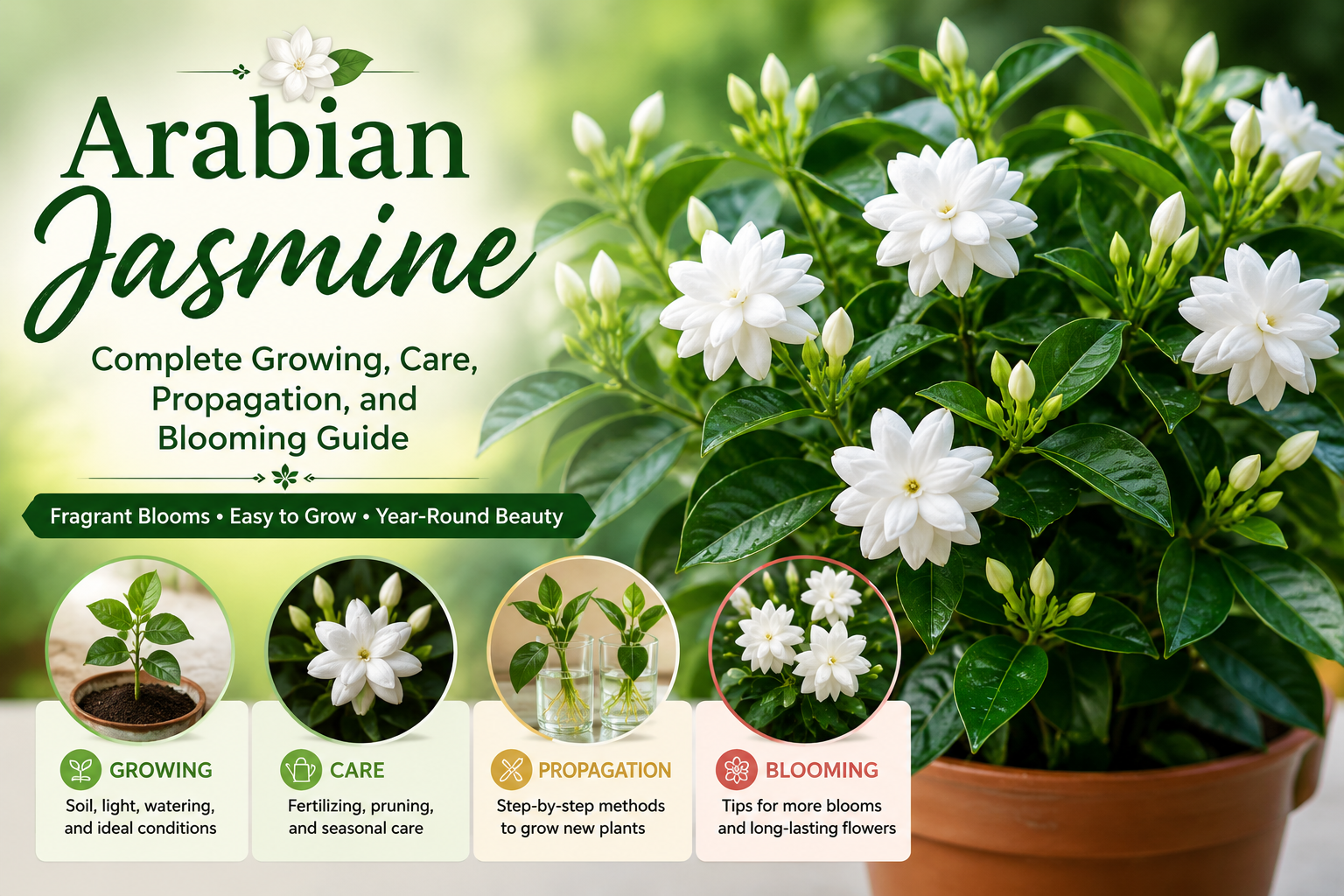
Arabian jasmine is a fragrant flowering plant prized for its intensely scented white blooms, glossy green foliage, and versatility in gardens and containers. Known scientifically as Jasminum sambac, Arabian jasmine is widely grown in tropical and subtropical regions and is valued for ornamental landscaping, perfume production, teas, and traditional cultural uses. With proper care, this evergreen shrub can produce flowers throughout much of the year, rewarding gardeners with continuous fragrance and beauty.
What Is Arabian Jasmine?
Arabian jasmine is a species of jasmine native to South and Southeast Asia. Despite its common name, it is not native to the Arabian Peninsula. It belongs to the olive family (Oleaceae) and is famous for its sweet fragrance that becomes especially noticeable during the evening.
Key Characteristics of Arabian Jasmine
| Feature | Details |
|---|---|
| Botanical Name | Jasminum sambac |
| Common Name | Arabian Jasmine |
| Plant Type | Evergreen shrub or vine |
| Mature Height | 3–10 feet |
| Flower Color | White |
| Fragrance | Strong and sweet |
| Blooming Season | Spring through fall, often year-round in warm climates |
| Sunlight Needs | Full sun to partial shade |
| Water Requirements | Moderate |
| USDA Zones | 9–11 |
| Growth Rate | Moderate to fast |
Why Arabian Jasmine Is So Popular
Arabian jasmine stands out among flowering plants because of its combination of beauty, fragrance, and practical uses.
Main Benefits
| Benefit | Description |
|---|---|
| Exceptional Fragrance | One of the most fragrant flowering plants available |
| Long Blooming Period | Produces flowers repeatedly throughout the growing season |
| Container Friendly | Thrives in pots and patio containers |
| Versatile Growth Habit | Can be trained as a shrub, hedge, or vine |
| Pollinator Attraction | Attracts bees and beneficial insects |
| Cultural Significance | Used in garlands, ceremonies, perfumes, and teas |
Types and Varieties of Arabian Jasmine
Several cultivars offer unique flower forms and growth habits.
| Variety | Flower Type | Notable Feature |
|---|---|---|
| Maid of Orleans | Single flowers | Most common and prolific bloomer |
| Grand Duke of Tuscany | Double flowers | Rose-like appearance |
| Belle of India | Semi-double flowers | Long petals and elegant blooms |
| Mysore Mulli | Single flowers | Strong fragrance and vigorous growth |
| Arabian Nights | Double blooms | Dense flower production |
Maid of Orleans
This is often considered the easiest variety for home gardeners. It blooms frequently and offers the classic Arabian jasmine fragrance.
Grand Duke of Tuscany
Known for large, layered flowers that resemble miniature roses. Although growth is slower, the blooms are highly ornamental.
Ideal Growing Conditions for Arabian Jasmine
Creating the right environment is the key to healthy growth and abundant flowering.
Sunlight Requirements
Arabian jasmine performs best with at least 6 hours of direct sunlight daily.
| Sun Exposure | Expected Results |
|---|---|
| Full Sun | Maximum blooms and vigorous growth |
| Partial Shade | Good growth but fewer flowers |
| Heavy Shade | Reduced flowering and leggy stems |
Temperature Preferences
| Temperature Range | Plant Response |
|---|---|
| 65–85°F (18–29°C) | Ideal growth |
| Above 95°F (35°C) | May require additional watering |
| Below 50°F (10°C) | Growth slows |
| Below Freezing | Potential damage or death |
Soil Requirements
Arabian jasmine prefers well-draining soil rich in organic matter.
Recommended Soil Mix
- 40% garden soil
- 30% compost
- 20% coco coir or peat moss
- 10% coarse sand or perlite
The ideal soil pH ranges from 6.0 to 7.5.
Spider Plant Care: Complete Guide to Growing Healthy, Thriving Plants
How to Plant Arabian Jasmine
Planting in the Ground
- Select a sunny location.
- Dig a hole twice as wide as the root ball.
- Mix compost into the soil.
- Place the plant at the same depth as the nursery container.
- Backfill and water thoroughly.
- Apply mulch around the base.
Planting in Containers
| Pot Requirement | Recommendation |
|---|---|
| Minimum Size | 12–16 inches wide |
| Drainage Holes | Required |
| Pot Material | Terracotta or plastic |
| Repotting Frequency | Every 2–3 years |
Arabian Jasmine Care Guide
Watering
Arabian jasmine prefers consistently moist but not soggy soil.
| Season | Watering Frequency |
|---|---|
| Spring | 1–2 times weekly |
| Summer | 2–3 times weekly |
| Fall | Once weekly |
| Winter | Reduce as needed |
A good rule is to water when the top inch of soil feels dry.
Fertilizing
Regular feeding encourages vigorous growth and flower production.
| Fertilizer Type | Application Frequency |
|---|---|
| Balanced Fertilizer (10-10-10) | Monthly |
| Organic Compost | Every 2–3 months |
| Bloom Booster | During flowering season |
Pruning
Pruning helps maintain shape and encourages branching.
Best Time to Prune
- After a major flowering cycle
- Early spring before active growth
- Remove dead or damaged stems anytime
How to Encourage More Blooms
Many gardeners grow Arabian jasmine primarily for its flowers. If blooming is limited, focus on these factors.
Blooming Checklist
| Factor | Recommendation |
|---|---|
| Sunlight | 6–8 hours daily |
| Fertilizer | Balanced feeding schedule |
| Pruning | Light trimming after blooms |
| Watering | Consistent moisture |
| Air Circulation | Avoid overcrowding |
Expert Insight
Excessive nitrogen often produces lush leaves but fewer flowers. Choose a fertilizer that supports flowering rather than leaf growth.
Propagating Arabian Jasmine
Propagation allows gardeners to create new plants from an existing specimen.
Propagation by Stem Cuttings
This is the most reliable method.
Steps
- Select a healthy stem 4–6 inches long.
- Remove lower leaves.
- Dip the cut end in rooting hormone.
- Place in moist rooting medium.
- Maintain humidity.
- Roots typically develop within 3–6 weeks.
Propagation Timeline
| Stage | Typical Duration |
|---|---|
| Cutting Preparation | 10 minutes |
| Root Formation | 3–6 weeks |
| Potting Up | 6–8 weeks |
| Mature Growth | Several months |
Common Problems and Solutions
Even healthy Arabian jasmine plants occasionally face challenges.
Common Mistakes
| Mistake | Why It Happens | How to Fix It |
|---|---|---|
| Overwatering | Fear of drought stress | Allow soil surface to dry slightly before watering |
| Too Much Shade | Poor planting location | Move to a sunnier area |
| Excess Nitrogen | Incorrect fertilizer choice | Use a bloom-promoting fertilizer |
| Poor Drainage | Heavy soil or containers | Improve soil structure and drainage |
| Skipping Pruning | Lack of maintenance | Prune regularly after flowering |
| Root-Bound Containers | Pot too small | Repot into a larger container |
Yellow Leaves
Possible causes include:
- Overwatering
- Nutrient deficiencies
- Poor drainage
- Temperature stress
Lack of Flowers
Potential reasons include:
- Insufficient sunlight
- Excess nitrogen
- Improper pruning
- Young plant age
Pest Issues
| Pest | Symptoms | Treatment |
|---|---|---|
| Aphids | Distorted growth | Insecticidal soap |
| Spider Mites | Fine webbing | Increase humidity and use miticides |
| Whiteflies | Yellowing leaves | Sticky traps and insecticidal soap |
| Mealybugs | White cottony masses | Manual removal and horticultural oil |
Arabian Jasmine in Containers
Container gardening is one of the most effective ways to grow Arabian jasmine in smaller spaces.
Advantages
| Advantage | Benefit |
|---|---|
| Mobility | Move indoors during cold weather |
| Better Soil Control | Customize growing medium |
| Decorative Appeal | Enhances patios and balconies |
| Easier Maintenance | Simplifies watering and pruning |
Container Care Tips
- Rotate the pot regularly for even growth.
- Use high-quality potting mix.
- Avoid water accumulation in saucers.
- Repot when roots circle the container.
Uses of Arabian Jasmine
Arabian jasmine offers value beyond ornamental gardening.
Popular Uses
| Use | Description |
|---|---|
| Landscaping | Shrubs, hedges, trellises |
| Containers | Patios and balconies |
| Perfume Production | Source of fragrant oils |
| Floral Garlands | Traditional decorations |
| Tea Flavoring | Adds fragrance to tea blends |
| Cut Flowers | Indoor floral arrangements |
Seasonal Care Calendar
| Season | Primary Tasks |
|---|---|
| Spring | Fertilize, prune lightly, increase watering |
| Summer | Monitor moisture and pests |
| Fall | Reduce feeding and perform maintenance pruning |
| Winter | Protect from cold and reduce watering |
Expert Tips for Growing Arabian Jasmine
- Place plants where evening fragrance can be enjoyed near patios or windows.
- Mulch around outdoor plants to conserve moisture.
- Use rainwater when possible if local water is highly alkaline.
- Remove spent flowers to encourage continued blooming.
- Inspect plants weekly for early signs of pests.
- Train stems on supports for a vine-like appearance.
- Repot container plants before they become severely root-bound.
- Maintain consistent watering during flowering periods.
FAQs
Is Arabian jasmine easy to grow?
Yes. Arabian jasmine is relatively easy to grow when provided with adequate sunlight, well-draining soil, and consistent watering.
How often does Arabian jasmine bloom?
Arabian jasmine can bloom repeatedly throughout the growing season and may flower nearly year-round in warm climates.
Can Arabian jasmine grow indoors?
Yes. It can grow indoors near a bright, sunny window, though outdoor conditions generally produce more flowers.
Why is my Arabian jasmine not flowering?
Common causes include insufficient sunlight, excess nitrogen fertilizer, improper pruning, or inadequate plant maturity.
How fast does Arabian jasmine grow?
Growth is typically moderate to fast under favorable conditions, especially in warm climates with regular feeding.
Does Arabian jasmine need full sun?
Arabian jasmine performs best with full sun but can tolerate partial shade. More sunlight usually means more flowers.
Can Arabian jasmine survive winter?
In frost-free regions, it survives outdoors year-round. In colder climates, container plants should be moved indoors before freezing temperatures arrive.
What is the best fertilizer for Arabian jasmine?
A balanced fertilizer supplemented with bloom-promoting nutrients works best for supporting healthy growth and abundant flowering.
Conclusion
Arabian jasmine remains one of the most rewarding flowering plants for home gardeners due to its exceptional fragrance, attractive blooms, and relatively simple care requirements. By providing adequate sunlight, well-draining soil, consistent moisture, and regular pruning, gardeners can enjoy months of beautiful flowers and rich scent. Whether grown in the ground, on a trellis, or in containers, Arabian jasmine delivers lasting ornamental value and remains an excellent choice for anyone seeking a fragrant and reliable flowering plant.