
Introduction
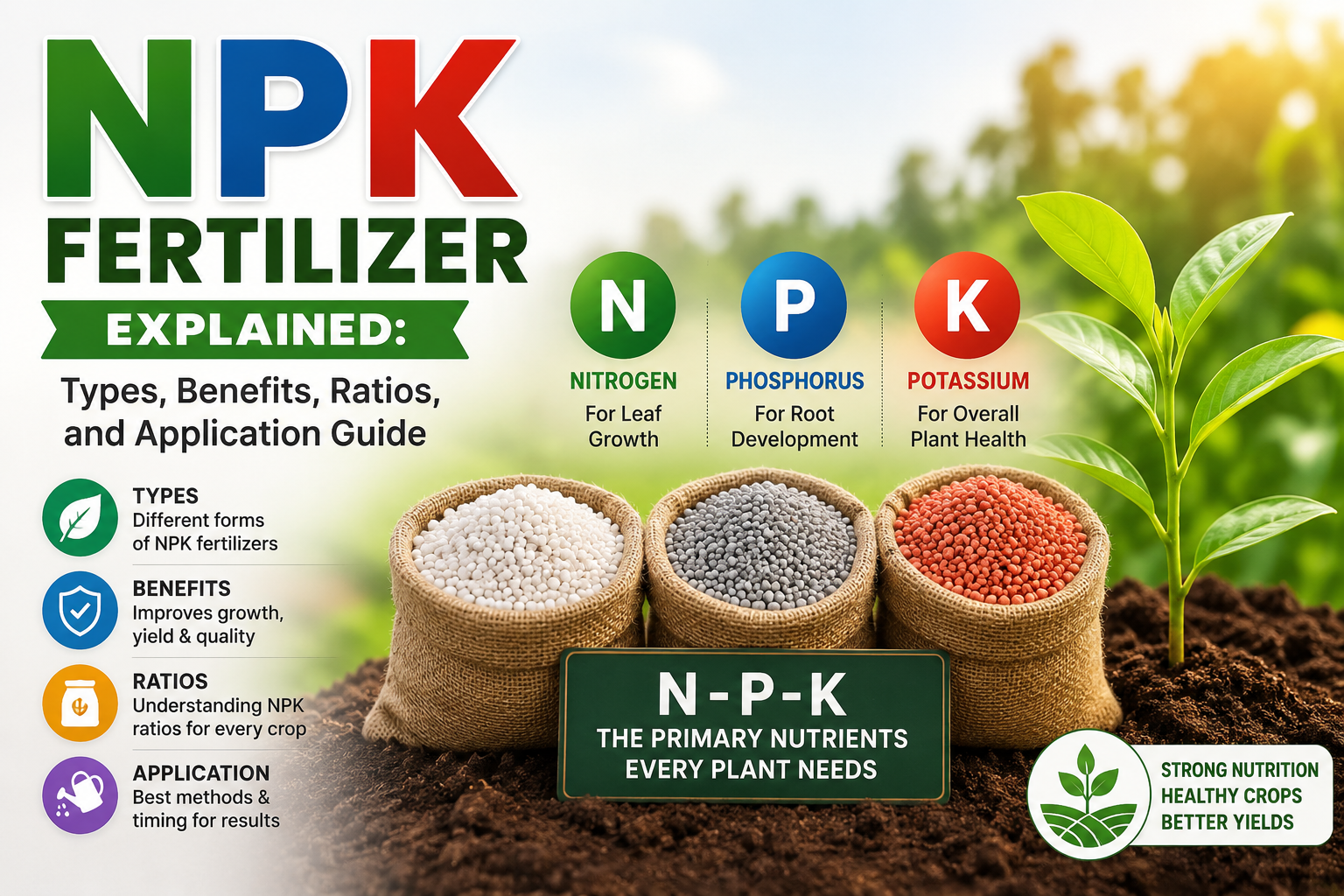
NPK fertilizer is a plant nutrient product that supplies three essential macronutrients: nitrogen (N), phosphorus (P), and potassium (K). These nutrients support leaf growth, root development, flowering, fruit production, and overall plant health. Whether you are growing vegetables, maintaining a lawn, managing crops, or caring for indoor plants, understanding NPK fertilizer is one of the most important steps toward achieving better growth and higher yields.
The right fertilizer ratio can improve plant performance, while the wrong one can lead to nutrient deficiencies, poor growth, or wasted money. This guide explains everything you need to know about NPK fertilizer, including how it works, how to choose the right formula, and how to apply it effectively.
What Is NPK Fertilizer?
NPK fertilizer is a fertilizer blend containing varying amounts of:
| Nutrient | Symbol | Main Function |
|---|---|---|
| Nitrogen | N | Promotes leafy growth and green color |
| Phosphorus | P | Supports root development, flowering, and seed production |
| Potassium | K | Improves overall plant health, stress tolerance, and fruit quality |
The numbers displayed on fertilizer packaging represent the percentage of each nutrient.
For example:
| Fertilizer Grade | Nitrogen | Phosphorus | Potassium |
|---|---|---|---|
| 10-10-10 | 10% | 10% | 10% |
| 20-10-10 | 20% | 10% | 10% |
| 5-10-5 | 5% | 10% | 5% |
| 15-30-15 | 15% | 30% | 15% |
A 50 kg bag of 10-10-10 fertilizer contains 5 kg nitrogen, 5 kg phosphorus, and 5 kg potassium.
Why Plants Need NPK Fertilizer
Plants require numerous nutrients, but nitrogen, phosphorus, and potassium are needed in the largest amounts.
Nitrogen Benefits
Nitrogen helps:
- Produce chlorophyll
- Promote rapid vegetative growth
- Increase leaf size
- Improve plant color
Nitrogen deficiency often causes yellow leaves and slow growth.
Phosphorus Benefits
Phosphorus helps:
- Develop strong roots
- Improve flowering
- Increase fruit and seed production
- Support energy transfer within plants
Deficiency may result in weak roots and reduced flowering.
Snake Plant Benefits: Air Purification, Wellness, and Easy Indoor Growth
Potassium Benefits
Potassium helps:
- Improve disease resistance
- Enhance drought tolerance
- Strengthen stems
- Improve fruit quality
Deficient plants often show weak growth and leaf edge discoloration.
Understanding NPK Ratios
Different plants require different nutrient balances.
Common NPK Ratios and Their Uses
| Ratio | Best For | Primary Benefit |
|---|---|---|
| 10-10-10 | General-purpose use | Balanced nutrition |
| 20-20-20 | Fast-growing plants | Complete feeding |
| 5-10-10 | Flowering plants | Increased blooms |
| 12-24-12 | Root establishment | Strong root growth |
| 30-10-10 | Lawns and foliage plants | Rapid green growth |
| 15-15-15 | Gardens and landscapes | Balanced maintenance |
Choosing the correct ratio depends on plant type, growth stage, and soil nutrient levels.
Types of NPK Fertilizer
Granular NPK Fertilizer
Granular fertilizers are dry pellets spread on soil.
Benefits:
- Easy storage
- Long-lasting effects
- Suitable for large areas
Best for:
- Lawns
- Gardens
- Agricultural fields
Water-Soluble NPK Fertilizer
These fertilizers dissolve in water and are applied through watering systems.
Benefits:
- Fast nutrient uptake
- Precise feeding
- Ideal for container plants
Best for:
- Hydroponics
- Greenhouses
- Indoor plants
Slow-Release NPK Fertilizer
Slow-release products gradually release nutrients over time.
Benefits:
- Fewer applications
- Reduced nutrient loss
- Consistent feeding
Best for:
- Landscape plants
- Trees
- Shrubs
Liquid NPK Fertilizer
Liquid formulas provide quick nutrient availability.
Benefits:
- Rapid plant response
- Easy application
- Effective for correcting deficiencies
Best for:
- Vegetables
- Houseplants
- Container gardening
Choosing the Right NPK Fertilizer
By Plant Type
| Plant Type | Recommended NPK Ratio |
|---|---|
| Lawn Grass | 30-10-10 or similar |
| Vegetables | 10-10-10 or 15-15-15 |
| Flowering Plants | 5-10-10 |
| Fruit Trees | 10-10-10 or 12-12-12 |
| Houseplants | 20-20-20 diluted |
| Seedlings | 10-52-10 or starter blends |
By Growth Stage
| Growth Stage | Nutrient Priority |
|---|---|
| Seedling | Phosphorus |
| Vegetative Growth | Nitrogen |
| Flowering | Phosphorus |
| Fruiting | Potassium |
| Maintenance | Balanced NPK |
How to Apply NPK Fertilizer
Proper application is critical for maximizing results.
Step 1: Test the Soil
A soil test identifies nutrient deficiencies and prevents over-fertilization.
Step 2: Read Product Instructions
Different products have different nutrient concentrations and application rates.
Step 3: Apply Evenly
Distribute fertilizer uniformly across the growing area.
Step 4: Water Properly
Most granular fertilizers should be watered after application.
Step 5: Monitor Plant Response
Observe growth, leaf color, flowering, and fruit production.
NPK Fertilizer Application Guide
| Area | Frequency | Notes |
|---|---|---|
| Lawn | Every 6–8 weeks | During active growth |
| Vegetable Garden | Every 3–4 weeks | Follow crop requirements |
| Flower Beds | Every 4–6 weeks | Increase phosphorus during blooming |
| Houseplants | Monthly | Use diluted solutions |
| Fruit Trees | 2–3 times annually | Apply around drip line |
Benefits of NPK Fertilizer
| Benefit | Impact |
|---|---|
| Faster Growth | Improved vegetative development |
| Better Roots | Stronger plant establishment |
| Higher Yields | Increased fruit and vegetable production |
| More Flowers | Enhanced blooming performance |
| Stress Resistance | Better drought and disease tolerance |
| Improved Quality | Better color, flavor, and appearance |
Pros and Cons of NPK Fertilizer
| Pros | Cons |
|---|---|
| Easy nutrient management | Overuse can damage plants |
| Widely available | Incorrect ratios may cause imbalance |
| Suitable for many crops | Excess nutrients may leach into water sources |
| Supports rapid growth | Soil testing is often needed |
| Available in multiple forms | Can be more expensive than organic amendments |
Organic vs Synthetic NPK Fertilizer
| Feature | Organic | Synthetic |
|---|---|---|
| Nutrient Release | Slow | Fast |
| Soil Improvement | Excellent | Limited |
| Cost | Often higher | Usually lower |
| Environmental Impact | Lower | Higher if misused |
| Nutrient Availability | Gradual | Immediate |
Both types can be effective when used correctly.
Common Mistakes When Using NPK Fertilizer
| Mistake | Why It Happens | How to Fix It |
|---|---|---|
| Over-fertilizing | Applying too much product | Follow label rates |
| Using the wrong ratio | Lack of soil testing | Match fertilizer to plant needs |
| Applying to dry soil | Poor planning | Water before and after application |
| Fertilizing dormant plants | Incorrect timing | Feed during active growth |
| Ignoring soil conditions | No soil analysis | Test soil regularly |
| Uneven spreading | Improper application methods | Use a spreader or measured application |
Signs Your Plants Need NPK Fertilizer
Nitrogen Deficiency
- Yellow older leaves
- Slow growth
- Pale green foliage
Phosphorus Deficiency
- Poor root development
- Delayed maturity
- Reduced flowering
Potassium Deficiency
- Brown leaf edges
- Weak stems
- Reduced fruit quality
Cost Considerations
| Fertilizer Type | Typical Cost Range | Best Use |
|---|---|---|
| Granular | Low to moderate | Large gardens and lawns |
| Water-Soluble | Moderate | Containers and hydroponics |
| Liquid | Moderate | Quick nutrient correction |
| Slow-Release | Higher | Long-term feeding |
Actual costs vary by brand, nutrient concentration, and region.
Expert Tips for Better Results
- Always perform a soil test before selecting an NPK ratio.
- Apply fertilizer during active growth periods.
- Water thoroughly after granular applications.
- Use slow-release products for long-term nutrition.
- Avoid fertilizing during extreme heat.
- Store fertilizer in a cool, dry location.
- Measure applications carefully to prevent nutrient burn.
- Adjust nutrient ratios as plants move from vegetative growth to flowering and fruiting stages.
- Combine fertilizer use with proper irrigation practices.
- Monitor plants regularly for deficiency symptoms.
Frequently Asked Questions
What does NPK stand for in fertilizer?
NPK stands for nitrogen, phosphorus, and potassium, the three primary nutrients required for healthy plant growth.
What is the best NPK fertilizer ratio?
There is no single best ratio. A balanced formula such as 10-10-10 works for many plants, while specific crops may need different nutrient ratios.
Can I use NPK fertilizer on all plants?
Most plants benefit from NPK fertilizer, but the ideal ratio and application rate vary by species and growth stage.
How often should NPK fertilizer be applied?
Application frequency depends on the product type, plant needs, and growing conditions. Most garden plants benefit from feeding every few weeks during active growth.
Is NPK fertilizer safe for vegetables?
Yes. When used according to label instructions, NPK fertilizer is safe and effective for vegetable production.
What happens if I apply too much fertilizer?
Excess fertilizer can burn roots, damage foliage, reduce yields, and contribute to environmental pollution.
Which NPK ratio is best for flowering plants?
Flowering plants often benefit from higher phosphorus formulas such as 5-10-10 or similar bloom-focused blends.
Can NPK fertilizer improve fruit production?
Yes. Proper nutrient balance, especially adequate potassium, can improve fruit size, quality, and overall yield.
Conclusion
NPK fertilizer provides the essential nutrients plants need for healthy growth, strong roots, abundant flowers, and productive harvests. Understanding fertilizer ratios, selecting the correct formula, and applying nutrients at the right time can significantly improve plant performance. Whether you are maintaining a lawn, growing vegetables, cultivating fruit trees, or caring for indoor plants, choosing the appropriate NPK fertilizer based on plant needs and soil conditions will deliver the best results. For long-term success, combine regular soil testing with a balanced fertilization strategy tailored to your specific growing goals.