
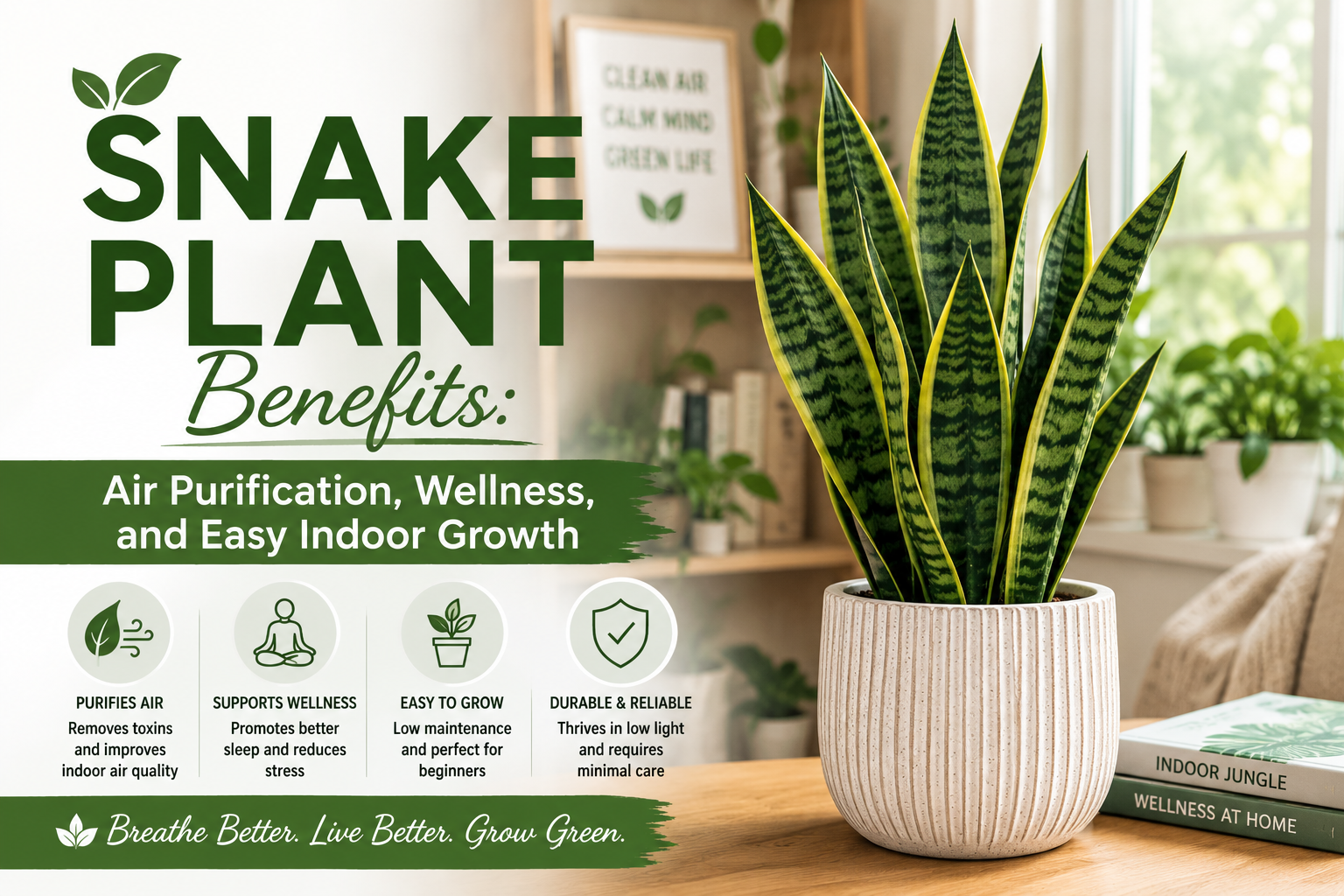
Snake Plant Benefits
Snake plants are among the most popular houseplants because they combine attractive appearance with remarkable practicality. The many snake plant benefits include easy maintenance, tolerance of neglect, improved indoor aesthetics, and potential contributions to healthier indoor environments. Whether you’re a beginner plant owner or an experienced indoor gardener, a snake plant can provide long-term value with minimal effort.
As modern homes and offices become increasingly enclosed, people are looking for simple ways to create more comfortable indoor spaces. Snake plants stand out because they thrive in conditions where many other houseplants struggle, making them one of the most reliable plants for nearly any indoor setting.
What Is a Snake Plant?
The snake plant (Dracaena trifasciata, formerly Sansevieria trifasciata) is a hardy evergreen plant native to West Africa. It is known for its upright, sword-shaped leaves and ability to survive in a wide range of indoor conditions.
Common Names
| Name | Description |
|---|---|
| Snake Plant | Most widely used common name |
| Mother-in-Law’s Tongue | Refers to the plant’s long, pointed leaves |
| Saint George’s Sword | Popular name in some regions |
| Viper’s Bowstring Hemp | Historical name based on fiber use |
Top Snake Plant Benefits
Improved Indoor Air Quality
One of the most discussed snake plant benefits is its role in indoor air quality improvement.
Plants naturally absorb carbon dioxide and release oxygen through photosynthesis. Snake plants also absorb certain airborne compounds through their leaves and root systems. While no houseplant can replace proper ventilation or air filtration systems, snake plants can contribute to a healthier indoor environment when combined with other good indoor air practices.
Air Quality Contributions
| Feature | Potential Benefit |
|---|---|
| Carbon dioxide absorption | Supports natural gas exchange |
| Oxygen production | Contributes to indoor freshness |
| Leaf surface area | Helps trap dust particles |
| Natural transpiration | Supports humidity balance |
Produces Oxygen at Night
Unlike many plants that primarily release oxygen during daylight hours, snake plants use a specialized process called Crassulacean Acid Metabolism (CAM).
This adaptation allows them to exchange gases at night, making them popular choices for bedrooms.
Why This Matters
- Suitable for bedrooms and sleeping areas
- Continues gas exchange after sunset
- Thrives in low-light indoor environments
- Requires little maintenance
Although the effect is modest in a typical room, this unique characteristic remains one of the most interesting snake plant benefits.
Extremely Low Maintenance
Perhaps the most practical advantage of snake plants is how easy they are to care for.
Ideal for Beginners
Many people struggle with houseplants because of inconsistent watering schedules. Snake plants are exceptionally forgiving.
| Care Factor | Snake Plant Performance |
|---|---|
| Drought tolerance | Excellent |
| Low light tolerance | Excellent |
| Pest resistance | Good |
| Growth rate | Moderate |
| Maintenance needs | Very low |
Survives Occasional Neglect
Snake plants store water in their thick leaves, allowing them to tolerate missed waterings better than most indoor plants.
This makes them ideal for:
- Busy professionals
- Frequent travelers
- Students
- First-time plant owners
- Office environments
Enhances Interior Design
Among the most overlooked snake plant benefits is its decorative value.
The plant’s vertical growth habit creates structure and visual interest in almost any room.
Design Advantages
| Design Feature | Benefit |
|---|---|
| Upright leaves | Adds height without taking much floor space |
| Modern appearance | Fits contemporary interiors |
| Variegated varieties | Provides visual contrast |
| Compact footprint | Suitable for apartments |
Works in Multiple Spaces
Snake plants look attractive in:
- Living rooms
- Bedrooms
- Home offices
- Entryways
- Bathrooms
- Commercial offices
- Reception areas
Helps Create a Calming Environment
Research consistently shows that indoor greenery can positively influence how people perceive and experience indoor spaces.
While a snake plant is not a medical treatment, many homeowners report that indoor plants help create a more relaxing atmosphere.
Spider Plant Care: Complete Guide to Growing Healthy, Thriving Plants
Environmental Benefits
| Aspect | Potential Effect |
|---|---|
| Visual greenery | Creates a natural feel |
| Interior decoration | Makes rooms feel more welcoming |
| Plant care routine | Encourages mindfulness |
| Biophilic design | Strengthens connection to nature |
Adaptable to Different Lighting Conditions
Many houseplants require specific light levels to thrive. Snake plants are far more adaptable.
Light Tolerance Comparison
| Light Condition | Snake Plant Performance |
|---|---|
| Bright indirect light | Excellent |
| Medium light | Excellent |
| Low light | Good |
| Artificial office lighting | Good |
| Direct intense sunlight | Moderate |
This adaptability makes snake plants suitable for locations where other plants may struggle.
Long Lifespan
A healthy snake plant can live for many years and sometimes decades.
Why Longevity Matters
- Better long-term value
- Less replacement cost
- Easier plant collection management
- Consistent decorative appeal
With proper care, a single plant can produce numerous offsets that can be propagated into new plants.
Easy Propagation
Another significant benefit is how simple snake plants are to multiply.
Common Propagation Methods
| Method | Difficulty | Success Rate |
|---|---|---|
| Division | Easy | Very High |
| Leaf cuttings in soil | Easy | High |
| Leaf cuttings in water | Moderate | Moderate to High |
Benefits of Propagation
- Expand your indoor plant collection
- Share plants with friends
- Save money
- Replace damaged plants
Suitable for Small Spaces
Apartment dwellers often have limited room for plants. Snake plants grow vertically rather than spreading outward.
Space-Saving Features
| Feature | Advantage |
|---|---|
| Vertical growth | Uses less floor area |
| Narrow profile | Fits corners easily |
| Container adaptability | Works in small pots |
| Slow growth | Requires infrequent repotting |
Common Snake Plant Varieties
Different varieties offer slightly different appearances while maintaining many of the same benefits.
| Variety | Characteristics |
|---|---|
| Laurentii | Yellow-edged leaves |
| Zeylanica | Dark green striped foliage |
| Moonshine | Silvery-green leaves |
| Black Coral | Dark dramatic foliage |
| Whale Fin | Large paddle-shaped leaf |
| Bird’s Nest | Compact rosette growth |
Snake Plant Care Guide
To maximize snake plant benefits, proper care remains important.
Basic Care Requirements
| Requirement | Recommendation |
|---|---|
| Light | Bright indirect to low light |
| Water | Every 2–6 weeks depending on conditions |
| Soil | Well-draining cactus mix |
| Temperature | 60–85°F (16–29°C) |
| Humidity | Average household humidity |
| Fertilizer | Light feeding during growing season |
Watering Guidelines
| Season | Watering Frequency |
|---|---|
| Spring | Every 2–3 weeks |
| Summer | Every 2–4 weeks |
| Fall | Every 3–4 weeks |
| Winter | Every 4–6 weeks |
Always allow soil to dry before watering again.
Pros and Cons of Snake Plants
| Pros | Cons |
|---|---|
| Very low maintenance | Can suffer from overwatering |
| Tolerates low light | Slow growth in dim conditions |
| Attractive appearance | Leaves may bend if neglected |
| Long lifespan | Sensitive to prolonged wet soil |
| Easy propagation | Growth may stall in extreme cold |
Common Mistakes
| Mistake | Why It Happens | How to Fix It |
|---|---|---|
| Overwatering | Owners water too frequently | Let soil dry completely between waterings |
| Poor drainage | Pot lacks drainage holes | Use a draining pot and well-draining soil |
| Too much direct sun | Assumption that all plants love sun | Provide bright indirect light |
| Excess fertilizer | Attempt to speed growth | Feed lightly during active growth |
| Cold exposure | Placement near drafts | Keep above 50°F (10°C) |
Expert Tips for Getting the Most Benefits
- Place snake plants near bright, indirect light for stronger growth.
- Use terracotta pots to improve moisture control.
- Rotate the plant every few weeks for balanced growth.
- Clean leaves occasionally to remove dust buildup.
- Avoid watering on a fixed schedule; check soil dryness first.
- Divide crowded plants every few years.
- Keep plants away from freezing temperatures.
- Choose larger varieties for statement décor and compact varieties for desks.
Are Snake Plants Safe Around Pets?
Snake plants contain compounds called saponins that can be mildly toxic if ingested by cats or dogs.
Pet Safety Overview
| Situation | Risk Level |
|---|---|
| Touching leaves | Low |
| Normal household exposure | Low |
| Ingesting leaves | Moderate |
| Large consumption | Higher |
Pet owners should place snake plants out of reach whenever possible.
Are Snake Plants Worth Buying?
For most people, the answer is yes.
Few houseplants offer the same combination of durability, appearance, adaptability, and ease of care. Whether your goal is improving interior décor, starting an indoor garden, or adding greenery to a workspace, snake plants provide excellent value.
FAQs
What are the main snake plant benefits?
The main snake plant benefits include easy care, tolerance of low light, long lifespan, attractive appearance, simple propagation, and potential contributions to improved indoor air quality.
Can snake plants improve indoor air quality?
Snake plants can help support indoor air quality as part of a broader healthy indoor environment, though they should not replace ventilation systems or air purifiers.
Is a snake plant good for a bedroom?
Yes. Snake plants are commonly placed in bedrooms because they are low maintenance and continue gas exchange during nighttime hours.
How often should I water a snake plant?
Most snake plants need watering every two to six weeks, depending on temperature, light, and humidity levels.
Do snake plants need sunlight?
They prefer bright indirect light but can tolerate low-light conditions better than many other houseplants.
How long do snake plants live?
With proper care, snake plants can live for many years and sometimes decades.
Are snake plants beginner-friendly?
Yes. They are among the easiest indoor plants for beginners due to their resilience and minimal care requirements.
Can snake plants grow in offices?
Absolutely. Their tolerance for artificial lighting and infrequent watering makes them excellent office plants.
Conclusion
The many snake plant benefits make this plant one of the best choices for homes, apartments, and offices. From its low-maintenance nature and striking appearance to its adaptability and long lifespan, the snake plant offers exceptional value for both new and experienced plant owners. If you’re looking for a hardy indoor plant that requires little effort while providing year-round beauty, a healthy snake plant is an excellent addition to your space.