
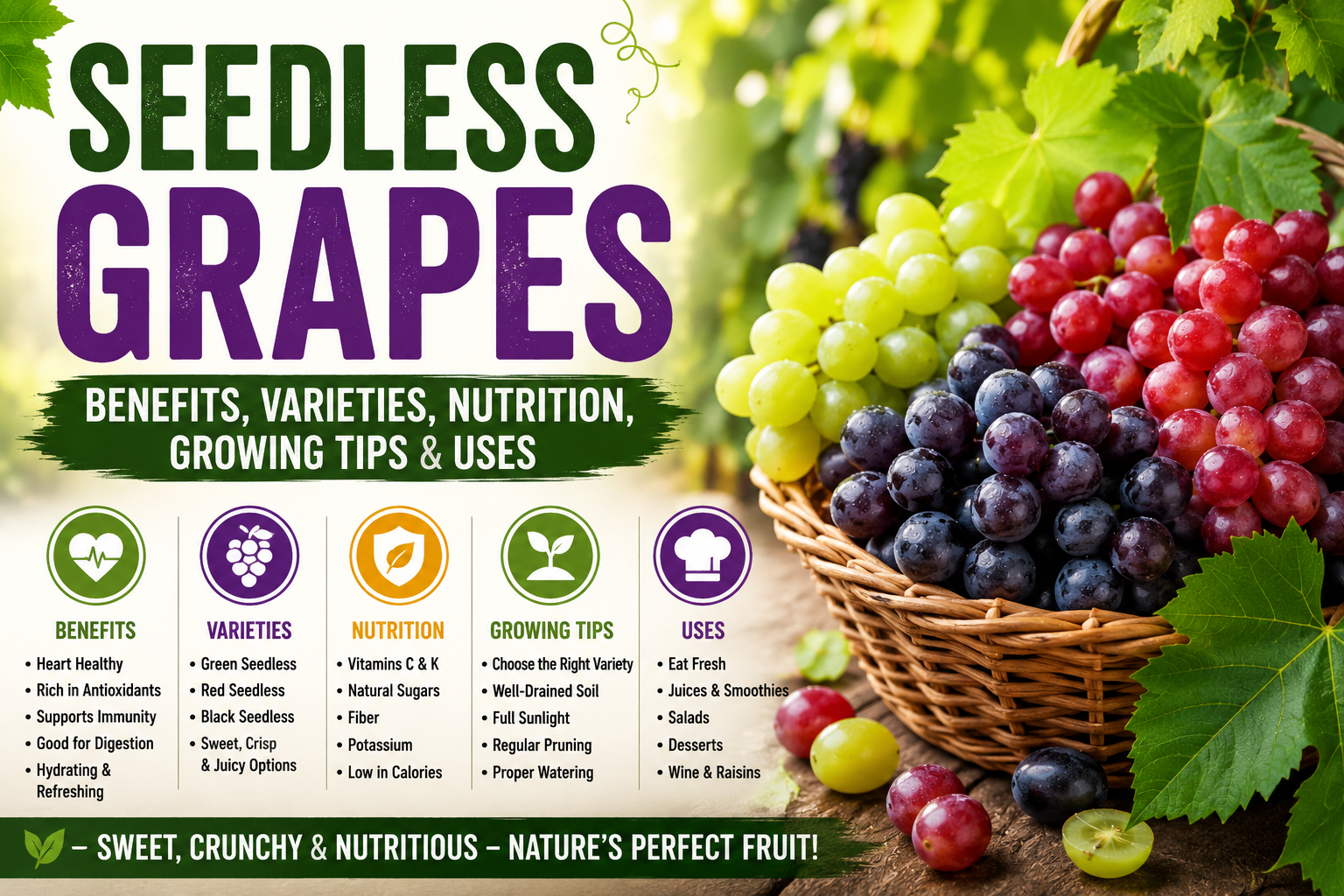
Seedless Grapes
Seedless grapes are among the most popular fruits in the world because they offer convenience, sweetness, and versatility without the inconvenience of hard seeds. These grapes are enjoyed fresh, frozen, dried into raisins, and incorporated into countless recipes. Their appealing texture and naturally sweet flavor make them a favorite snack for children and adults alike.
Beyond convenience, seedless grapes provide valuable nutrients, antioxidants, and hydration. Understanding the different varieties, nutritional benefits, storage methods, and growing requirements can help consumers and gardeners get the most from this remarkable fruit.
What Are Seedless Grapes?
Seedless grapes are grape varieties that develop fruit without producing fully mature seeds. Most contain tiny, soft seed traces that are barely noticeable when eaten.
Unlike seeded grapes, seedless grapes are propagated through cuttings rather than planting seeds. This process allows growers to reproduce vines with consistent fruit quality, flavor, and disease resistance.
Seedless Grapes vs Seeded Grapes
| Characteristic | Seedless Grapes | Seeded Grapes |
|---|---|---|
| Seeds | Absent or undeveloped | Fully developed |
| Eating Convenience | Very high | Moderate |
| Popularity | Extremely high | Less common in supermarkets |
| Propagation | Cuttings and grafting | Seeds or cuttings |
| Use in Snacks | Excellent | Less convenient |
How Are Seedless Grapes Produced?
Most seedless grapes originate from natural mutations discovered by growers. Plant breeders then selectively cross desirable varieties to improve sweetness, texture, color, shelf life, and disease resistance.
Contrary to a common misconception, most commercially available seedless grapes are not genetically modified.
Nutritional Value of Seedless Grapes
Seedless grapes are naturally low in fat and provide carbohydrates for quick energy. They also contain vitamins, minerals, antioxidants, and water.
| Nutrient | Approximate Amount Per 100g |
|---|---|
| Calories | 69 kcal |
| Water | 81 g |
| Carbohydrates | 18 g |
| Natural Sugars | 15–16 g |
| Fiber | 0.9 g |
| Protein | 0.7 g |
| Vitamin C | Moderate |
| Vitamin K | Good source |
| Potassium | Moderate |
Health Benefits of Seedless Grapes
Rich in Antioxidants
Seedless grapes contain powerful antioxidants such as flavonoids, anthocyanins, and resveratrol. These compounds help combat oxidative stress and support long-term health.
Support Heart Health
The combination of antioxidants and potassium may contribute to healthy blood pressure and cardiovascular function.
Help Maintain Hydration
Because grapes are composed of more than 80% water, they help support hydration while providing natural sweetness.
Provide Quick Energy
The natural sugars found in seedless grapes make them an ideal snack before workouts, study sessions, or busy workdays.
Support Immune Function
Vitamin C and other plant compounds contribute to normal immune system function.
Convenient for All Ages
The absence of hard seeds makes seedless grapes especially appealing for children, older adults, and anyone seeking an easy-to-eat snack.
Popular Varieties of Seedless Grapes
Modern breeding programs have produced many flavorful seedless grape varieties.
| Variety | Color | Flavor Profile | Best Use |
|---|---|---|---|
| Thompson Seedless | Green | Mild and sweet | Fresh eating, raisins |
| Crimson Seedless | Red | Sweet with slight tartness | Snacking |
| Flame Seedless | Red | Juicy and sweet | Fruit platters |
| Autumn Royal | Black | Rich and sweet | Desserts |
| Sweet Sapphire | Dark Purple | Crisp and sweet | Premium snacking |
| Cotton Candy | Green | Candy-like sweetness | Fresh consumption |
Green vs Red vs Black Seedless Grapes
| Feature | Green Grapes | Red Grapes | Black Grapes |
|---|---|---|---|
| Sweetness | Moderate | High | High |
| Antioxidant Content | Good | Higher | Highest |
| Texture | Crisp | Juicy | Firm |
| Flavor | Light | Balanced | Rich |
| Popularity | Very High | Very High | Growing |
How to Choose the Best Seedless Grapes
Selecting high-quality grapes significantly improves flavor and shelf life.
Look For
- Firm, plump grapes
- Bright and vibrant color
- Grapes firmly attached to stems
- Green and flexible stems
- Natural powdery coating known as bloom
Avoid
- Soft or wrinkled grapes
- Brown stems
- Excessive moisture in packaging
- Mold growth
- Damaged fruit
How to Store Seedless Grapes
Proper storage extends freshness and prevents spoilage.
| Storage Method | Expected Freshness |
|---|---|
| Countertop | 1–2 Days |
| Refrigerator | 1–3 Weeks |
| Freezer | 8–12 Months |
Best Storage Practices
- Store grapes unwashed.
- Keep them refrigerated.
- Use ventilated containers.
- Wash immediately before eating.
- Remove damaged grapes promptly.
Can You Freeze Seedless Grapes?
Yes. Frozen seedless grapes make a refreshing and nutritious snack.
| Step | Action |
|---|---|
| 1 | Wash grapes thoroughly. |
| 2 | Dry completely to prevent ice crystals from forming. |
| 3 | Spread the grapes in a single layer on a baking sheet. |
| 4 | Freeze until the grapes are completely solid. |
| 5 | Transfer the frozen grapes to airtight freezer bags or containers. |
Frozen grapes can replace sugary frozen desserts and are particularly enjoyable during hot weather.
Lawn Care Guide: Proven Tips for a Healthier, Greener Lawn Year-Round
Culinary Uses for Seedless Grapes
Fresh Applications
- Fruit salads
- Cheese boards
- Lunch boxes
- Yogurt toppings
- Smoothies
Cooked Applications
- Roasted side dishes
- Chutneys
- Sauces
- Cakes and pastries
- Fruit compotes
Dried Applications
Many seedless grapes, particularly Thompson Seedless, are processed into raisins because of their sweetness and thin skins.
Growing Seedless Grapes at Home
Growing seedless grapes can be rewarding for home gardeners with adequate sunlight and space.
Growing Requirements
| Requirement | Recommendation |
|---|---|
| Sunlight | 6–8 Hours Daily |
| Soil | Well-Drained, Fertile Soil |
| Water | Deep Weekly Watering |
| Soil pH | 5.5–7.0 |
| Support Structure | Trellis or Arbor |
| Pruning | Annual Winter Pruning |
Growth Timeline
| Year | Expected Development |
|---|---|
| Year 1 | Root Establishment |
| Year 2 | Vine Development |
| Year 3 | First Significant Harvest |
| Year 4+ | Full Production |
Pros and Cons of Seedless Grapes
| Pros | Cons |
|---|---|
| Easy to Eat | Usually More Expensive |
| Kid-Friendly | Can Bruise Easily |
| Versatile for Various Uses | Shorter Shelf Life if Mishandled |
| Excellent for Recipes and Snacks | Higher Natural Sugar Content |
| No Seed Removal Required | Premium Varieties Can Cost More |
Common Mistakes When Buying and Storing Seedless Grapes
| Mistake | Why It Happens | How to Fix It |
|---|---|---|
| Washing Before Storage | Moisture Promotes Spoilage | Wash Grapes Only Before Eating |
| Buying Grapes with Brown Stems | Freshness Signs Are Ignored | Select Grapes with Green, Healthy Stems |
| Leaving Grapes Unrefrigerated | Convenience or Forgetfulness | Refrigerate Promptly After Purchase |
| Ignoring Damaged Fruit | Quick Visual Inspection | Remove Spoiled Grapes Immediately |
| Overpacking Freezer Bags | Poor Freezing Technique | Freeze Grapes Individually Before Bagging |
| Judging Only by Color | Assumptions About Ripeness | Check Firmness and Stem Condition |
Expert Tips for Buying and Enjoying Seedless Grapes
- Purchase grapes during peak harvest seasons for the best flavor and value.
- Look for a natural bloom coating, which often indicates freshness.
- Freeze grapes for a healthier dessert alternative.
- Pair black and red grapes with cheese for balanced flavor combinations.
- Use slightly overripe grapes in smoothies and baking recipes.
- Prune grapevines annually to improve fruit production.
- Store grapes away from strong-smelling foods.
- Inspect stored grapes weekly and remove damaged fruit.
Frequently Asked Questions
Are seedless grapes genetically modified?
No. Most seedless grapes are developed through natural mutations and traditional breeding rather than genetic modification.
Are seedless grapes healthy?
Yes. Seedless grapes provide antioxidants, vitamins, hydration, and natural sugars that can be part of a healthy diet.
Why are seedless grapes more expensive?
Growing, breeding, and handling seedless grapes often require additional labor and specialized cultivation practices.
Can dogs eat seedless grapes?
No. Grapes, including seedless grapes, are toxic to dogs and should never be given as food.
Which seedless grape variety is the sweetest?
Cotton Candy grapes are widely regarded as one of the sweetest seedless grape varieties due to their unique flavor profile.
How long do seedless grapes last in the refrigerator?
Properly stored seedless grapes typically remain fresh for one to three weeks.
Can seedless grapes be made into raisins?
Yes. Thompson Seedless grapes are among the most common varieties used for raisin production.
Do seedless grapes contain any seeds?
Most seedless grapes contain tiny undeveloped seed traces that are soft and generally unnoticeable when eaten.
Conclusion
Seedless grapes are a convenient, nutritious, and versatile fruit enjoyed around the world. Available in numerous colors and varieties, they provide antioxidants, hydration, natural sweetness, and countless culinary possibilities. Whether eaten fresh, frozen, dried, or used in recipes, seedless grapes offer an easy way to add flavor and nutrition to your diet. For the best experience, choose firm, fresh clusters, store them properly, and explore different varieties to discover your favorites.