Peace Lily Plant
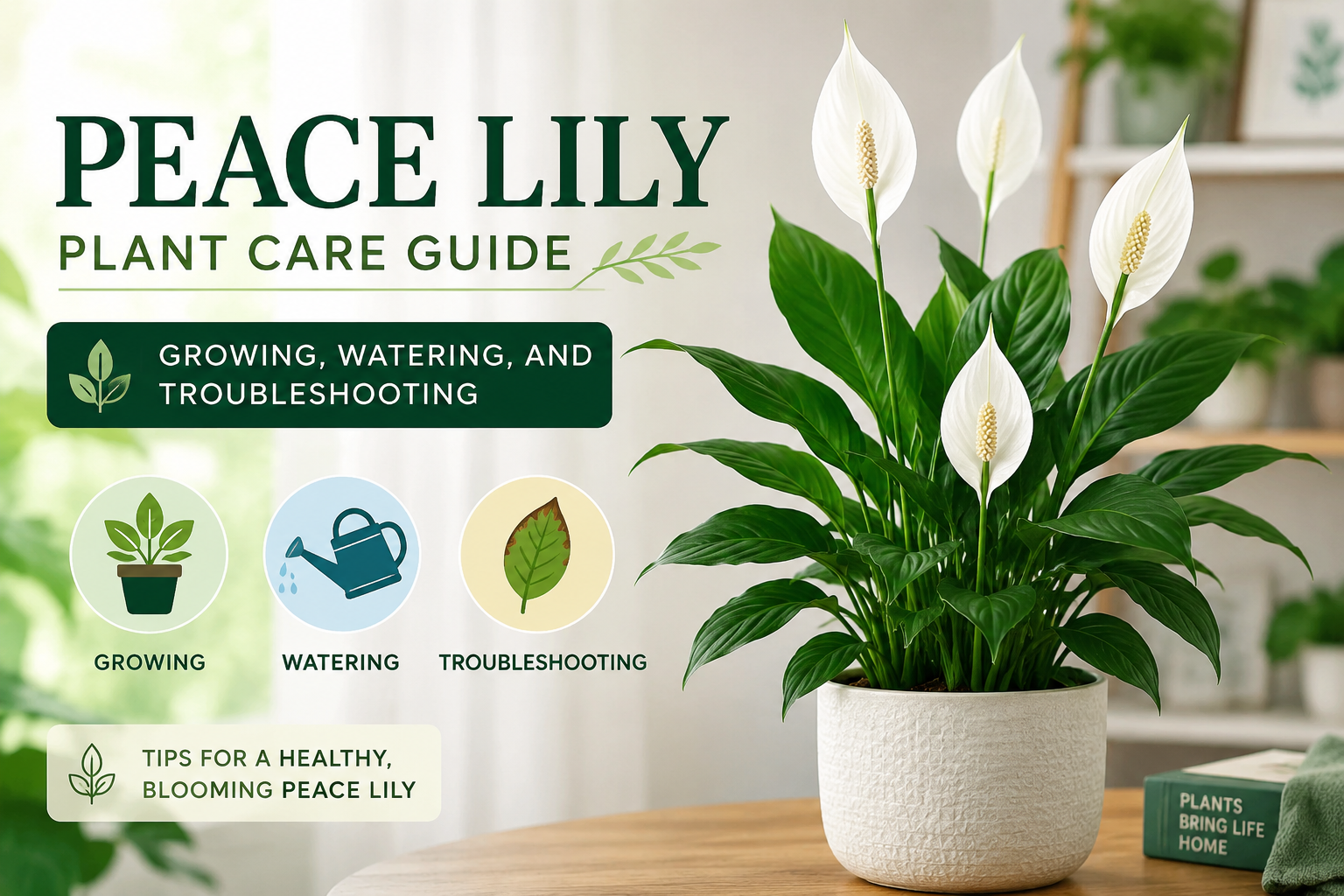
The peace lily plant is one of the most popular indoor houseplants because it combines attractive foliage, elegant white blooms, and relatively simple care requirements. Known for its glossy green leaves and graceful flowers, this tropical plant can thrive indoors for many years when given the right growing conditions.
Whether you’re a beginner looking for an easy houseplant or an experienced gardener seeking a low-maintenance indoor plant, understanding how to care for a peace lily properly will help you enjoy healthy growth and consistent blooms.
What Is a Peace Lily Plant?
The peace lily (Spathiphyllum) is a tropical flowering plant native to Central and South America. Despite its common name, it is not a true lily. It belongs to the Araceae family and is prized for its air-purifying qualities, attractive foliage, and ability to tolerate lower light conditions.
Key Characteristics
| Feature | Details |
|---|---|
| Botanical Name | Spathiphyllum |
| Common Name | Peace Lily |
| Plant Type | Evergreen perennial |
| Mature Height | 1–6 feet, depending on variety |
| Light Needs | Bright indirect light |
| Water Needs | Moderate |
| Flower Color | White |
| Leaf Color | Dark green |
| Toxicity | Toxic to pets and humans if ingested |
Benefits of Growing a Peace Lily Plant
A peace lily offers several advantages that make it a favorite indoor plant.
| Benefit | Description |
|---|---|
| Attractive Appearance | Glossy foliage and elegant blooms |
| Low Maintenance | Easy for beginners to grow |
| Adaptable | Tolerates lower indoor light levels |
| Long Lifespan | Can live for many years with proper care |
| Indoor Appeal | Enhances homes and office spaces |
Why Homeowners Love Peace Lilies
- Thrive in indoor environments.
- Require less sunlight than many flowering plants.
- Provide year-round greenery.
- Fit well in apartments and small spaces.
- Produce beautiful white flowers under proper conditions.
Creeping Thyme: Complete Growing, Care, and Landscaping Guide
Popular Peace Lily Varieties
Different varieties offer unique sizes and appearances.
| Variety | Mature Size | Notable Features |
|---|---|---|
| Domino | 1–2 feet | Variegated leaves |
| Mauna Loa Supreme | 3–4 feet | Large flowers and foliage |
| Sensation | Up to 6 feet | Largest peace lily variety |
| Petite | Under 1 foot | Compact for desks and small spaces |
| Sweet Chico | 2–3 feet | Dense growth habit |
Choosing the Right Variety
For small apartments, compact varieties such as Petite work well. Larger rooms can accommodate impressive specimens like Sensation.
Ideal Growing Conditions for a Peace Lily Plant
Understanding the plant’s natural environment helps replicate ideal indoor conditions.
Light Requirements
Peace lilies prefer bright, indirect sunlight.
| Light Condition | Result |
|---|---|
| Bright indirect light | Best growth and flowering |
| Medium light | Healthy foliage growth |
| Low light | Survival possible but fewer flowers |
| Direct sunlight | Leaf scorch and damage |
Best Placement
Place your peace lily near:
- East-facing windows
- North-facing windows
- Bright rooms with filtered light
Avoid intense afternoon sun from south- or west-facing windows unless filtered by curtains.
Temperature Requirements
| Condition | Ideal Range |
|---|---|
| Daytime | 65°F–80°F (18°C–27°C) |
| Nighttime | Above 55°F (13°C) |
| Humidity | 40%–60% or higher |
Sudden temperature fluctuations can stress the plant and reduce flowering.
How to Water a Peace Lily Plant
Proper watering is one of the most important aspects of peace lily care.
Watering Schedule
Rather than following a strict calendar, check soil moisture regularly.
| Soil Condition | Action |
|---|---|
| Top inch dry | Water thoroughly |
| Slightly moist | Wait |
| Wet soil | Do not water |
Signs Your Plant Needs Water
- Drooping leaves
- Slight wilting
- Dry soil surface
Peace lilies are known for dramatic drooping when thirsty, but they usually recover quickly after watering.
How to Water Correctly
- Check soil moisture first.
- Water slowly and evenly.
- Allow excess water to drain.
- Empty decorative cachepots after watering.
Overwatering vs Underwatering
| Symptom | Overwatering | Underwatering |
|---|---|---|
| Yellow leaves | Common | Rare |
| Root rot | Common | No |
| Dry leaf tips | Sometimes | Common |
| Drooping | Persistent | Temporary |
| Soil condition | Soggy | Dry |
Best Soil for a Peace Lily Plant
Peace lilies prefer well-draining yet moisture-retentive soil.
Ideal Soil Characteristics
| Requirement | Importance |
|---|---|
| Good drainage | Prevents root rot |
| Organic matter | Supports growth |
| Moisture retention | Maintains hydration |
| Air circulation | Healthy roots |
Recommended Soil Mix
A quality mix may contain:
- Peat moss or coco coir
- Perlite
- Pine bark
- Compost
This combination balances moisture retention and drainage.
Fertilizing a Peace Lily Plant
Peace lilies are not heavy feeders, but periodic fertilization encourages healthy growth and blooms.
Fertilizer Schedule
| Season | Frequency |
|---|---|
| Spring | Every 6–8 weeks |
| Summer | Every 6–8 weeks |
| Fall | Reduce feeding |
| Winter | Usually unnecessary |
Best Fertilizer Type
Use a balanced liquid houseplant fertilizer diluted to half strength.
Avoid excessive fertilization, which can cause:
- Brown leaf tips
- Salt buildup
- Root damage
How to Encourage More Flowers
Many owners wonder why their peace lily stops blooming.
Conditions That Promote Flowering
| Factor | Recommendation |
|---|---|
| Light | Bright indirect sunlight |
| Nutrition | Balanced fertilizer |
| Water | Consistent moisture |
| Pot Size | Slightly root-bound |
| Temperature | Warm indoor conditions |
Common Reasons for Lack of Blooms
- Insufficient light
- Overfertilizing
- Very young plant
- Temperature stress
- Poor overall plant health
Repotting a Peace Lily Plant
Repotting becomes necessary when roots outgrow the container.
Signs It’s Time to Repot
- Roots emerging from drainage holes
- Frequent wilting despite watering
- Slowed growth
- Crowded root system
Repotting Timeline
| Plant Age | Typical Repotting Frequency |
|---|---|
| Young plants | Every 1–2 years |
| Mature plants | Every 2–3 years |
Repotting Steps
- Choose a pot 1–2 inches larger.
- Add fresh potting mix.
- Remove the plant carefully.
- Loosen compacted roots.
- Replant at the same depth.
- Water thoroughly.
Common Problems and Solutions
Yellow Leaves
Possible causes:
- Overwatering
- Aging foliage
- Poor drainage
Brown Leaf Tips
Possible causes:
- Low humidity
- Excess fertilizer
- Fluoride or chlorine in water
Drooping Leaves
Possible causes:
- Underwatering
- Root stress
- Temperature shock
Root Rot
Signs include:
- Mushy roots
- Persistent yellowing
- Foul odor
- Soggy soil
Early intervention is critical to save affected plants.
Common Mistakes to Avoid
| Mistake | Why It Happens | How to Fix It |
|---|---|---|
| Overwatering | Fear of dry soil | Water only when top inch is dry |
| Direct sunlight exposure | Assuming more light is better | Use bright indirect light |
| Ignoring drainage | Decorative pots without holes | Use containers with drainage |
| Overfertilizing | Trying to boost growth | Feed lightly and infrequently |
| Using compacted soil | Poor potting mix choice | Use airy, well-draining soil |
| Delaying repotting | Forgetting root growth | Check roots annually |
Peace Lily Plant Toxicity
Peace lilies contain calcium oxalate crystals.
Safety Considerations
| Group | Risk Level |
|---|---|
| Cats | High |
| Dogs | High |
| Children | Moderate |
Symptoms after ingestion may include:
- Mouth irritation
- Drooling
- Difficulty swallowing
- Swelling of oral tissues
Keep plants out of reach of pets and young children.
Propagating a Peace Lily Plant
Peace lilies are typically propagated through division.
Division Method
| Step | Action |
|---|---|
| 1 | Remove plant from pot |
| 2 | Identify separate clumps |
| 3 | Gently divide roots |
| 4 | Plant each section individually |
| 5 | Water thoroughly |
The best time for division is during spring repotting.
Seasonal Care Guide
| Season | Care Focus |
|---|---|
| Spring | Active growth, fertilize lightly |
| Summer | Monitor watering and humidity |
| Fall | Reduce fertilizer |
| Winter | Avoid overwatering and cold drafts |
Expert Tips for Growing a Healthy Peace Lily Plant
- Rotate the pot every few weeks for even growth.
- Wipe leaves regularly to remove dust and improve photosynthesis.
- Use filtered or distilled water if leaf tips frequently brown.
- Maintain consistent indoor temperatures.
- Increase humidity during dry winter months.
- Inspect roots annually for signs of crowding.
- Keep the plant slightly root-bound to encourage flowering.
- Provide bright indirect light for maximum blooms.
Peace Lily Plant Care Summary
| Care Factor | Recommendation |
|---|---|
| Light | Bright indirect light |
| Water | When top inch of soil dries |
| Soil | Well-draining potting mix |
| Humidity | Moderate to high |
| Fertilizer | Every 6–8 weeks during growth |
| Temperature | 65°F–80°F |
| Repotting | Every 1–3 years |
| Propagation | Division |
FAQs
How often should I water a peace lily plant?
Water a peace lily plant when the top inch of soil feels dry. This is typically every 7–10 days indoors, though frequency varies based on temperature, humidity, and light conditions.
Why are my peace lily leaves turning yellow?
Yellow leaves are most often caused by overwatering, poor drainage, or natural aging of older leaves.
Can a peace lily survive in low light?
Yes, peace lilies tolerate low light better than many houseplants. However, brighter indirect light usually results in healthier growth and more flowers.
Should I mist my peace lily?
Occasional misting can help increase humidity, but maintaining overall room humidity is generally more effective.
How long do peace lily flowers last?
Individual blooms often remain attractive for several weeks and may last one to two months under favorable conditions.
Is a peace lily plant safe for pets?
No. Peace lilies are toxic to cats and dogs if ingested and should be kept out of their reach.
Why is my peace lily drooping even after watering?
Persistent drooping may indicate root rot, compacted soil, or root-bound conditions rather than simple thirst.
When should I repot a peace lily?
Repot when roots become crowded, emerge from drainage holes, or when growth slows noticeably, usually every one to three years.
Conclusion
The peace lily plant remains one of the best indoor plants for homes and offices because it combines elegant beauty with relatively easy care. By providing bright indirect light, proper watering, well-draining soil, and occasional feeding, you can enjoy lush foliage and beautiful blooms year after year. For the best results, monitor moisture carefully, avoid overwatering, and repot when necessary. With consistent care, a healthy peace lily plant can thrive indoors for many years and become a standout feature in any indoor space.