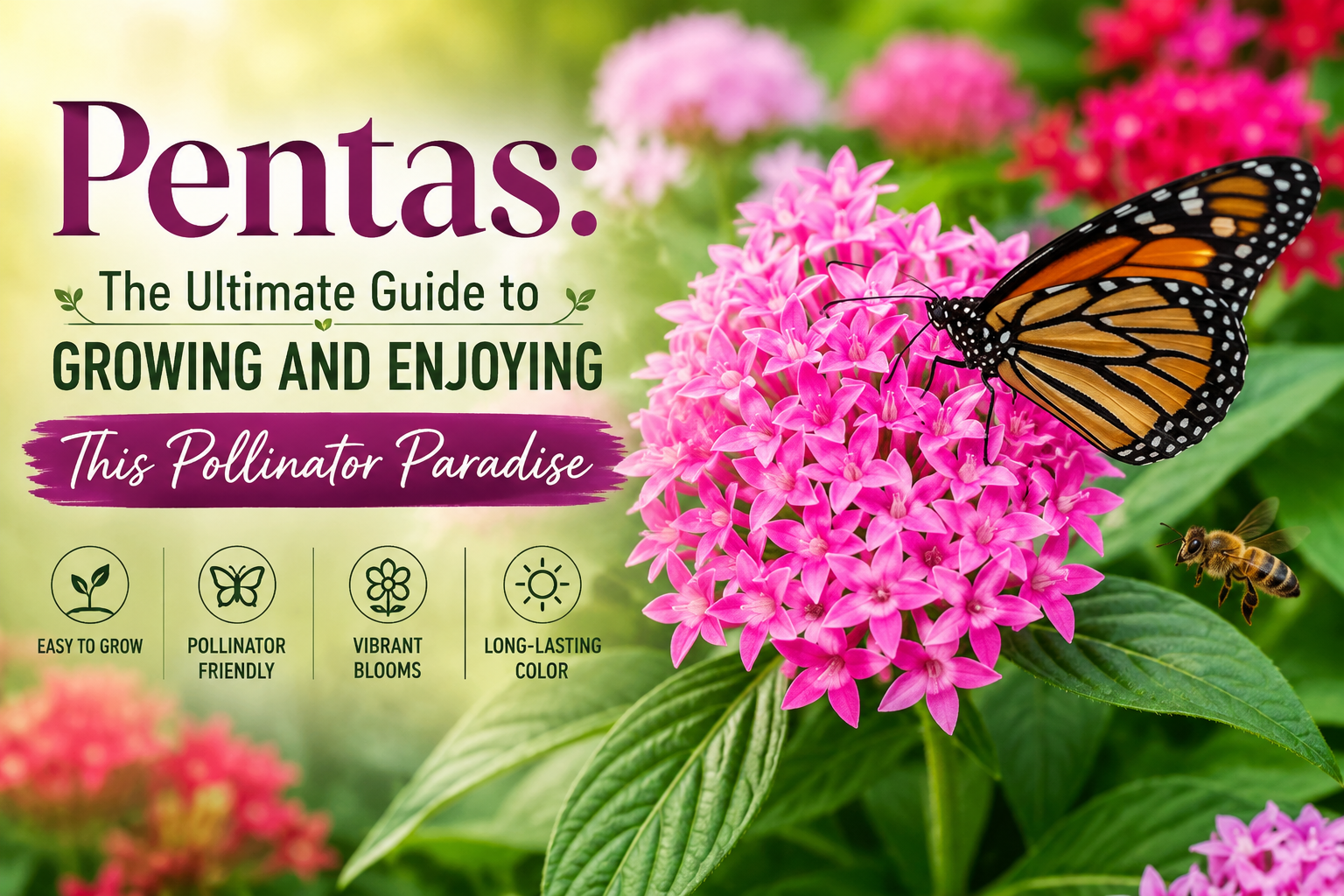
Imagine a plant that thrives in scorching heat, blooms continuously from spring to frost, and acts like a magnet for butterflies and hummingbirds. That’s the magic of pentas. These vibrant, low-maintenance flowering plants are a favorite among gardeners for bringing unparalleled color and wildlife to the garden. This guide will teach you everything you need to know to successfully grow pentas and turn your outdoor space into a pollinator haven.
What Are Pentas?
Pentas, scientifically known as Pentas lanceolata, are tropical and subtropical plants famous for their clusters of star-shaped flowers. They are also commonly called Egyptian starcluster or star flower. The name “pentas” is derived from the Greek word “pente,” meaning five, which refers to the five petals of each individual flower.
These plants are often grown as perennials in warmer climates but are equally popular as annuals in cooler regions. Their ability to bloom profusely through the hottest and most humid conditions makes them a go-to choice for summer gardens. Pentas are available in a wide range of vivid colors, including red, pink, white, purple, and various shades of lavender and magenta.
Why You Should Grow Pentas
There are many reasons to love pentas, but their greatest claim to fame is their appeal to pollinators. They are one of the most effective plants for attracting butterflies, bees, and hummingbirds. The flowers are rich in nectar, making them a vital food source that will keep your garden buzzing and fluttering with life all season long.
Beyond their ecological benefits, pentas are a gardener’s delight for their sheer resilience and beauty:
- Unstoppable Bloomer: They produce a continuous display of flowers from late spring until the first frost in the fall.
- Heat & Humidity Tolerant: While other plants may wilt in the summer sun, pentas thrive, making them a reliable choice for challenging climates.
- Low Maintenance: They are relatively disease-free and require minimal care, making them perfect for both novice and experienced gardeners.
How to Plant and Care for Pentas
While pentas are tough plants, providing them with the right conditions will ensure they perform at their best. Here’s your guide to planting and caring for them.
The Perfect Location: Sun and Soil
For the most prolific blooming, plant your pentas in a location that receives full sun (at least 6 hours of direct sunlight daily). While they can tolerate some partial shade, they will become leggy and produce fewer flowers. In climates with intense afternoon heat, a little dappled shade can help keep them looking fresh.
When it comes to soil, pentas prefer a moist, well-drained environment. They are not too fussy but will perform best in organically rich, fertile soil with a slightly acidic to neutral pH (between 6.0 and 7.0). Amending your garden bed with compost before planting can help improve moisture retention and nutrient levels.
Planting Pentas: A Step-by-Step Guide
| Step | Action | Details |
|---|---|---|
| 1 | Timing | Plant in the spring after the last frost when the soil and weather have warmed up. |
| 2 | Soil Prep | Amend the soil with compost or peat moss to ensure good drainage and fertility. |
| 3 | Spacing | Space plants 12-16 inches apart to allow for adequate air circulation and growth. |
| 4 | Planting | Dig a hole slightly larger than the root ball, place the plant, and backfill with soil. |
| 5 | Watering | Water thoroughly after planting to help the roots establish. |
Ongoing Care Tips
Once established, pentas are easy to care for.
- Watering: While they are somewhat drought-tolerant, pentas look their best with regular watering. Water them when the top 2 to 4 inches of soil feel dry. In containers, you may need to water daily during hot weather.
- Fertilizing: A little food goes a long way. Apply a balanced, slow-release fertilizer at planting time to get them off to a strong start. Supplement with a balanced liquid fertilizer every 4-6 weeks during the growing season to encourage continuous blooming.
- Pruning & Maintenance: To encourage a bushier, more compact plant, pinch back the tips of young plants. Deadheading spent flower clusters promotes the development of new blooms and prevents the plant from putting energy into seed production. In late winter or early spring, give your pentas a hard prune to remove woody stems and encourage fresh new growth.
Common Pests, Diseases, and Solutions
| Problem | Why It Happens | How to Fix It |
|---|---|---|
| Aphids & Spider Mites | These common pests appear during hot, dry weather, often attacking new growth. | For mild infestations, spray plants with a strong jet of water to knock pests off. Insecticidal soap or neem oil can also be used. Apply in the evening to protect pollinators. |
| Caterpillars | Caterpillars may munch on leaves, especially if you’re attracting butterflies to your garden. | Manual removal is an effective and safe solution. Live with the caterpillars if you don’t mind a few chewed leaves, or simply pick them off and relocate them. |
| Bacterial Leaf Spot | This disease causes water-soaked spots on leaves that turn brown or black, leading to yellowing and leaf drop. | Prevention is key. Ensure good air circulation and avoid overhead watering. Affected plants should be removed to prevent the disease from spreading. |
Expert Tips for Spectacular Pentas
- Choose the right variety for your space. For more compact growth and larger flowers, look for series bred specifically for their performance and bloom size. Other popular series include Graffiti, New Look, and Starcluster.
- Pentas are exceptional for containers and window boxes. Their vibrant colors create a stunning display on patios and balconies. Use a high-quality, well-draining potting mix.
- In cooler climates, you can overwinter pentas indoors. Bring pots inside before the first frost and place them in a bright, cool (50-59°F) location. Reduce watering. You can also take cuttings in late summer to start new plants indoors.
- Expand your collection by taking softwood cuttings in the summer. Dip the cut end in rooting hormone or honey and plant it in a moist propagation mix. It’s a great way to get more of your favorite colors for free.
The Ultimate Guide to Coleus Plant Care: Vibrant Foliage Made Easy
Frequently Asked Questions
1. Are pentas perennials or annuals?
Pentas are tender perennials native to tropical regions. In USDA Hardiness Zones 8-11, they can survive mild winters and grow as perennials. In colder zones, they are grown as annuals that complete their life cycle in one season and will not survive winter frost.
2. Do pentas need full sun?
Yes, pentas thrive in full sun. For the best flowering, they need at least 6 hours of direct sunlight per day. While they can tolerate some partial shade, they will produce fewer flowers and may become leggy.
3. Are pentas poisonous to dogs?
Pentas are generally considered non-toxic to dogs, cats, and horses, according to the ASPCA. However, it’s always a good practice to discourage pets from chewing on any ornamental plants.
4. How do you keep pentas blooming all summer?
Regular deadheading is the best way to keep pentas blooming. Removing spent flower clusters encourages the plant to produce more blooms instead of seeds. Also, ensure they get plenty of sun and water, and apply a balanced fertilizer monthly.
5. Why are my pentas leaves turning yellow?
Yellowing leaves can be a sign of several issues. It could be a watering problem (either too much or too little), a nutrient deficiency, or a sign of spider mites. Check the soil moisture and inspect the undersides of the leaves for pests. Bacterial leaf spot can also cause yellowing.
6. When is the best time to plant pentas?
The best time to plant pentas is in late spring, after the threat of frost has passed and the soil has warmed up. This gives the plants the longest possible growing season to establish and bloom.
7. Do pentas attract hummingbirds?
Absolutely! Pentas, especially those with red flowers, are a hummingbird favorite. The rich nectar and bright colors are a powerful draw for these energetic birds.
Conclusion
Pentas are a powerhouse addition to any garden, offering a winning combination of non-stop color, effortless care, and incredible pollinator appeal. Whether you’re planting them in a grand border, a window box, or a container on a sunny balcony, these vibrant plants will reward you with months of beautiful blooms and the delightful sight of hummingbirds and butterflies visiting your garden. By providing them with plenty of sun, well-drained soil, and regular watering, you’ll enjoy the full potential of this spectacular star flower.