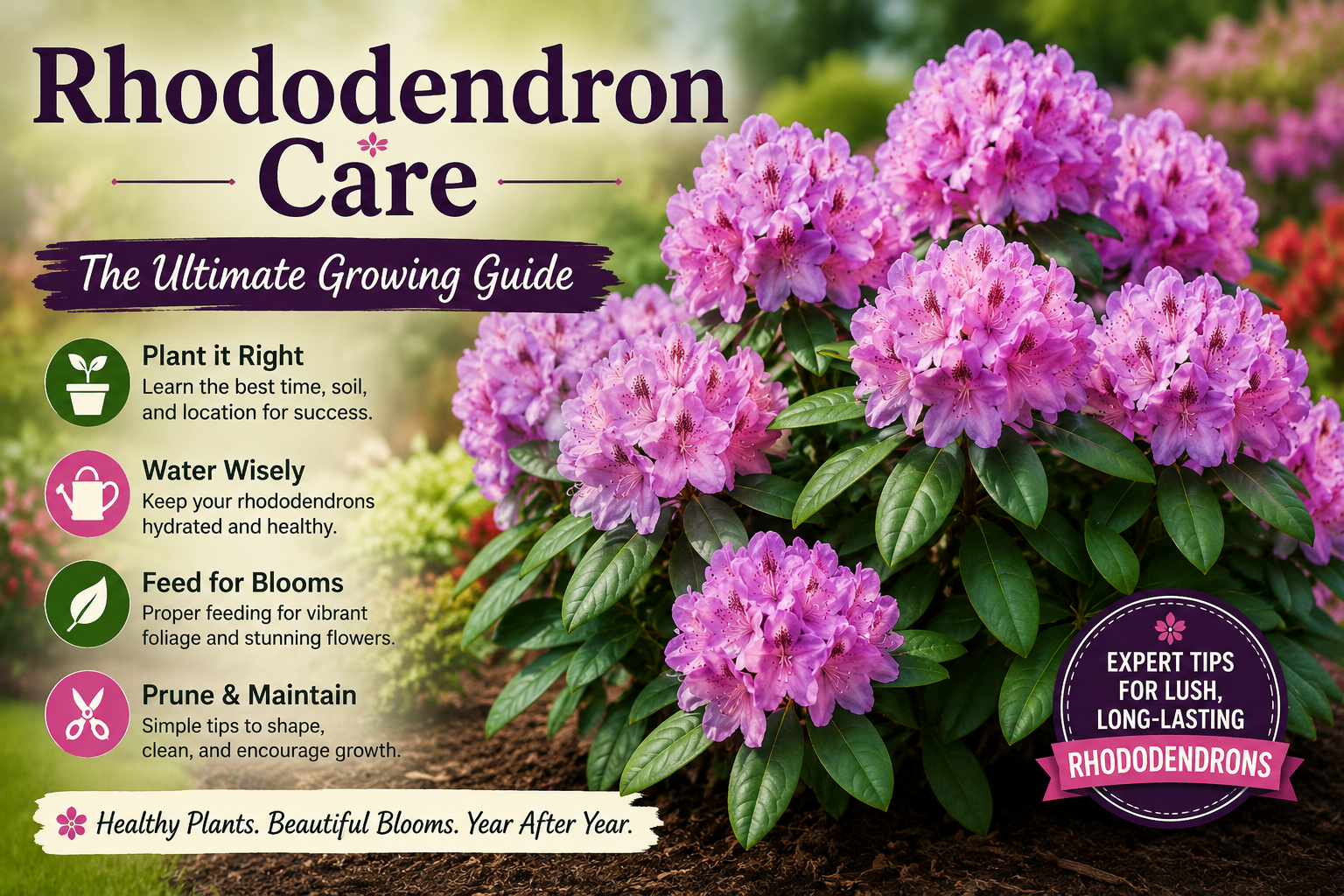
Rhododendrons are the crown jewels of the spring garden, producing spectacular clusters of blooms that can range from delicate pastels to vibrant, fiery reds. However, these stunning shrubs have a reputation for being finicky. The truth is, successful rhododendron care is not about luck; it is about understanding the specific needs of these shallow-rooted beauties. By mastering a few key principles—particularly regarding soil and water—you can ensure your rhododendrons thrive and produce a breathtaking display year after year.
Understanding Your Rhododendron
Before you grab your gardening gloves, it is crucial to understand what makes a rhododendron tick. Unlike many common garden shrubs, rhododendrons are acid-loving plants (ericaceous) with a fibrous, shallow root system. This means they are highly sensitive to soil pH, drainage, and competition from other plants.
Deciduous vs. Evergreen Rhododendrons
While both share similar care requirements, there is a key difference in their hardiness and appearance.
- Evergreen Rhododendrons: These are the classic large-leafed varieties that retain their foliage year-round. They are generally more sensitive to cold winter winds, which can desiccate their leaves.
- Deciduous Rhododendrons (Azaleas): Often referred to as azaleas, these lose their leaves in the fall. Many deciduous varieties are hardier in colder climates and offer brilliant autumn foliage color before dropping their leaves.
Planting Rhododendrons for Long-Term Success
Getting the planting process right is the single most important step in rhododendron care. Mistakes made at this stage are difficult, if not impossible, to correct later.
Choosing the Perfect Location
Rhododendrons prefer dappled shade or morning sun with afternoon shade. Too much direct, intense sunlight can scorch the leaves, while too much deep shade will result in a leggy plant with few flowers. A location sheltered from strong winds is also beneficial, especially for evergreen varieties.
The Golden Rule: Soil Preparation
Rhododendrons demand acidic, well-draining soil with a pH between 4.5 and 6.0. If your garden has heavy clay or alkaline soil, do not simply dig a hole and plant. The single most effective action you can take is to amend the soil.
- For In-Ground Planting: Dig a wide, shallow hole (twice as wide as the root ball but no deeper). Mix the native soil with equal parts of organic matter like peat moss, composted pine bark, or ericaceous compost. This improves drainage and acidifies the soil.
- For Raised Beds: If your soil is poorly drained, creating a raised bed is a superior solution. Fill it with a mix of ericaceous compost and coarse grit to ensure sharp drainage.
How to Plant a Rhododendron
- Soak the Root Ball: Submerge the pot in a bucket of water until bubbles stop rising. This ensures the roots are hydrated.
- Loosen the Roots: Gently tease the outer roots apart. If the plant is pot-bound, score the sides of the root ball with a knife to encourage new growth outward.
- Plant at the Right Depth: This is critical. The top of the root ball must sit 1-2 inches above the surrounding soil level. Rhododendrons are susceptible to root rot if planted too deeply.
- Backfill and Water: Fill in around the root ball with your amended soil, firm gently, and water thoroughly.
Essential Rhododendron Care Guidelines
Once your rhododendron is planted, consistent and correct care is vital. This table summarizes the key care tasks to focus on throughout the year.
| Care Aspect | Requirement | Pro Tip |
|---|---|---|
| Sunlight | Dappled shade or morning sun/afternoon shade. | Protect from harsh afternoon sun, especially in hot climates. |
| Soil pH | 4.5 – 6.0 (acidic). | Test your soil before planting. |
| Watering | Consistent moisture, never waterlogged. | Use rainwater instead of tap water where possible. |
| Fertilizing | Acidic fertilizer in early spring. | Avoid high-nitrogen formulas; use a balanced (10-10-10) or specific ericaceous feed. |
| Mulching | 2-3 inch layer of pine bark or leaf mold. | Do not pile mulch against the stem (avoid “volcano” mulching). |
| Pruning | Immediately after flowering. | Deadhead spent blooms to encourage next year’s growth. |
| Hardiness | Varies by variety (USDA zones 4-9). | Choose a variety suited to your local climate. |
Mastering Watering and Nutrition
Water and nutrients are the fuel for your rhododendron’s magnificent blooms.
Flaming Katy: Care Tips and Common Problems
The Importance of Rainwater
Rhododendrons are highly sensitive to the salts and lime found in most tap water. Over time, using hard tap water can raise the soil pH and cause yellowing leaves (chlorosis). Collecting rainwater is one of the best things you can do for the long-term health of your plant.
Watering Best Practices
- Frequency: Water deeply and regularly during dry spells, especially in the first year.
- Signs of Underwatering: Drooping, curling leaves.
- Signs of Overwatering: Yellow, limp leaves, and a mushy texture.
Fertilization Schedule
Rhododendrons are light feeders. Over-fertilizing can damage their delicate roots.
- When to Feed: Apply a granular fertilizer formulated for acid-loving plants in early spring, just as new growth begins.
- What to Avoid: Avoid using fertilizers with high nitrogen (the first number on the NPK ratio), as this promotes leafy growth at the expense of flowers. Never fertilize a drought-stressed plant.
Pruning, Deadheading, and Maintenance
Rhododendrons require minimal pruning if planted in the right location. However, a little maintenance goes a long way.
Deadheading for More Blooms
Deadheading—the removal of spent flower clusters—prevents the plant from expending energy on seed production. Instead, that energy is directed toward next year’s buds. Break the faded truss off by snapping it gently at its base, being careful not to damage the small new buds emerging just below.
When and How to Prune
- Rejuvenation Pruning: If an old, leggy rhododendron needs a fresh start, you can perform hard pruning. Do this in late winter, just before new growth emerges.
- Light Shaping: For minor shaping, prune immediately after flowering. This gives the plant the rest of the season to set new buds.
- Expert Tip: Never cut branches back to bare wood without any leaves or buds, as they may not regrow. Always cut back to a set of leaves or a dormant bud.
Common Rhododendron Mistakes
Even experienced gardeners can make errors. By anticipating these common pitfalls, you can avoid them.
| Mistake | Why It Happens | How to Fix It |
|---|---|---|
| Yellowing Leaves | Iron deficiency (chlorosis) caused by alkaline soil. | Apply a liquid iron chelate or sulphur to acidify the soil. |
| Planting Too Deep | Misunderstanding the delicate root system. | Lift the plant and re-plant with the root ball 1-2 inches above ground. |
| Bud Blast | Winter damage or a fungal disease causing buds to turn brown. | Remove and dispose of affected buds. Provide winter protection. |
| Leaf Scorch | Too much direct sun or lack of water. | Provide more shade or move to a location with morning sun only. |
| Root Rot | Poor drainage and waterlogged soil. | Improve drainage with grit or move to a raised bed. |
Expert Tips from a Nursery Professional
Based on over 20 years of growing thousands of rhododendrons, here are my top recommendations for guaranteed success:
- Mulch, Mulch, Mulch: A 3-inch layer of organic mulch, such as pine needles or bark, will keep the shallow roots cool and moist, suppress weeds, and slowly acidify the soil. Apply it in spring.
- Monitor pH Annually: Test your soil’s pH at least once a year. It is much easier to slightly lower the pH with sulphur than it is to correct a severe deficiency.
- Water Deeply in Autumn: Ensure your rhododendrons go into the winter with moist roots. Cold winds and frozen ground can desiccate the leaves.
- Choose the Right Variety: “Rhododendron yakushimanum” hybrids are compact, hardy, and forgiving, making them an excellent choice for beginners.
Frequently Asked Questions
1. Why are my rhododendron leaves turning yellow?
Yellowing leaves, a condition known as chlorosis, are most often caused by the plant being unable to absorb iron due to the soil being too alkaline. You can remedy this by using an iron chelate fertilizer and ensuring the soil is acidified with organic matter like composted pine bark.
2. How often should I water a rhododendron?
During the growing season, water deeply when the top inch of soil feels dry. In hot, dry spells, this may mean watering every day. Always water at the base of the plant, avoiding wetting the foliage, which can lead to disease.
3. Can I grow rhododendrons in full sun?
While some sun-loving hybrids exist, most rhododendrons prefer dappled shade or morning sun with afternoon shade. Full sun, especially in the afternoon, can cause leaf scorch and stress the plant.
4. What is the best fertilizer for rhododendrons?
A balanced, slow-release fertilizer formulated for acid-loving plants (like those for azaleas, camellias, and rhododendrons) is best. Look for an NPK ratio of about 10-10-10 and apply it in early spring.
5. When is the best time to prune rhododendrons?
The best time for light pruning and deadheading is immediately after the plant has finished flowering. This allows the plant to focus on producing new growth and setting buds for the next year without impacting the current season’s display.
6. Why are my rhododendron buds not opening?
This could be due to a fungal disease called “bud blast.” The buds will turn brown or black and may have tiny black spikes (the fruiting bodies of the fungus) on them. Remove and destroy the affected buds to prevent the spread.
7. How do I protect my rhododendron in winter?
Apply a deep layer of mulch to protect the roots from freezing. For evergreen varieties, build a burlap screen or apply an anti-desiccant spray to protect the leaves from drying winter winds, especially if you live in a cold or exposed area.
8. Can I grow a rhododendron in a pot?
Yes, dwarf and compact varieties grow very well in containers. Use a large pot with excellent drainage and fill it with ericaceous (acidic) compost. Potted rhododendrons are more susceptible to drying out, so they will need more frequent watering.
Conclusion
Mastering rhododendron care is an investment that pays off with spectacular, vibrant blooms for decades. While these shrubs are sometimes perceived as difficult, their needs are simple: acidic soil, excellent drainage, consistent moisture, and a location with the right balance of sun and shade. By following the expert advice in this guide and avoiding common mistakes like planting too deep or neglecting soil pH, you can transform your garden into a rhododendron paradise. Start by taking a soil test today, and get ready to enjoy the breathtaking colors that only a healthy, well-cared-for rhododendron can provide.